
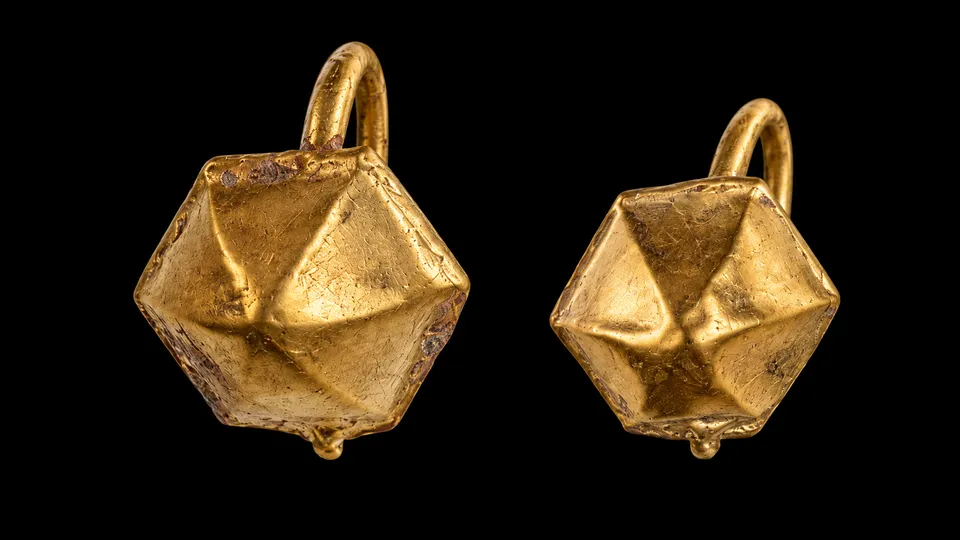
Archaeologists working ahead of a construction project in Stara Zagora, Bulgaria, have uncovered a child’s grave holding two gold earrings and a coin minted under the Roman emperor Aurelian, a burial dating to roughly 1,750 years ago, Arkeonews reported.
The grave turned up during rescue excavations by the Regional History Museum of Stara Zagora on land designated for a new residential building and garages. Below the modern city lies a Roman cemetery of 135 graves, used from the late second century to the fifth, just beyond the southwestern walls of Augusta Traiana, the city that grew up under Emperor Trajan in the early second century AD.
The child was buried with the head pointing west and the feet to the east, the gold earrings and coin alongside. Who the child was, and how he or she died, is not known. The gold suggests valuable personal possessions accompanied the burial, though not enough to establish the family’s social standing.
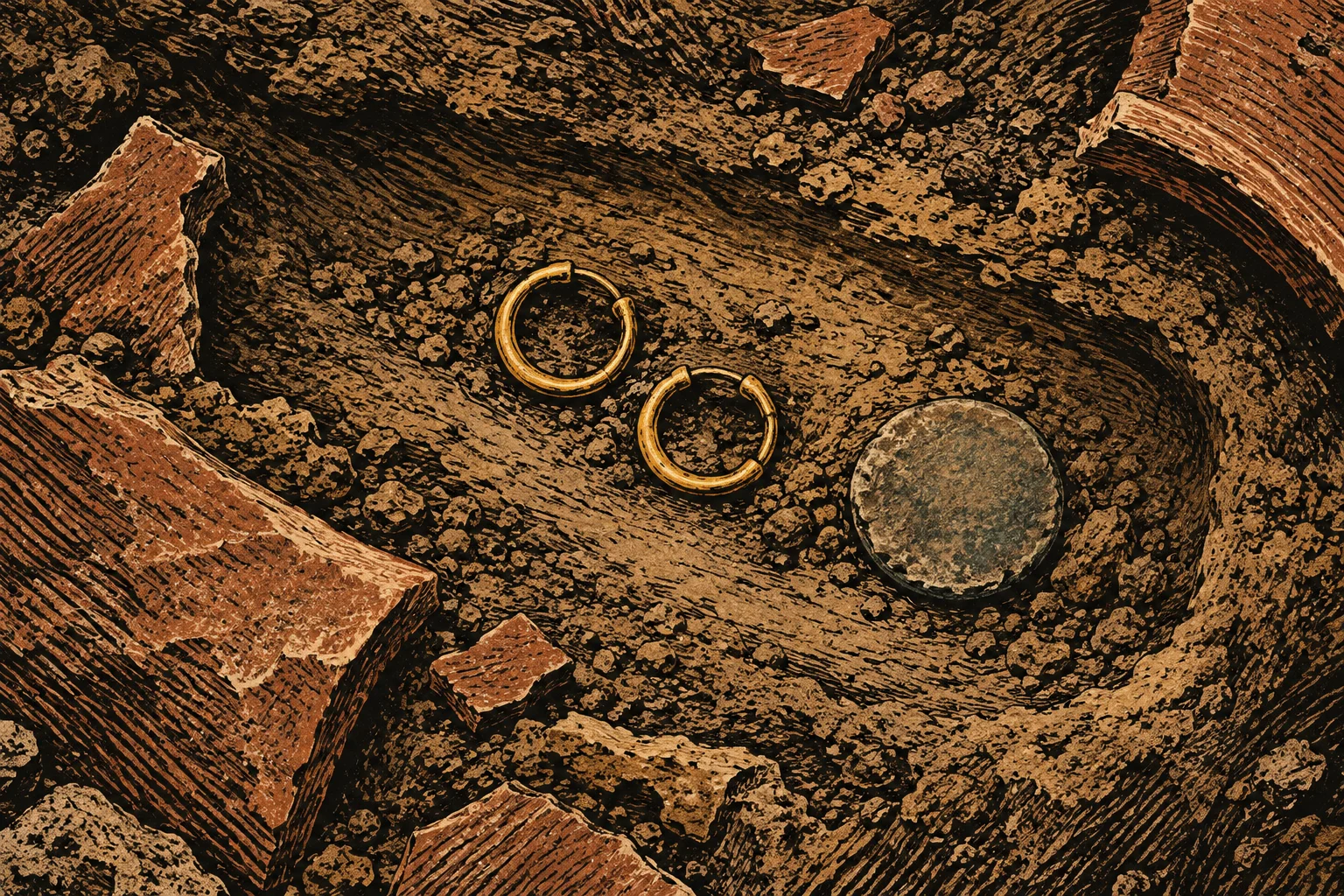
The coin is an antoninianus struck in Serdica, present-day Sofia, between AD 274 and 275, in the final years of Aurelian’s reign, which ran from AD 270 to 275. It fixes one edge of the date: the burial cannot be earlier than the coin. It may also carry meaning. In Greek and Roman funerary tradition, a coin was sometimes placed with the dead as payment to Charon, the mythical ferryman who carried souls to the underworld. Its purpose in this grave is unknown.
The cemetery shows mixed custom. Only four of the 135 graves held cremated remains; the rest were body burials, some covered with Roman roof tiles, bricks or stone slabs, others simple uncovered pits.
Augusta Traiana ranked among the chief cities of Roman Thrace, second in standing, by tradition, to Philippopolis, modern Plovdiv. It had fortifications, public baths, stone-paved streets and monumental civic buildings, and under Marcus Aurelius it won the right to issue its own bronze coinage. Sections of its forum, street network and public buildings are still visible in Stara Zagora.
Aurelian himself is remembered for restoring imperial control over territories that had broken away during the Crisis of the Third Century, and the Serdica mint struck the coin found in the grave during the last years of his rule. It is the one fixed point. Everything else about the child, a name, a family, a cause of death, did not survive.