
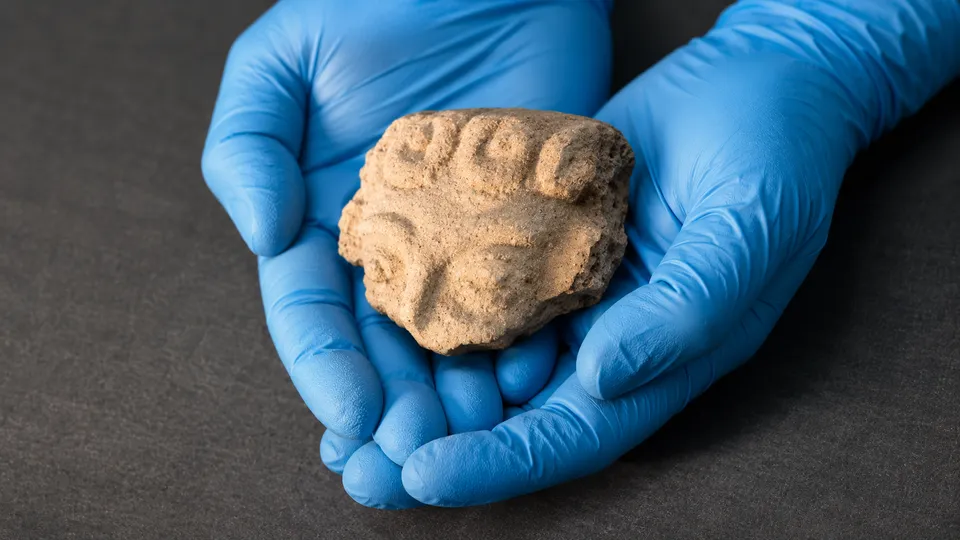
Archaeologists digging beneath a 1,200-year-old Pictish cross-slab in Angus, Scotland, which was blown down in a storm in March 2025, have found part of a carved human head and a piece of an older stone that appears to show a salmon, Historic Environment Scotland said this week.
The excavation at Aberlemno III, carried out by the agency and AOC Archaeology, also found two pits under the monument’s base stone that may once have held upright stones. One of them could mark an earlier position of Aberlemno III itself, a sign that the slab may have faced another direction for part of its history, Arkeonews reported.
“The initial results of the excavation by AOC have already exceeded our expectations,” said Stefan North-Sagrott, a senior cultural resources adviser at Historic Environment Scotland. “The discovery of the Pictish stone fragment, as well as the carved head, give us new questions to answer.”
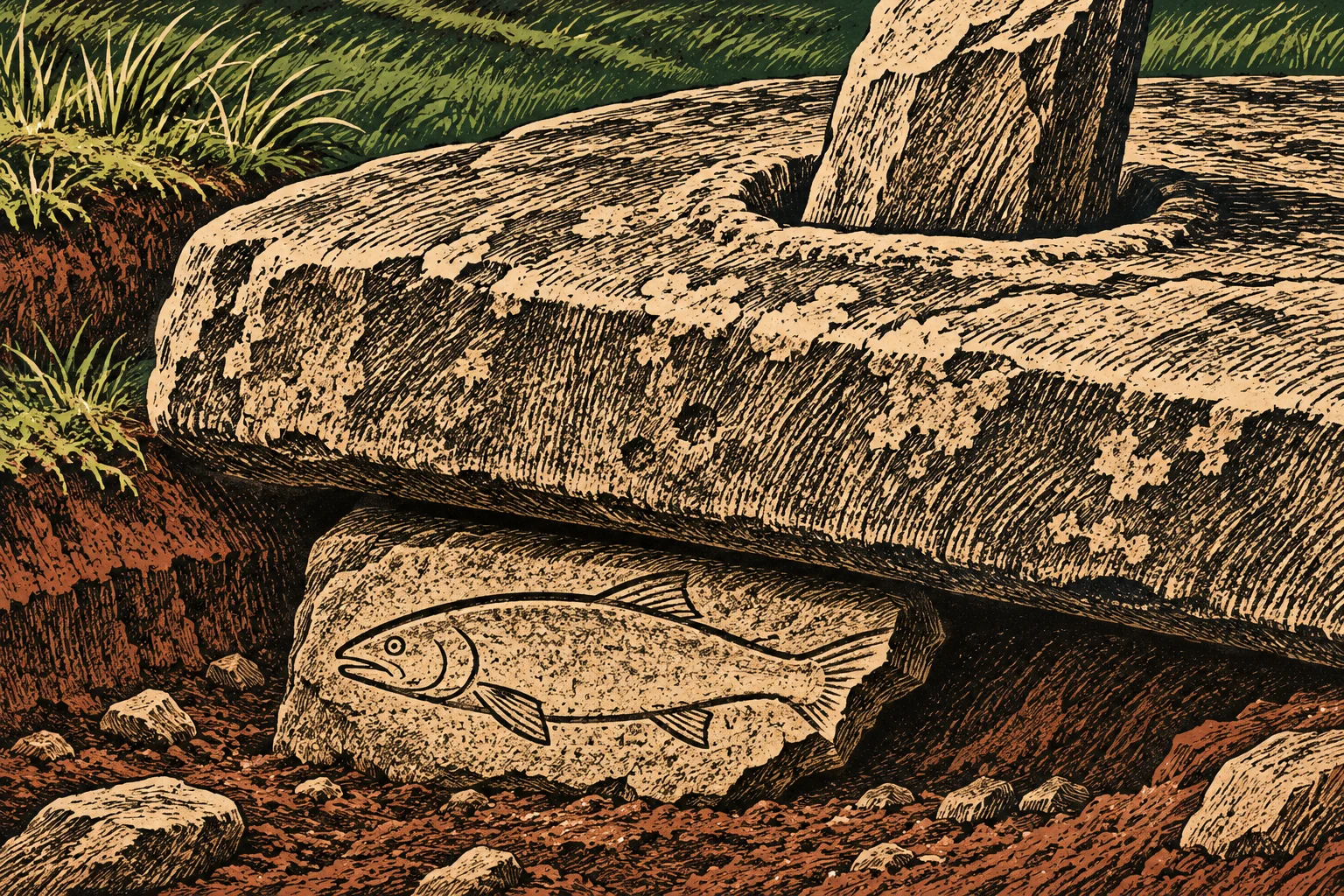
The salmon piece was under the monument, used as packing to prop up the base stone. Its design is incised, and salmon symbols are generally associated with earlier Pictish stones, according to HeritageDaily, which drew on the agency’s announcement. Because it went in as packing, the stone it came from had probably been broken already when Aberlemno III was set into its later base. Nobody knows yet when that stone broke, or how long it lay around before someone reused it.
The head is harder to place. It turned up in the topsoil around the monument, not in the foundations, and it is carved in relief, with facial features and curled hair. It doesn’t match the surviving slab of Aberlemno III or any other known monument at Aberlemno. A preliminary assessment puts it in the early medieval period. If that holds, it could point to another carved monument that once stood nearby and has since been lost.
“We are unsure how the head fits into this,” Mr. North-Sagrott said.
The pits offer a rough sequence, though the agency calls it preliminary. Aberlemno III may first have stood on a north-south line, facing Aberlemno Kirk, where another Pictish stone survives. At some point it fell or was moved. A base stone was added and the slab was reset east-west, the usual orientation for Christian monuments. When that happened, and why, has not been established.
Even so, the slab doesn’t seem to have gone far. “We have learned that Aberlemno III has likely remained in its original location,” Mr. North-Sagrott said.
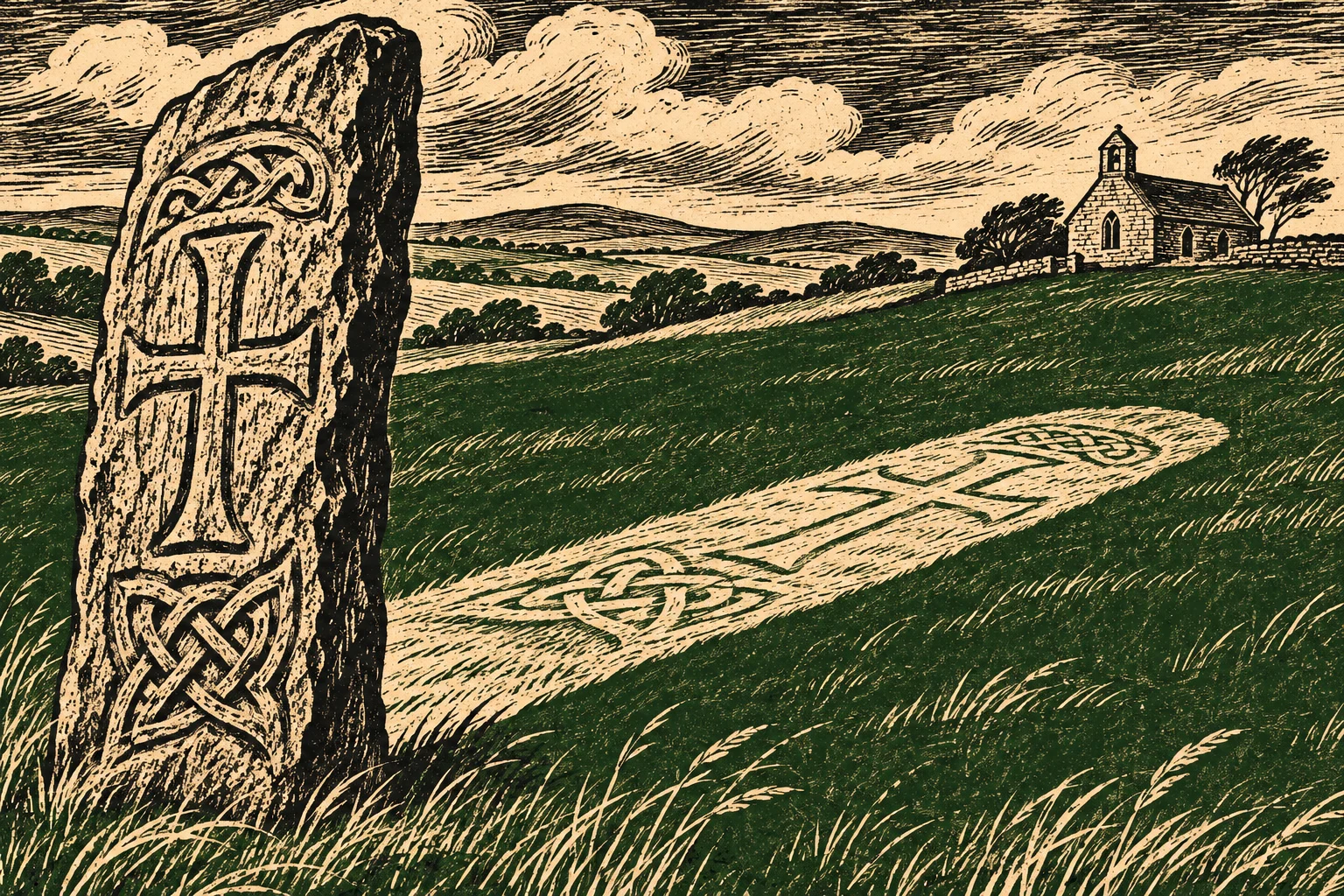
Aberlemno III stands about 2.8 meters, roughly nine feet, tall beside the road through Aberlemno, a village between Forfar and Brechin, and is one of four surviving Pictish carved stones there. Its decoration includes a large cross, angels and animals. The stones date broadly to the late first millennium and mix traditional Pictish symbols with Christian imagery, according to the national heritage record. The Picts lived in northern and eastern Scotland.
While the slab was upright, its foundations were largely out of reach. The collapse let conservators assess the damage and gave archaeologists their first real look underneath.
The base stone has now been moved to Edinburgh for detailed study. A broken section of Aberlemno III is still lodged in it, and specialists hope that removing it will expose carving hidden for centuries. Tests on the base stone and on samples from the dig are expected to help date when the monument was repositioned and explain how the salmon fragment ended up beneath it.