
Archaeologists from the International University of Kagoshima said on Oct. 26 that they had found the foundation of an eight-sided building from about the 12th century on Kuroshima, a small island off southern Japan.
The platform is at the Osato site in Mishima Village, Kagoshima Prefecture. Its upper section measures about 8.9 meters between opposite corners, with sides of about 3.4 meters, and the wider base may have reached 10 to 11 meters, according to a university press release dated Oct. 27. The team said octagonal plans were typical of Chinese buildings and rare in Japan, and that this one probably held something religious, perhaps a Buddhist pagoda or a hall.
The dig is led by Satoru Nakazono, a professor of archaeology and the dean of the university’s faculty of intercultural studies, who announced the find at a news conference, KKB Kagoshima Broadcasting reported. Arkeonews, which described the discovery this week, gave his first name as Satoshi.
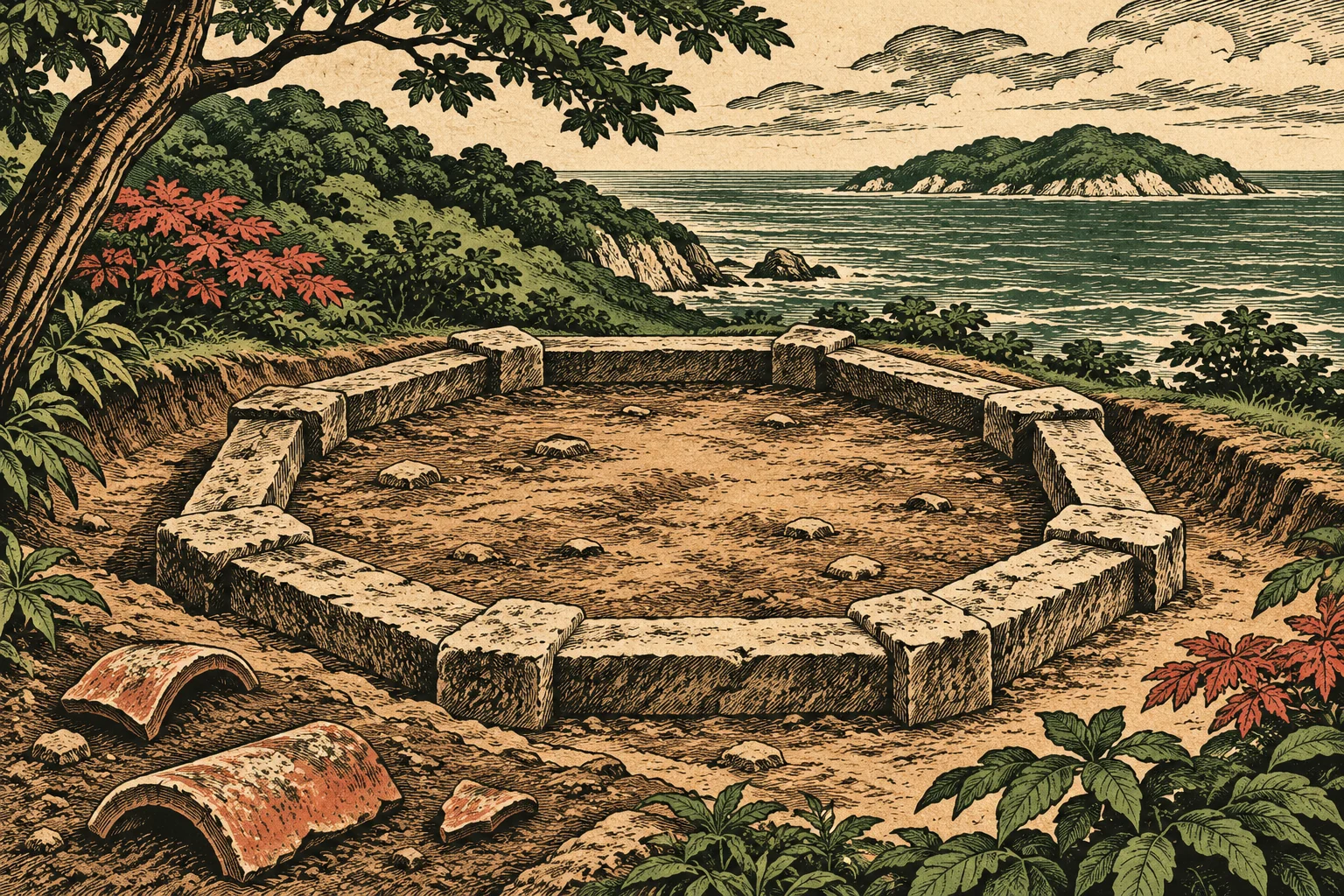
None of the building above ground survives. So its shape and purpose are still open. The team found what may be rows of stones or stone masonry around the foundation and traces of burnt earth nearby.
The case for a sacred building comes down to location and roofing. The foundation sits in an area south of the settlement that the researchers consider religiously significant, and it is ringed by roof tiles of a type made under China’s Southern Song dynasty. Among the comparisons the team weighed were the octagonal nine-story pagoda of Hosho-ji in Kyoto and the octagonal three-story pagoda of Anraku-ji in Nagano.
Those tiles are why archaeologists have kept coming back to Kuroshima. Digs at Osato since 2014 have turned up ceramics, tiles and other material from China and from across Japan, and a 2021 report on the second season is in the national database of site reports. Kuroshima is the southernmost place in Japan where Southern Song-type tiles have been found. Others turned up in Hakata, the main medieval port for trade with China, and elsewhere in Kyushu.
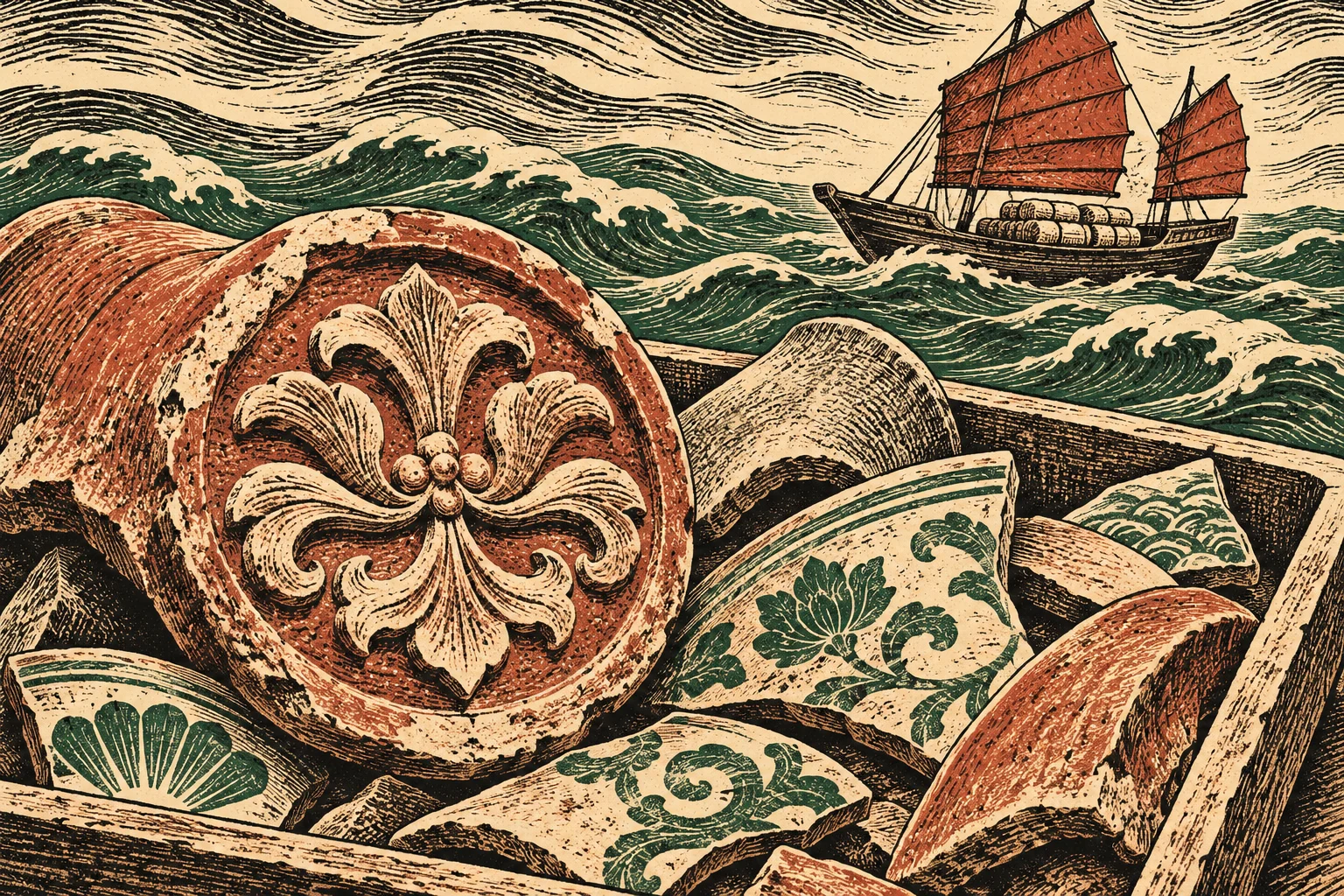
In 2015, Mr. Nakazono and his colleagues found tiles in Ningbo, China, made from the same molds as tiles found in Japan. Chemical analysis confirmed the tiles were made in Ningbo, about 1,000 kilometers away by sea.
What the researchers didn’t have was a building to put them on. The octagonal foundation is the first real architectural evidence of what kind of structure the tiles roofed, and it raises the possibility that Chinese building traditions crossed to Japan along with the materials.
Kuroshima sits on sea routes in southwestern Japan. Its neighbor Iojima was known in the Middle Ages for sulfur, which was exported to China, and the researchers think Kuroshima may have had a part in shipping between Kyushu, Hakata and ports farther off. The team said Chinese merchants may have lived on the island and used it as a trading base, according to KKB.
It isn’t known whether Chinese ships called at Kuroshima directly. Whether Osato was a port of call for Southern Song vessels, and how it was tied to Hakata and mainland Kyushu, are questions for later work, the team said, Kagoshima News KTS also reported on the find.