
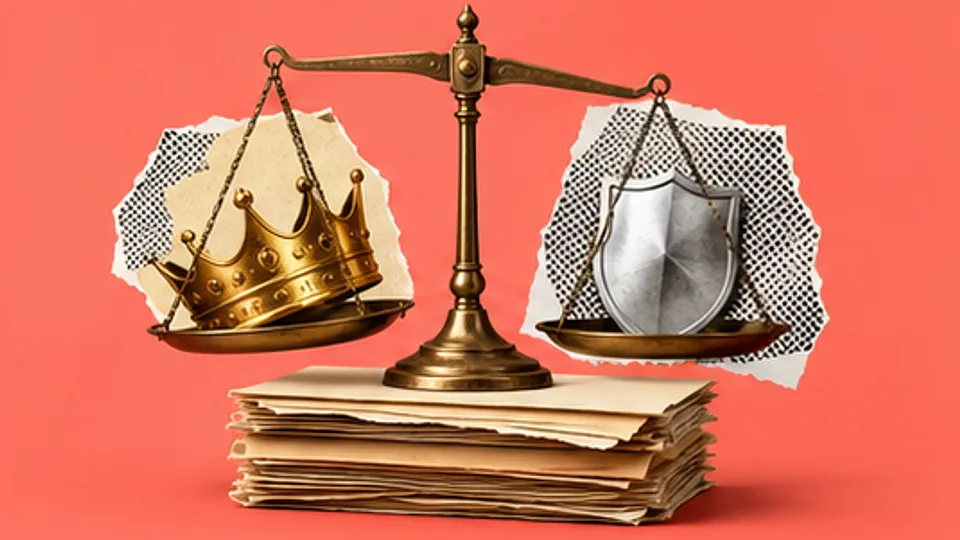
Having been stripped of the title of prince, the dukedom, the royal duties and the use of Royal Lodge, Andrew Mountbatten-Windsor has located one prerogative still available to him: suing the police. King Charles’s younger brother has launched a judicial review against Thames Valley Police, asking the High Court to quash the search warrants behind his February arrest on suspicion of misconduct in public office. A hearing is due on Thursday before Mr Justice Hilliard and will begin in private, the judiciary confirmed on Monday — the immediate dispute being the police’s effort to restrict public access to court documents about a case that has already generated almost nothing but headlines.
The facts in brief. On February 19, his 66th birthday, Mountbatten-Windsor was arrested at his new home on the Sandringham estate in Norfolk — the first senior royal arrested in centuries, according to CNN — and questioned for almost 12 hours at Aylsham police station before being released under investigation. A Reuters photograph of him leaving the station showed a man in visible shock. The warrants that preceded the arrest, issued by an Old Bailey judge, authorized searches of Sandringham and of his former Windsor residence, Royal Lodge. No charges have been filed; police say the investigation continues.
The suspicion behind it all is not directly the Epstein sex scandal that ended his public life, but something adjacent and more bureaucratic: that during his decade as a UK trade envoy, from 2001 to 2011, he shared confidential government documents with Jeffrey Epstein. The assessment followed material released from the U.S. Justice Department’s Epstein files. The Guardian notes that “misconduct in public office” is an offense with a wide remit — it can cover leaking confidential information, financial misconduct, wilful neglect of duty, conflicts of interest or conduct for personal gain — which makes it a flexible instrument for exactly this kind of suspicion. Mountbatten-Windsor denies any wrongdoing in his dealings with Epstein, denies any personal gain from the envoy role, and says he regrets the friendship. His lawyer did not respond to requests for comment.
The legal posture is interesting, in a dry English way. A judicial review does not ask whether police were right to suspect him; it asks whether the force acted lawfully — whether the warrants were properly obtained and properly executed. In practice this is a way of attacking the foundations of an investigation without having to engage with the suspicion itself, and it comes with a side benefit, noted by the judiciary, of a fight over how much of the court file the public gets to see. If the warrants fall, so does much of what they produced. It is worth noting who invented this posture, in the Telegraph’s framing: the paper said the challenge is the first time a member of the royal family has contested the lawfulness of criminal proceedings against them since the trial of Charles I in 1649. That one ended with the defendant losing his head, and the monarchy shortly after. The stakes here are somewhat lower, though the family will forgive no one for saying so.
Sure. Anyway, the run-up matters. Mountbatten-Windsor stepped back from royal duties in 2019 after a BBC interview about his Epstein friendship so calamitous it has its own cultural afterlife. Epstein was found dead in his Manhattan jail cell that August, a death ruled suicide; Ghislaine Maxwell was convicted of federal sex trafficking in 2021 and sentenced to 20 years in 2022. Virginia Roberts Giuffre, who accused Mountbatten-Windsor of sexually assaulting her at 17 — an allegation he denied before settling her civil lawsuit, insisting he never met her — died at her Australian home last year, a death also ruled suicide. After her posthumous memoir appeared in 2025, amid public outcry, King Charles stripped his brother of the right to be called a prince at all. A U.S. congressional committee has been interviewing figures with Epstein ties, Bill Clinton among them; some members would like a word with Andrew, but the committee has no power to compel him to appear, which he has presumably made a note of.
Thames Valley Police, for its part, said only that it is “engaged in legal proceedings in relation to warrants previously obtained from the central criminal court” and that with proceedings ongoing, further comment would be inappropriate. Translation: we will see you, or rather not see you, at the private hearing on Thursday. There is a certain symmetry here that Buckingham Palace cannot love. For 25 years the story of Andrew and Epstein has been, at its core, a story about powerful men, private spaces and the paper trails that eventually surface from them. Now the former prince is in court arguing that the state trespassed on a private space and mishandled the paperwork. The institution that spent decades absorbing damage on his behalf is not a party to the case. The hearing is closed to the public. He is, at last, handling it like any other private citizen with good lawyers — which is, one gathers, precisely the treatment he has spent seven years trying not to receive.