
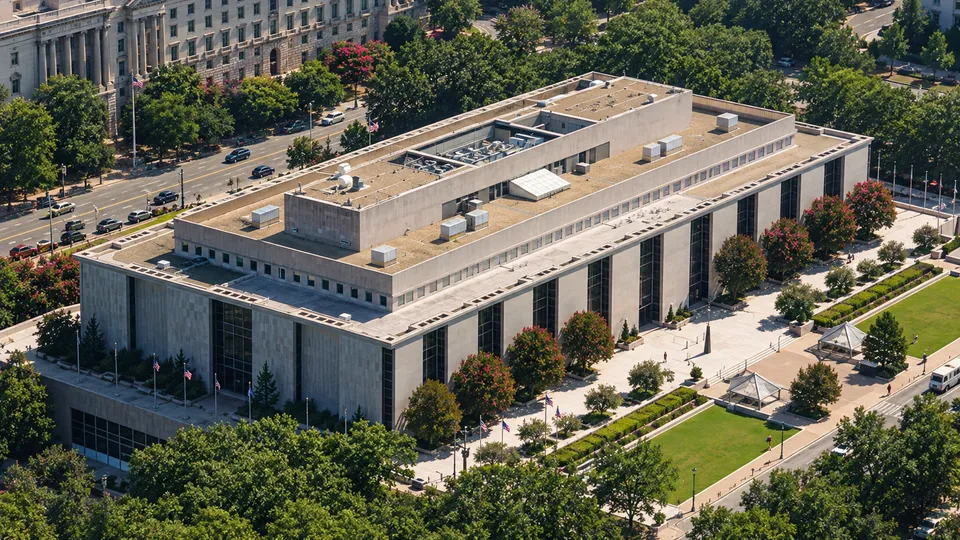
The Smithsonian Institution used to be the rare Washington body that could argue about Benjamin Franklin without becoming an argument about itself. That refuge is shrinking. According to ProPublica, an exhibit at the National Museum of American History that opened in November 2021 noted that before Franklin became an abolitionist he enslaved people in his household, and declared that his electrical accomplishments were, “in part, enabled by slavery.”
The exhibit went further, but carefully. It speculated that Franklin may have used enslaved people in electrical research, while conceding that he seldom named assistants and that indentured servants and enslaved household members “could also have been used, although we may never know for certain.” That hedge did not save it. A 162-page White House report released in July treated the display as evidence that the museum had suffered “ideological capture” and moved from historical education towards “extreme political activism.”
The institution, which draws about 15 million visitors a year to 21 museums, has weathered storms before, notably the 1995 row over the Enola Gay at the National Air and Space Museum. It mostly retained bipartisan protection even as the rest of America picked fights over memory. The exceptionalism now looks brittle: President Donald Trump signed an executive order in March 2025 accusing the Smithsonian of “divisive, race-centered ideology,” and the July report arrived on July 4th, in the semiquincentennial year.
The pressure has been theatrical as well as budgetary. Later in July two House committees held hearings at which Republicans berated Anthea Hartig, the American-history museum’s director, over items including a “chrome and rubber crotch harness”. Mr Trump then ordered the Department of the Interior to post signs outside the museum warning visitors about “ideological capture”; they have not appeared, but in late August Doug Burgum, the interior secretary, told the Board of Regents that other agencies “cannot in good conscience continue to support the Smithsonian under current leadership.”
The soft underbelly is money
Formally the Smithsonian sits beyond the executive branch. Its 17-member board is led by the chief justice and includes six members of Congress, three from each party, plus nine private citizens and the vice-president. Informally it is exposed: 62% of its funding, more than $1 billion a year, comes from the federal government. On September 8th Lonnie Bunch, the institution’s first African American secretary, said he would step down at 73, offering the terse explanation that “it has been stressful.”
It is tempting to file the assault beside Mr Trump’s other renovations of Washington symbolism: shuttering the Kennedy Center, replacing the East Wing with a huge ballroom and planning a 250-foot arch near Arlington National Cemetery. ProPublica’s account suggests something older and more awkward. Complaints had come from board members before Mr Trump returned to office, and the American-history museum had long been unsure whether its job was to unify a nation or to audit one.
The museum was born divided. The National Museum of History and Technology opened on the Mall in 1964 promising, in Remington Kellogg’s words, a “clear understanding of the inspiring story of the United States.” Renamed in 1980, it kept machines and myths under one roof. Ivan Selin, a former board chairman, warned that without throwing everything out it risked becoming “apples and oranges”; Ada Louise Huxtable had earlier dismissed the building itself as neither classical nor modern.
Conservative unease predates Maga. In 1999 David Brooks complained that the museum skipped the Constitutional Convention, Lewis and Clark and the Great Depression while elevating “multicultural grievance”. A commission led by Richard Darman responded in 2002 that the museum lacked coherence and balance, urging a chronological introduction that would celebrate achievement while treating failures honestly. That formula is easy to endorse and hard to hang on a wall; Brent Glass, who became director after the report, called the space challenging.
The museum’s turn after 2020, amid pandemic and the murder of George Floyd, echoed academia and other progressive institutions and made it an easier target for an administration eager to punish wokeness. Garret Graves, a Republican former congressman who sat on the board in 2023 and 2024, says he warned of “a day of reckoning”: join a guided correction or suffer an abrupt one. The likeliest outcome is not a sudden conversion but a slower narrowing, as curators learn which truths are expensive.