
When Amazon puts a big banner on its homepage with a button that says “Act now,” you’d normally expect a discount on an air fryer. This week the banner in New York City says: “ATTENTION NYC Council could add up to $5 per order.” Scharon Harding reported for Ars Technica that she sees the vertical banner when she’s logged in, plus a smaller version on an order confirmation page. Bloomberg reported that app users get it as a pop-up. Amazon hasn’t said how it works out who counts as a New Yorker: saved addresses, device location or something else.
Hit “Act now” and you don’t get a deal. You get a page that helps you contact your City Council member, and this:
Right now, Amazon works with a network of small delivery businesses that are deeply embedded in your communities. If this legislation passes, we’d no longer be able to work with them, and we’d be forced to consider moving our operations outside of the city. That would likely mean slower and more expensive delivery for millions of customers in New York City, while also threatening small businesses and their thousands of employees.
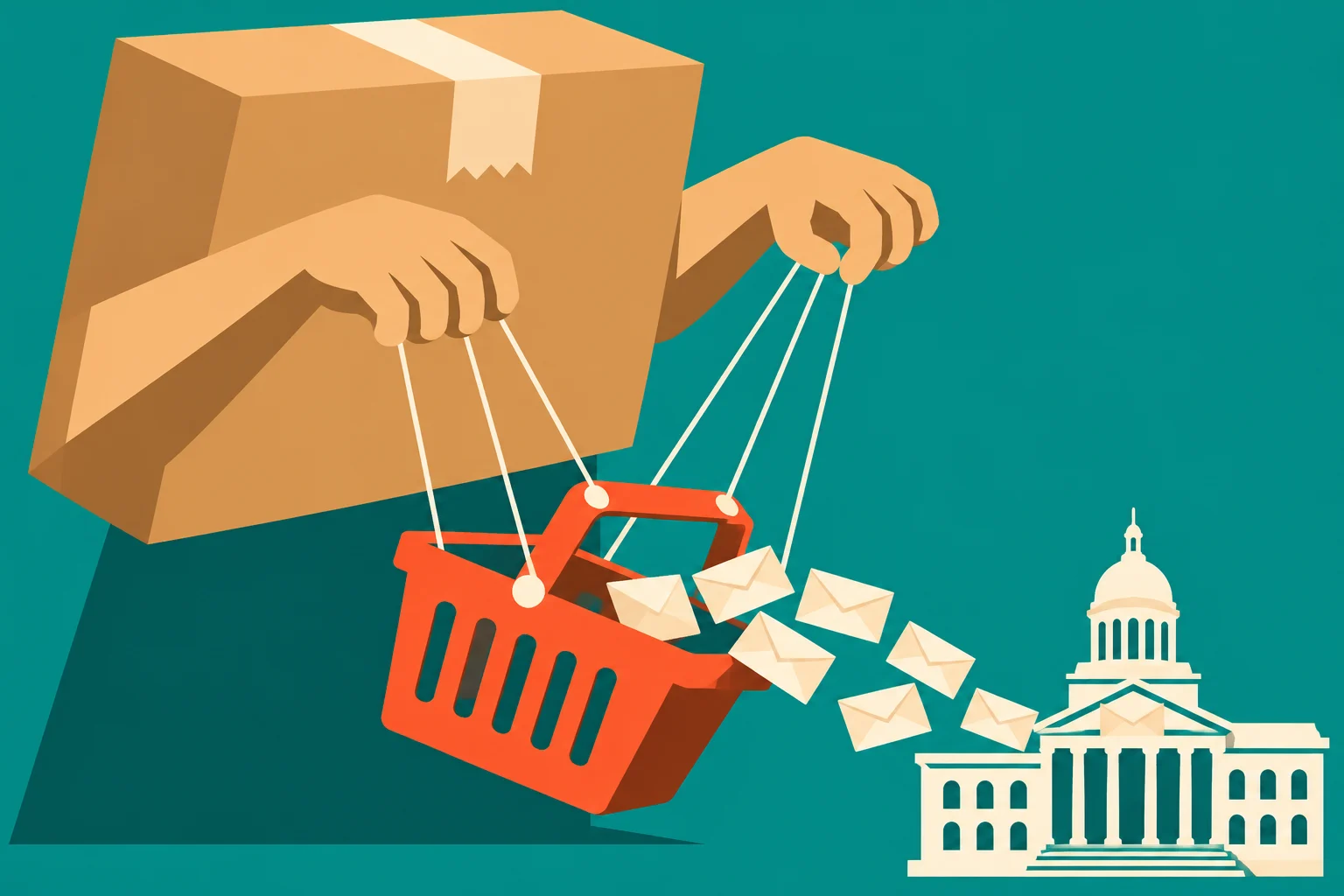
The legislation is Introduction 0518-2026, known as the Delivery Protection Act. Amazon has opposed it publicly since April. According to CNBC, the bill was introduced in February and would require companies running last-mile delivery facilities in the city to employ their delivery workers directly instead of going through subcontractors. Those companies would also need city licenses and would have to meet new safety, training and worker-protection standards. For Amazon, that means bringing the drivers at its third-party delivery companies onto its own payroll, which would undo the contractor model it has used since 2018.
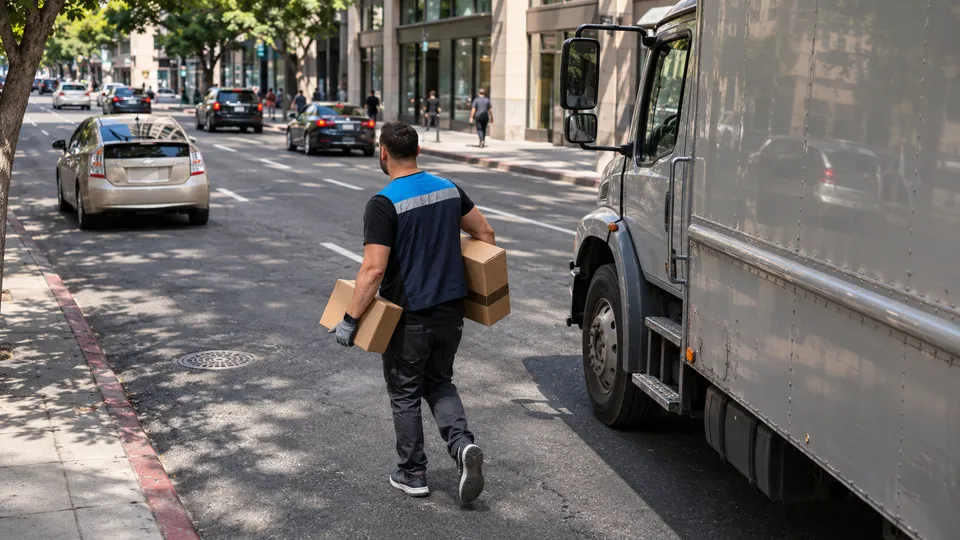
It helps to spell out why the contractor model exists. Picture a delivery system where Amazon owns the packages, the warehouses, the routes, the software and the customer, but the person driving the van works for a small separate company. That company is the employer, so the wages, the injuries, any union drive and the van double-parked on Second Avenue all belong to it on paper. Amazon sets the volume, and someone else carries the liability. Supporters say that’s the whole point of the bill. Mayor Zohran Mamdani said in August that the subcontractor model “leaves workers vulnerable and corporations free to avoid accountability for reckless conditions on city streets.” In the previous Council session, then-Comptroller Brad Lander’s office tied the growth of e-commerce to more crashes, pollution and workplace injuries, and urged passage of an earlier version of the bill. And rews has covered the 14,000 traffic citations Amazon vans drew in New York.
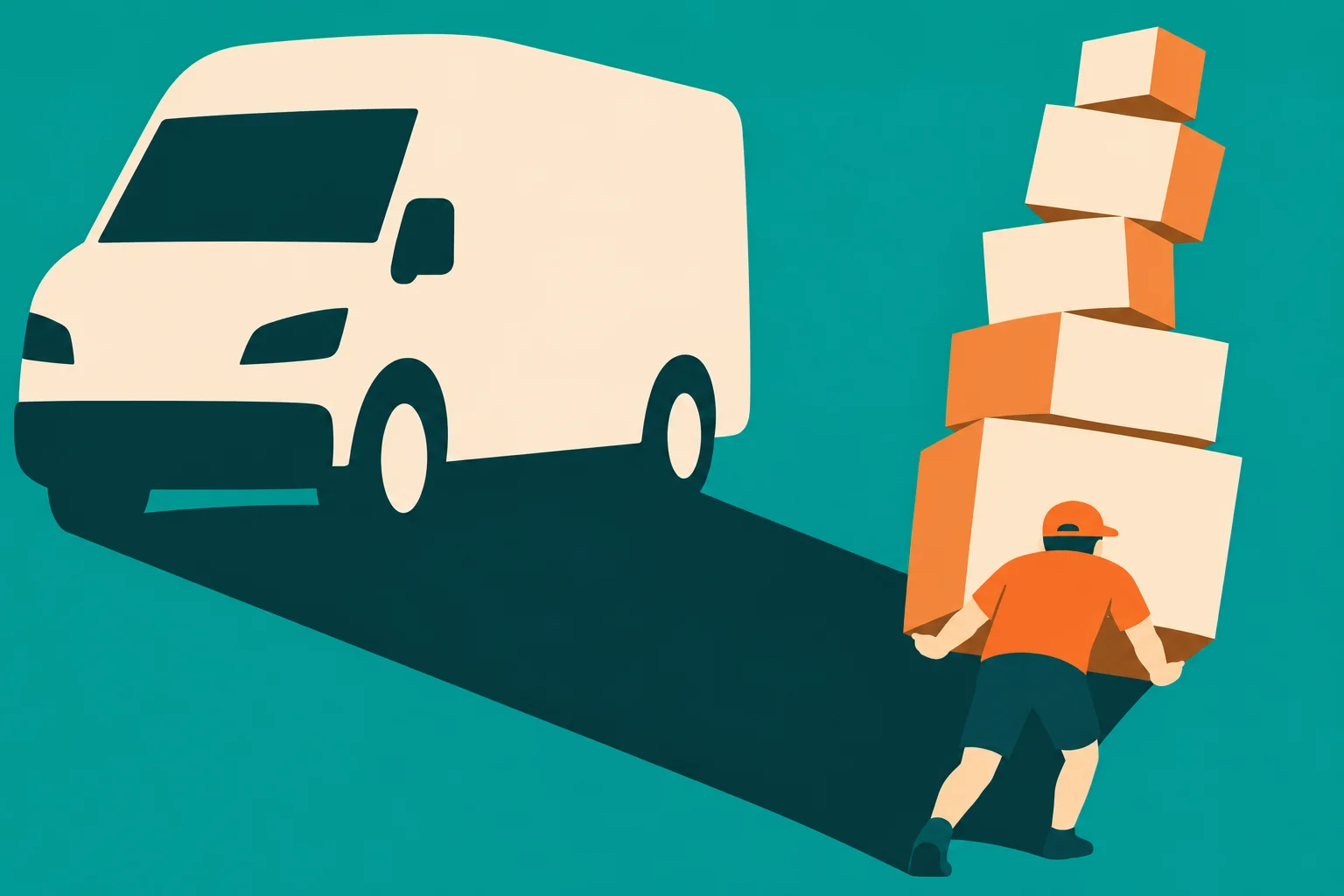
Amazon told the Council in testimony earlier this year that it works with more than 40 local delivery businesses that employ over 5,000 people in the city. That’s roughly 125 workers per business, which is real but not exactly corner-shop size. The pop-up says the bill would mean Amazon could “no longer be able to work with them.” That’s accurate, in a circular way. The bill is about whether those businesses should exist as a separate layer between Amazon and its drivers, so of course passing it would end the arrangement. The jobs don’t obviously go anywhere, since the packages still need delivering. What would change is the name on the paycheck, unless Amazon does what it says it would “be forced to consider” and moves operations out of the city. Delivering New York packages from outside New York is presumably part of where the “slower and more expensive” bit comes from.
Up to five dollars
Then there’s the $5, where “up to” is doing a lot of work. Amazon’s own post, dated November 19, repeats the headline figure but doesn’t explain how it was reached: no breakdown, no annual cost, no count of affected orders. Fox Business also pointed out that the company hadn’t shown how its estimates turn into a per-order increase. A ceiling with no method attached isn’t really a forecast. It works more like an opening position. It’s also a slightly odd warning, because the company that would add $5 to your order is Amazon. The Council doesn’t set Amazon’s prices.

City officials made that point immediately. Council Speaker Julie Menin told Business Insider: “It defies logic that Amazon, a $3 trillion corporation, would raise New Yorkers’ cost of living if it’s forced to adhere to basic regulations and worker protection.” Mamdani wrote on X: “Amazon is a multi-trillion dollar company. If Jeff Bezos adds $5 to your order, it’s not because of City Council’s efforts to protect workers’ rights and keep our streets safe.”
The novel part isn’t Amazon having a view, since it has lots of views. It’s the venue. CNBC noted that the company has rarely used its storefront and app for its own political positions. Uber and Lyft have run in-app campaigns during their own legislative fights, but a pop-up about a bill on a shopping site is still unusual. Amazon spokesperson Kelly Nantel said the notices were meant to be “transparent with our customers.” Amazon also says 20,000 customers emailed Council members in the first six hours. The Council has 51 members, so if those emails were spread evenly that’s around 390 per member, arriving at about 55 a minute. Few lobbying shops can match a checkout page for reach.
So far, though, the bill hasn’t moved in either direction. A majority of Council members reportedly support Intro 518, but it has been laid over in committee and no vote has been scheduled. Menin is reportedly negotiating with Amazon, the city’s lawyers and the Teamsters, who back the bill and rallied with Mamdani in October to push her to schedule a vote. Amazon says it has invited every Council member to visit its delivery stations.
Every other “Act now” button on Amazon is there to get you to buy something before the price goes up. This one asks you to email a politician because Amazon says it might raise the price itself.