
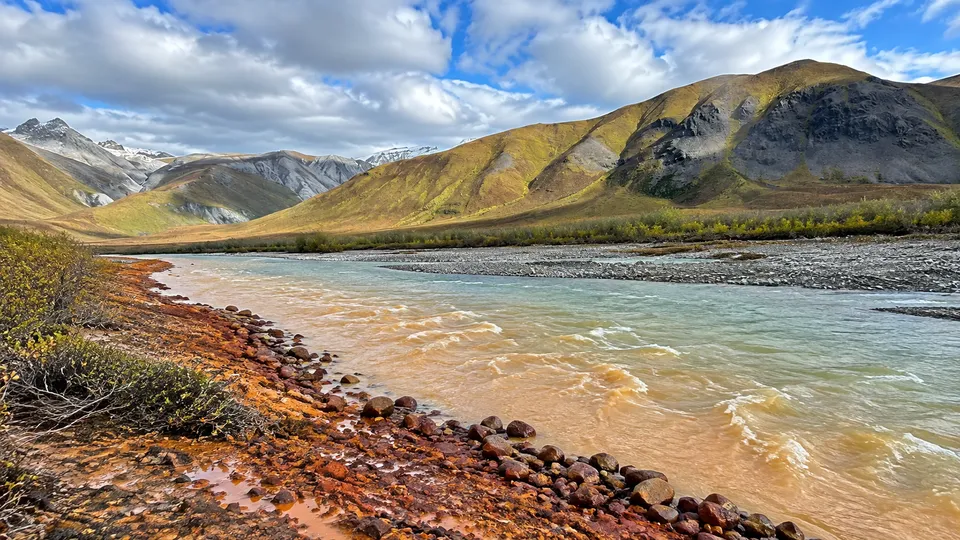
In parts of Alaska the water now looks as if it has been left out in the rain. Rivers across the Brooks Range are turning orange and acidic as thawing permafrost releases iron, sulphuric acid and other metals long locked in frozen ground. A study published in AGU Advances found some “rusting” waters more metallic and acidic than drainage from metal mines. On the Salmon River, leaching raised metal levels as much as seventy-fold some 60 miles downstream.
The mechanism is newly visible, not newly imagined. Permafrost is supposed to stay frozen; as temperatures rise it thaws, exposing carbon, nutrients and minerals to oxygen and sending iron and acid into nearby streams. Researchers spent two years sampling six watersheds in the Brooks Range, measuring acidity, temperature and oxygen and then comparing chemical profiles. The main stems of rivers buffered pH and did not become more acidic, Brett Poulin of the University of California, Davis said, but metals increased downstream and “can be transported very long distances.”
Long-term records point to a trigger. Researchers found large spikes in sulphate and zinc in 2019, Alaska’s warmest summer on record; rusting has since been recorded in more than 200 Alaskan rivers and in waterways across much of northern Canada. Taylor Evinger, the study’s first author, explained that deep thaw let water travel further into mineral-rich soil: “We think water went deeper into the soil because of soil thaw, interacted with these minerals, and all of these watersheds were triggered around the same time.”
What unsettles scientists is that this was not in the script. “This was a process that was not forecast, predicted, or included in any assessment of how the Arctic will change under a warmer climate,” Mr Poulin said, “but we’re seeing it in rivers across the Arctic.” Even rivers in otherwise pristine national parks now show acid-rock drainage of a sort normally associated with active or abandoned mines. Earlier remote sensing suggested rivers can recover gradually after acidity spikes, but the authors judge those recoveries minor beside recent shifts.
The consequences for fish and people remain uncertain. No massive fish die-offs or village water-quality problems have yet been directly tied to orange rivers, Ms Evinger said, though that cannot be ruled out as more waterways change colour. There are fears that rusting contributed to the collapse of the chinook salmon fishery in the region, but the evidence is incomplete. Hundreds of watersheds now have acid-rock inputs, in Ms Evinger’s words, in rivers “pretty much untouched” by industry. The Arctic’s new palette is a warning from places with no chimneys to blame.