
For three years, the em dash has been the involuntary confession of AI-assisted prose — the tell that a chatbot had passed through the room. Now, Business Insider reports, the AI industry is trying something more radical than detection: asking employees to confess voluntarily.
On Monday, Varun Anand, cofounder of the AI sales-and-marketing startup Clay, posted his company’s newly rolled-out AI writing policy on X; the guidelines had been shared on LinkedIn last month. Clay does not ban chatbots for brainstorming or drafting. It simply assigns ownership of the result.
If a reviewer asks, ‘What did you mean by this line?’, it’s not acceptable to reply with ‘Oh sorry, AI wrote that, just ignore it.’
The policy, which began with Clay’s engineering team before spreading companywide, rests on a sturdy theory: writing is itself a form of thinking, and dispatching a long AI-generated document after typing a short prompt merely transfers the labor of making sense onto everyone who has to read it. The machine worked for seconds; the colleagues pay the hours.
Other tech leaders answered the post with their own disclosure regimes. Figma CEO Dylan Field said the design software company’s rule is straightforward: workers who use AI in their writing process must put ‘written with AI’ at the top.
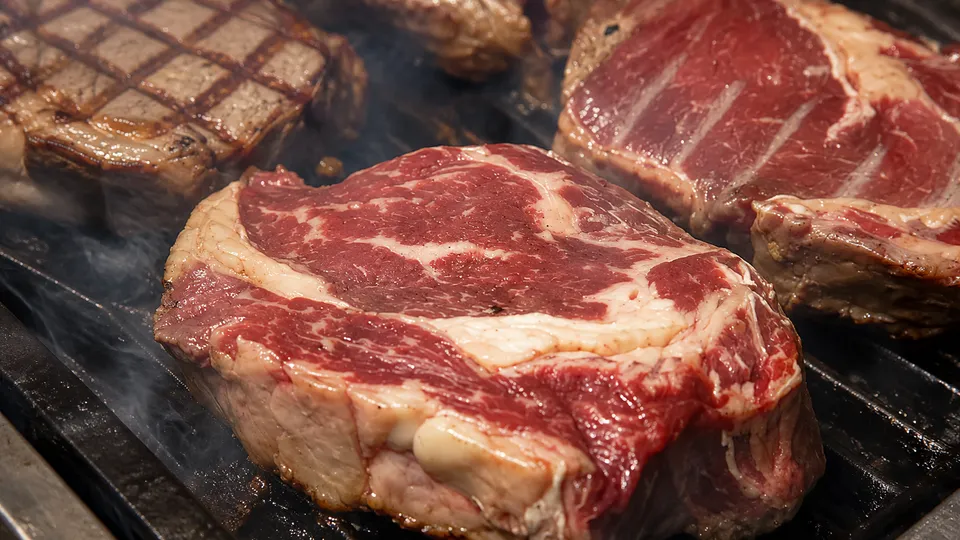
Bobby Ghoshal, founder of the AI shopping startup Dupe.com, went further into heraldry. At Dupe, pasted-in AI copy gets tagged with a steak emoji — the symbol marking the employee as a ‘meat proxy’ for words the machine produced. ‘Varun is touching on a live wire inside every company right now,’ Ghoshal wrote.
Then there is Exa, an AI research lab, whose policy is the one no lab thought to patent: prohibition. ‘No external comms (tweets/linkedIn post/and more) can be AI written, and everything needs to be hand written,’ employee Ishan Goswami replied. ‘If you don’t take the time to write it, why should anyone take the time to read it.’
All of this answers a complaint spreading through workplaces: AI has made it effortless to produce text, which means the cost has simply relocated to the reader, who is now spending more time deciphering than the writer spent writing.
The labeling project extends well past in-house etiquette. In August, Anthropic — fresh from signing on to the EU AI Act’s transparency code — began embedding an imperceptible watermark in text generated by its new Claude models. The mark does not change the text’s meaning or readability, travels with it when copied and pasted, and, the lab concedes, ‘may persist through some editing.’
The visibly riskier media got labels first. Google’s SynthID can embed invisible watermarks in AI-generated images, video, audio and text; OpenAI has added Content Credentials to images from DALL-E 3, ImageGen and Sora, and this year began adding SynthID watermarks to supported images and audio made with its tools. The visible world is increasingly certified. The unlabeled remainder is mostly prose — which is what the steak emoji is for.
An industry that shipped software able to imitate any writer on earth has concluded that its own hallways require provenance labels, disclosure forms and one small picture of a cow. For a verdict on AI writing, watch the AI companies: they know precisely what the product is worth, and they would like a signature under it.