
Every morning, Mahmoud Khalla goes to the cemetery. His family is there now, near Jabalia an-Nazla in northern Gaza. For 29 months, their remains lay beneath the five floors of the house where they had gathered. Having somewhere to visit them is a change he describes as a relief.
Khalla, 40, lost 39 relatives when an Israeli strike destroyed his family home in Jabalia on December 21, 2023, according to Maram Humaid’s reporting for Al Jazeera. His wife and three children were killed, along with his parents, two brothers and their families, his sister and her children, and other relatives. He had gone out shortly before the strike. He was the sole survivor of the family gathered inside.
Fifteen minutes
Israeli tanks had surrounded the area. Food was scarce under the siege. That evening, Khalla left the five-storey building to look for supplies. About 15 minutes later, he heard an explosion. He ran back and found that his own house had been hit.
He and a few neighbours tried to search the wreckage. According to his account, air attacks, quadcopters and surveillance aircraft continued targeting the area. An aircraft dropped a bomb as they searched, forcing them to retreat. Ambulances and civil defence crews could not reach the building that night.
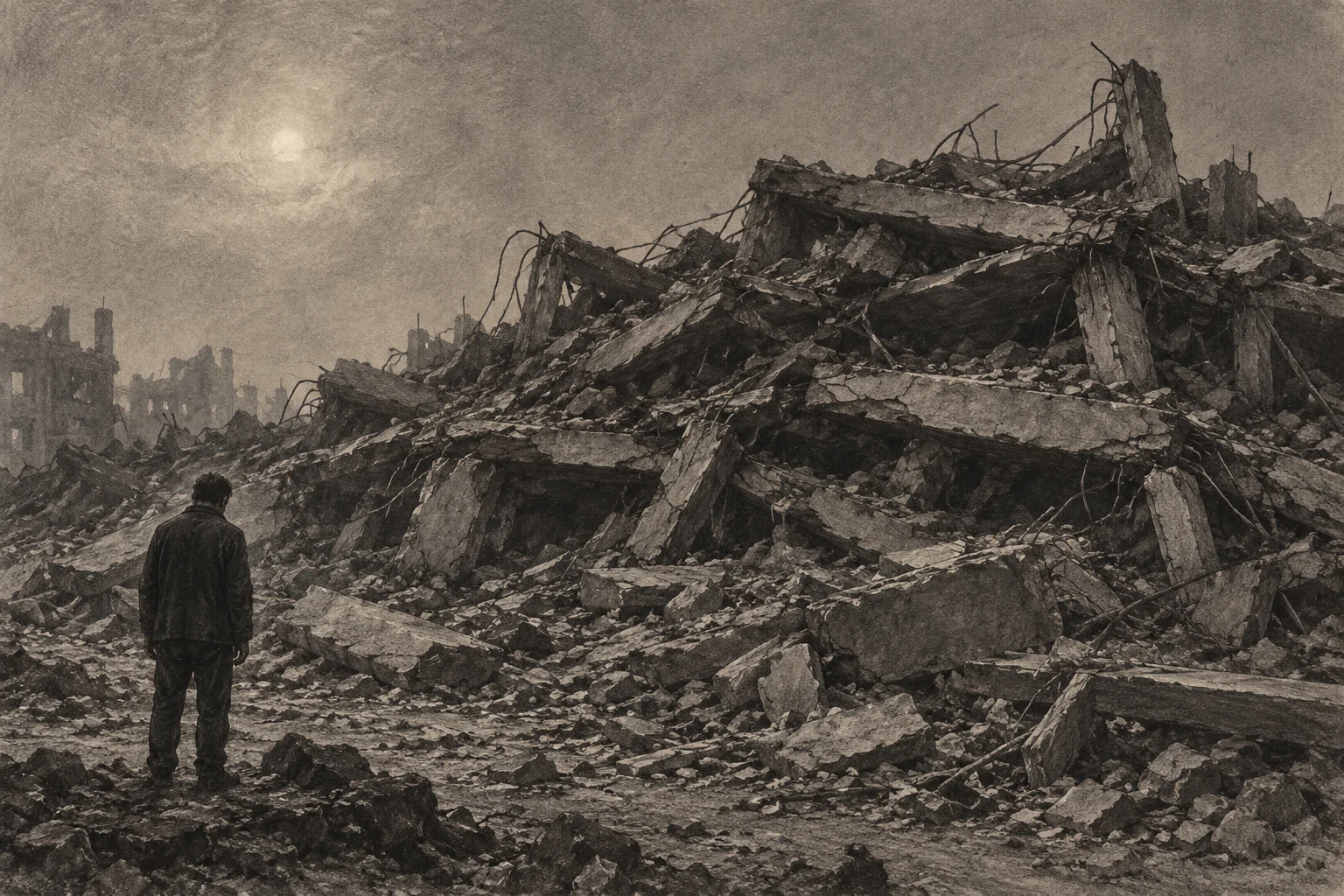
Until morning, he did not know whether anyone beneath the rubble remained alive. He described that night as having “died a thousand times”. When he returned, he called into the ruins. Nobody answered.
“There were five floors of rubble. It was impossible for us to pull anyone out,” Khalla said.
Among those killed was his daughter Huda, 12. In a photograph accompanying Humaid’s account, he holds her picture.
A house across the street
Nine days before the destruction of his home, a strike had hit his uncles’ house across the street, killing 18 people. Other surviving relatives had fled south. The family network that might have given him shelter had itself been killed or scattered.
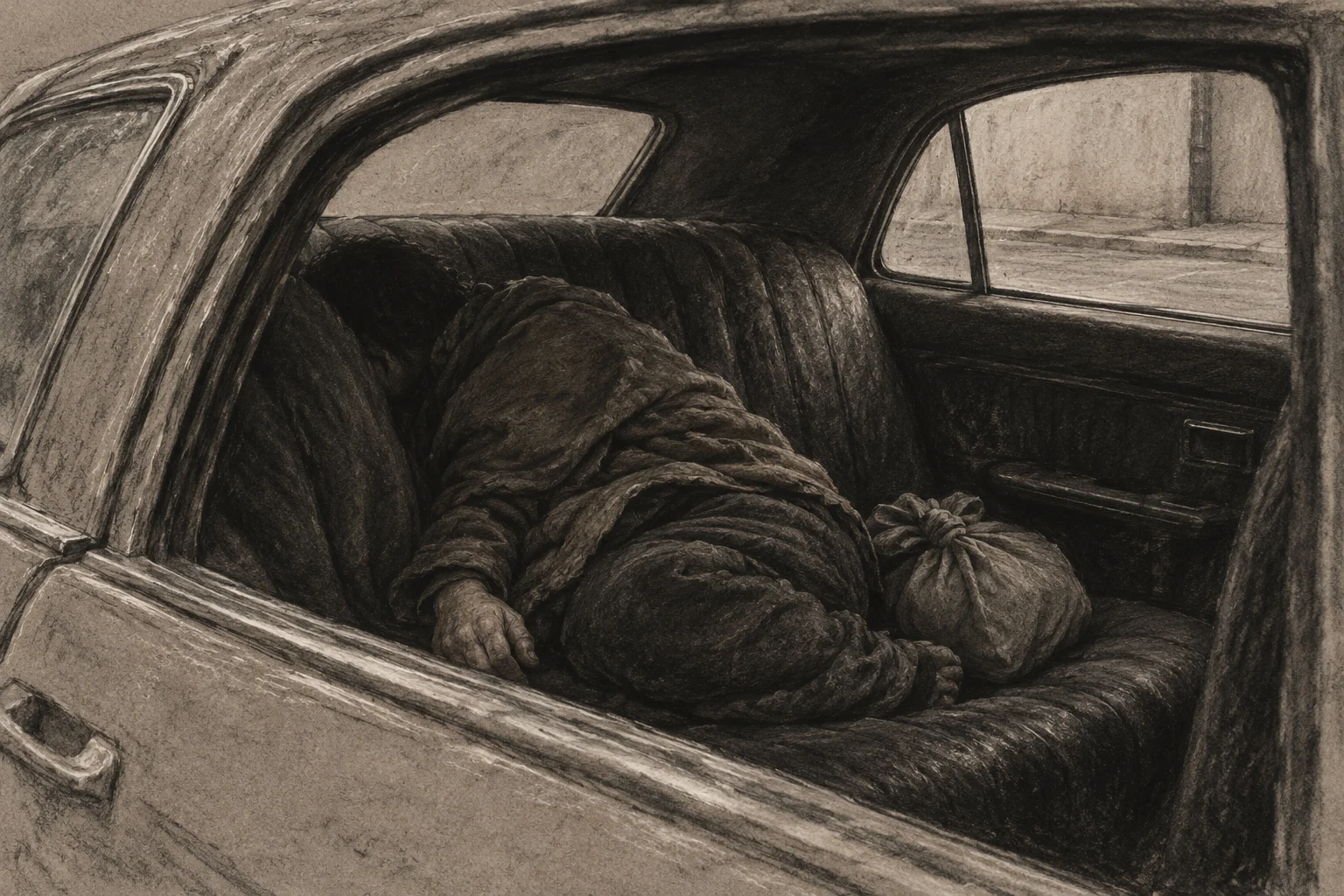
For months, he moved through displacement alone. Finding a place among families to whom he was unrelated was difficult. He slept in the streets, sometimes taking shelter in a car or another vehicle when he found one unlocked. He struggled to find food while remaining exposed to attacks.
His account measures survival in immediate uncertainties: whether a bullet would strike, whether a rocket would come, whether there would be food, where he would sleep. Alongside these was another, unrelenting knowledge: his family remained beneath the house, without burial.
One person in a day
A ceasefire was announced in October 2025. Nearly a year later, Al Jazeera reported that an estimated 8,000 people remained missing in Gaza, likely beneath the rubble. The account did not identify the body responsible for that estimate. The difficulty of recovering the dead has also been described in earlier reporting on Gaza’s missing.
Khalla sought help from the civil defence, the Red Cross and other authorities. Shortages of equipment and the scale of the requests confronting them meant they could offer little assistance. Recovery eventually depended on friends and neighbours volunteering to work with him by hand.
They began around May. The work took three months. Sometimes they recovered one person in a day; sometimes recovering one took two days. The first remains they found belonged to two relatives who had been sheltering with the family. The last were those of his sister and her children, buried together beneath the wreckage.
Khalla buried his relatives in the cemetery near Jabalia an-Nazla. “I felt a great sense of relief when I finally buried them,” he said. In the mornings, he visits their graves, keeping a routine through which he imagines his family is still around.