
A trade preference can look permanent from the factory floor and provisional from the office that grants it. On September 2, Donald Trump signed legislation extending the African Growth and Opportunity Act through the end of 2028 after overwhelming support in Congress. Two months later, on November 2, his administration announced that South Africa and Rwanda would lose eligibility from January 1, 2027.
For Hakeem Najimdeen, writing in Al Jazeera, the reversal exposes the central weakness of the arrangement: African economies can build exports and employment around privileges that Washington may withdraw when its political priorities change. His argument is not that the programme has produced nothing. It is that its benefits arrive without dependable tenure.
The open door that closes
AGOA was enacted on May 18, 2000. It now covers 33 eligible sub-Saharan African countries, allowing thousands of products to enter the United States duty-free. It was promoted as a means of encouraging growth, expanding trade and advancing economic and political reform. Najimdeen credits it with supporting an estimated more than 300,000 direct jobs in Africa and 1.3 million indirect jobs.
The trade figures show both its reach and its narrowing. A 2024 US Trade Representative report put two-way goods trade between the United States and sub-Saharan Africa at $47.5bn in 2023. Imports under AGOA and the Generalized System of Preferences accounted for $9.7bn, including $5.5bn in non-oil goods such as clothing and agricultural products.
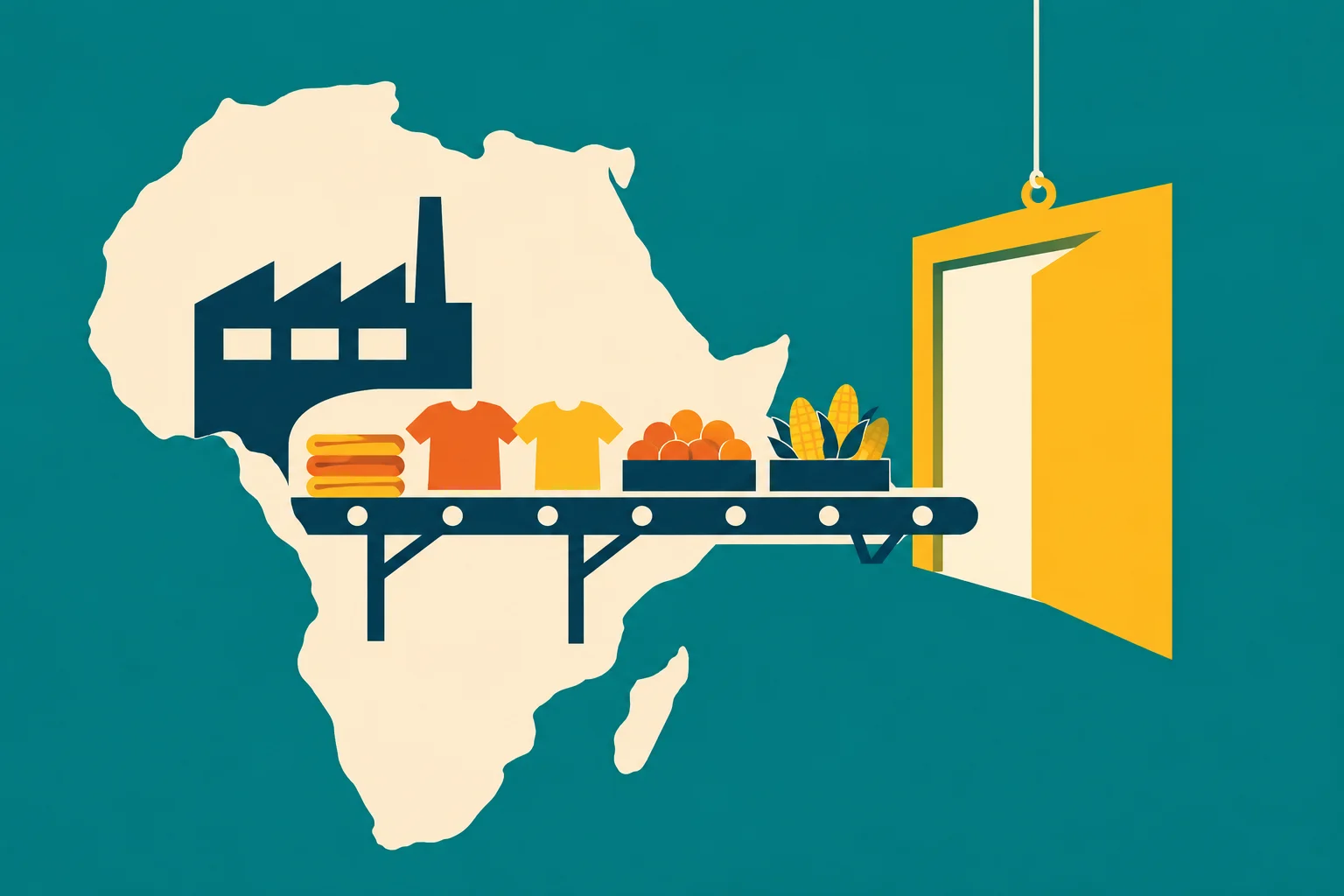
More recent numbers are less reassuring. The Congressional Research Service found that US imports receiving AGOA duty-free treatment fell from $7.9bn in 2024 to $5bn in 2025. The German Institute of Development and Sustainability calculated that the share of American imports from sub-Saharan Africa using AGOA and GSP preferences dropped from more than 80 percent in 2008 to about 24.7 percent in 2021, against a background of uncertain eligibility and short renewal periods.
The gains have also been unequally distributed. South Africa, the programme’s largest beneficiary, exports goods worth billions of dollars annually to the United States, while many other eligible countries have struggled to use its preferences fully. And because Washington administers the system unilaterally rather than through a bilateral treaty, it can remove or restore countries according to its own assessments of market reform, human rights and labour standards.
The political invoice
Najimdeen argues that geopolitical interests often outweigh those published criteria. South Africa has deepened economic and political relations with China and Russia, while Washington has accused it of obstructing American trade and investment. Trump has also made allegations of a “white genocide” there. Rwanda, meanwhile, has come into conflict with American interests because of its alleged support for the M23 rebel group in eastern Democratic Republic of the Congo, a region central to competition over critical minerals.
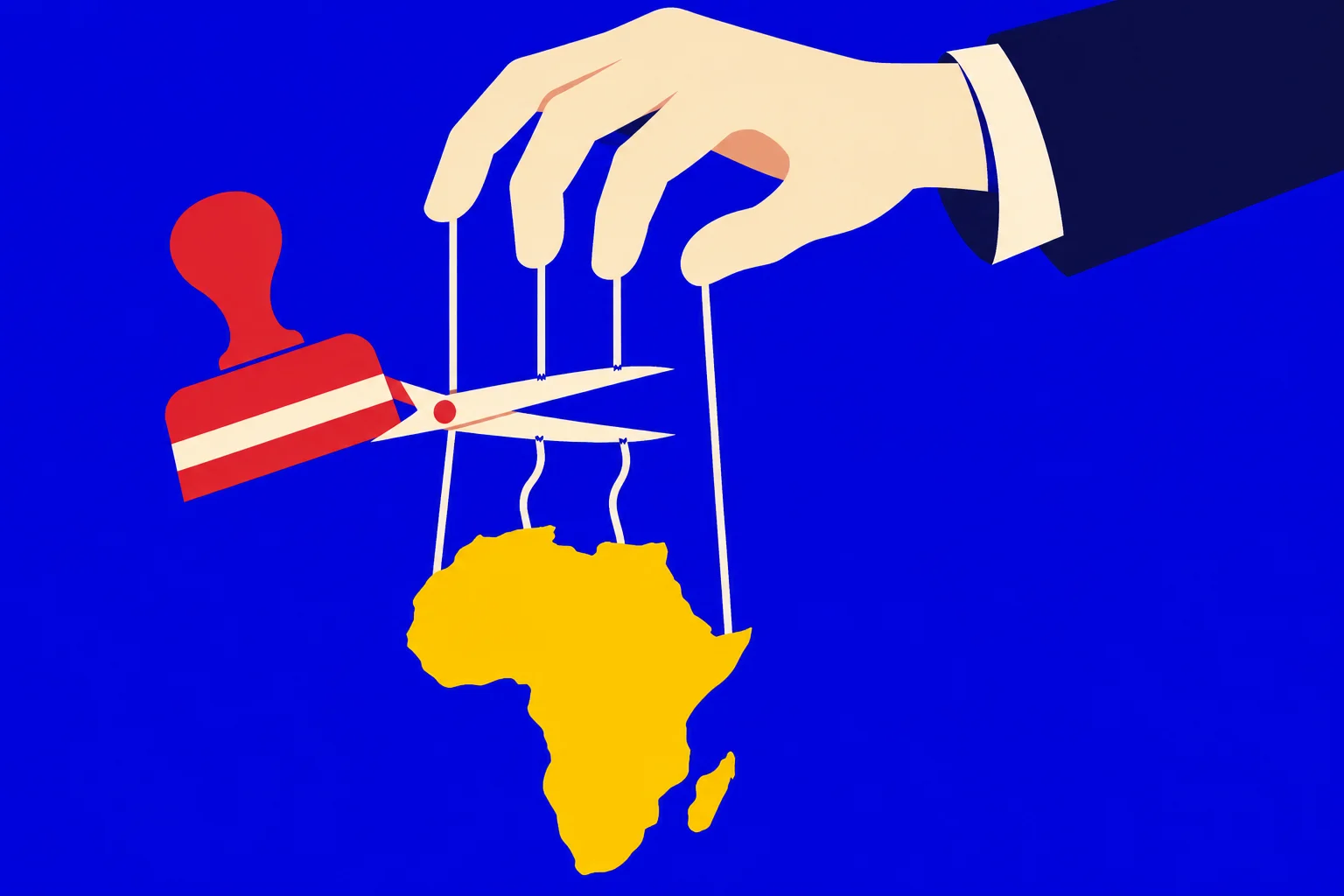
The human cost of withdrawal is not hypothetical in Najimdeen’s account. Ethiopia’s suspension in 2022 led to the loss of thousands of garment-sector jobs. Exporters losing AGOA access can face immediate customs increases of 15 to 20 percent on some products. A signature in Washington can therefore become a closed production line far away, among workers who had no part in the diplomatic quarrel.
A market of one’s own
His proposed alternative is faster implementation of the African Continental Free Trade Area. Signed under African Union auspices in Kigali on March 21, 2018, the agreement entered into force on May 30, 2019; trading began on January 1, 2021. It is intended to unite AU member states in a market of more than 1.3 billion people with combined GDP exceeding $3.4 trillion.
The need is visible in the present division of African commerce. Trade between African nations represents only about 15–18 percent of the continent’s total trade. AfCFTA aims to eliminate tariffs progressively on 90 percent of tariff lines, encouraging internal commerce and giving exporters some protection when Western markets become less accessible.
The agreement also addresses the older economic inheritance identified by Najimdeen: external arrangements have largely preserved Africa’s position as a supplier of raw materials. Regional value chains would allow raw materials from one country to be processed in another and sold to consumers elsewhere on the continent with fewer tariff barriers. The ambition is production rooted closer to the market, not merely another route for exporting what lies beneath African soil.

Some machinery already exists. South Africa, Egypt, Nigeria, Ghana, Kenya, Rwanda and Tunisia have joined trading initiatives using AfCFTA’s preferential tariffs. The Pan-African Payment and Settlement System, launched on January 13, 2022, permits banks and financial institutions to conduct cross-border transactions in African currencies, reducing dependence on currencies such as the US dollar. The AU adopted competition-policy and digital-trade protocols in February 2023 and February 2024 respectively. In August 2026, the AfCFTA Secretariat agreed to modernise and digitise customs systems.
An adjustment fund has been activated, with an estimated financing requirement of $8bn–$10bn to help developing countries and small and medium-sized enterprises adapt to the single market. Much remains expensive and uncertain: tariff and non-tariff barriers must come down, regulations must be harmonised, and governments must finance roads, railways, digital energy grids and other cross-border infrastructure.
AGOA’s extension to 2028 and the exclusions announced two months later describe the same condition from opposite ends. Preference can be renewed without becoming reliable. Najimdeen’s conclusion is accordingly less a rejection of trade with Washington than a refusal to let access to Washington remain the foundation on which African economic independence is supposed to rest.