
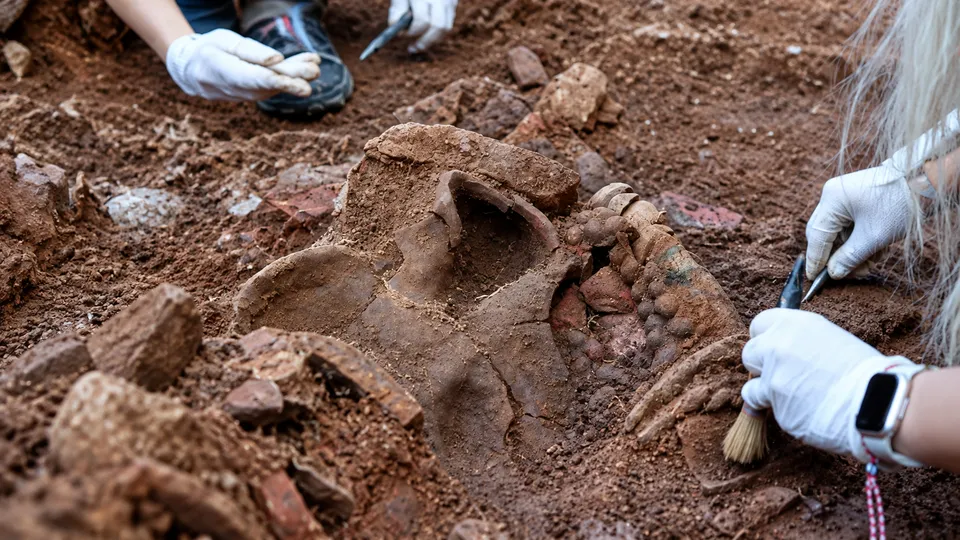
Mithridates VI Eupator ruled the Kingdom of Pontus from about 120 to 63 BCE. He held land around the southern shore of the Black Sea, fought Rome in three major wars, and at some point decided that a king’s name was not enough. He identified himself with Dionysus, god of wine, vegetation, fertility and ecstatic celebration, and took the god’s name as his own. Rome won in the end and the kingdom went under. More than two thousand years later, on a rocky hill above the Turkish city of Ordu, archaeologists are still finding the god he wanted to be.
As Oguz Buyukyildirim reported for Arkeonews, the 2026 season at Kurul Castle has turned up more areas linked to the worship of Dionysus, along with other finds. Ordu Metropolitan Municipality announced the results on October 12. The excavation director, Professor Süleyman Yücel Şenyurt of Ankara Hacı Bayram Veli University, has said the new objects matter a great deal for understanding religious practice at the site. What exactly they are, the team has not yet said.
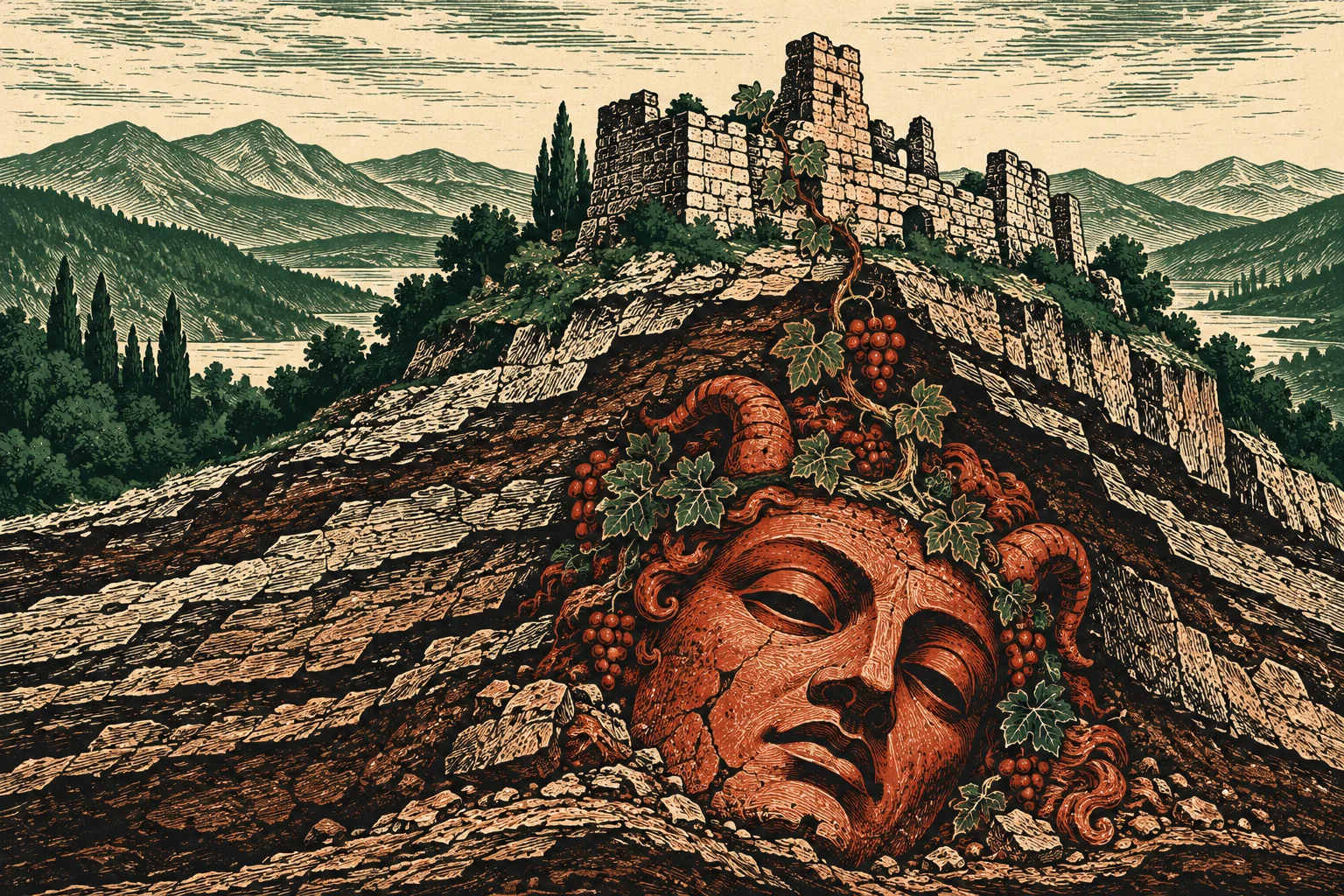
The rock in Bayadı
The fortress stands on a rocky height in the Bayadı neighbourhood of Ordu’s Altınordu district, about 13 kilometres from the city centre. Digging began in 2010. It was the first scientific archaeological excavation in the eastern Black Sea region, where thick vegetation and mountains have kept much of the ancient past out of sight. For sixteen years Kurul has been the reference point that other searches in the region are measured against.
In remarks carried by Turkish media from an Anadolu Agency report, Şenyurt said a Dionysus piece had turned up in earlier seasons, but this year the team had reached areas more particular to the god. He thanked the Ministry of Culture and Tourism and the municipality for funding the work. If the new spaces can be read properly, they may show where the rites were held and how sacred ground was arranged inside the walls.
A king in a god’s mask
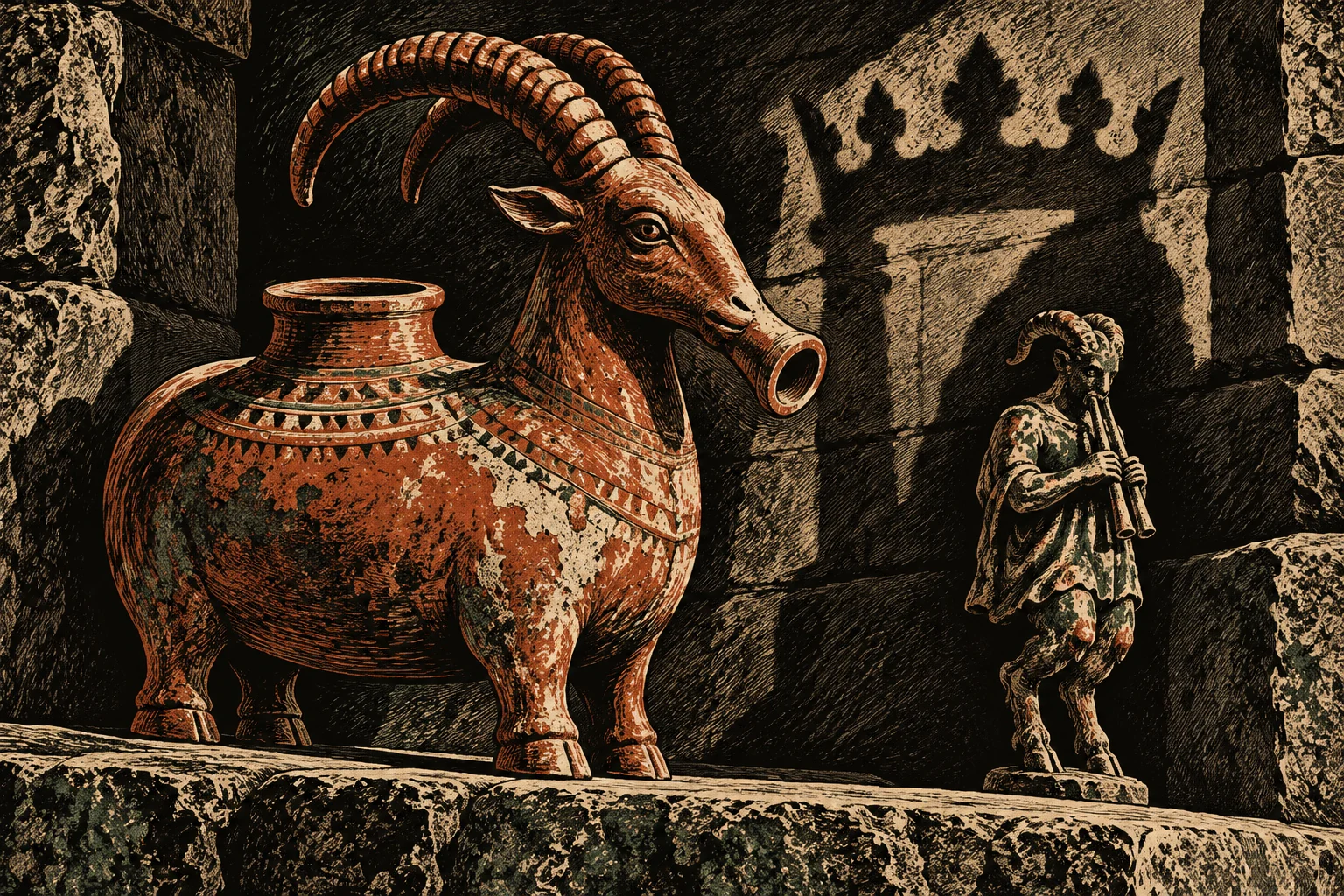
The god has been at Kurul for a long time. Earlier seasons produced terracotta figures of Dionysus as a child and of Pan, the goat-legged god of shepherds, wild country and music, who often turns up in Dionysian scenes and is described in Turkish reports as the figure who raised the infant god. There were goat-shaped composite vessels, which the archaeologists connect to rites for both gods. There were horned images of Dionysus as well, among them a sculpted head found near the entrance to the fortress’s northern terrace.
What follows is reflection, not a finding. A ruler at war with Rome had good reason to want his subjects to see a god when they looked at him. A king can lose a battle. A god is harder to depose. It is hard not to read the clay Dionysus figures on this hill as one small piece of that claim, carried down to a garrison above a river valley.
The Romans were not persuaded.
The goddess at the gate
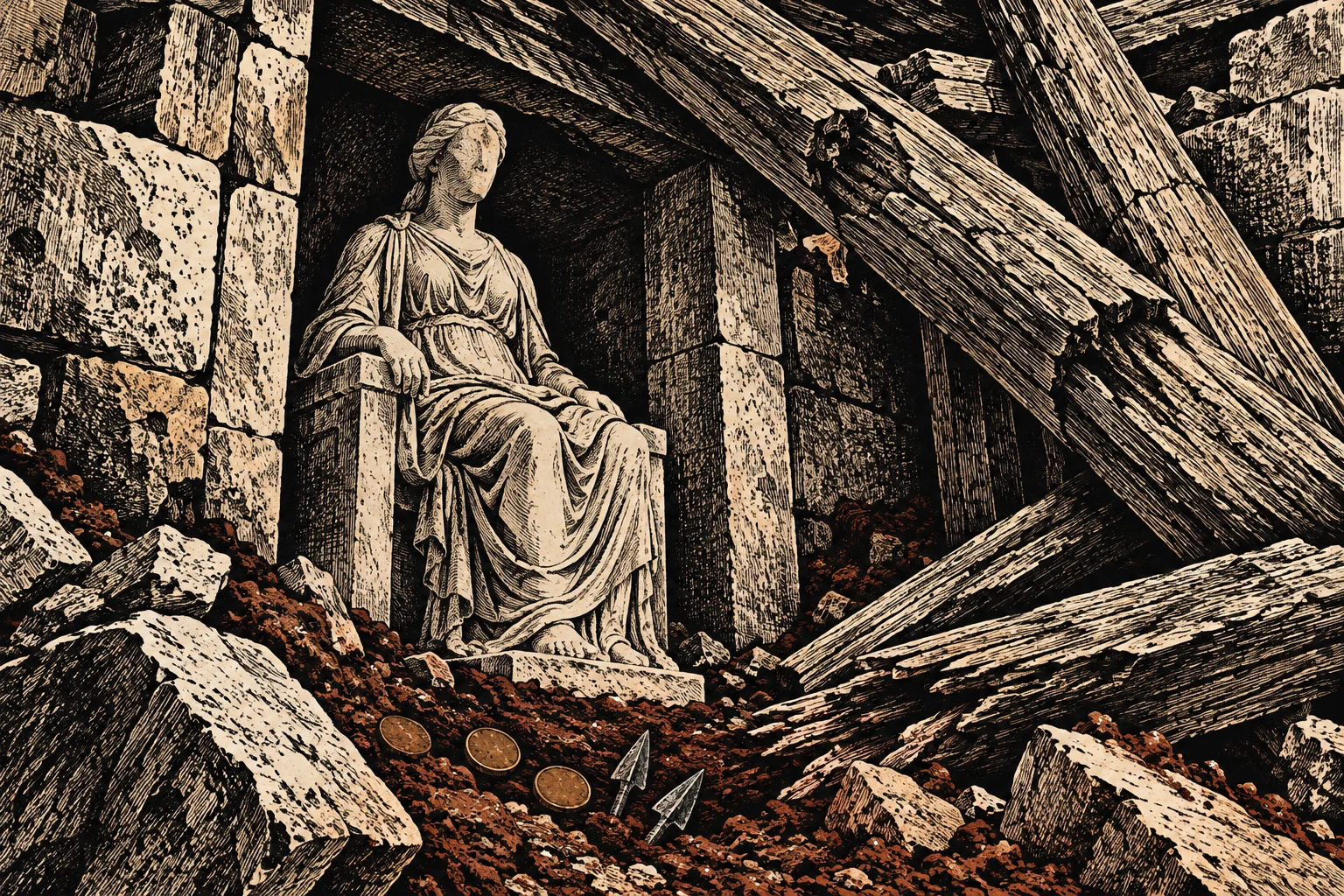
Kurul’s best-known find is older news. In 2016 the excavators uncovered a marble Cybele, the Great Mother of Asia Minor, seated on a throne near the main entrance. The statue stands about 110 centimetres tall and weighs around 200 kilograms. Hürriyet Daily News reported at the time that it was 2,100 years old; this week’s Anadolu report puts it at about 2,150. What makes it unusual is that it was still in place. A wooden structure had fallen over it and protected it for more than two millennia.
In a scholarly study of the statue, the find is described as the first Hellenistic Cybele discovered in situ. It sat in a rectangular niche, with coins of Mithridates VI placed beneath it, and the authors argue that the fortress served cult purposes as well as defence. Coins and arrowheads were found around the goddess, and some may have been offerings. Her place by the gate suggests she was there to guard the people inside.
She did not guard them alone. Later seasons turned up smaller Cybele figures, more images of Dionysus, and objects linked to Apollo and Hermes. The people of Kurul seem to have prayed to several gods at once and hedged their bets.
Keys, lamps, spearheads
Then there is the everyday life of the fortress, which the gods share with the people who served them. The excavators have found fortification walls and buildings, along with bronze keys, pottery, oil lamps, jewellery and coins. They have also found arrowheads, spearheads, axes and stone projectiles. Here people locked doors, lit lamps, wore ornaments and waited for an attack. The archaeologists think domestic, administrative and religious life all went on inside one fortified complex, though they are still working out what each building was for.
Ordu’s metropolitan mayor, Mehmet Hilmi Güler, visited the site recently and was briefed by Şenyurt. He said the finds show Kurul was a settlement, more than just a castle, and that significant progress had been made on the Dionysian period.
By his estimate, about 40 percent of the excavation is finished. The rest of the hill has not been opened yet.