
It started with a black mark. Three and a half years ago Kurt Walde, a mountain guide from Brunico in South Tyrol, was standing on a peak in the Dolomites when he saw a dark spot on the mountainside opposite, sharp against the bare rock around it. “That was the first sign,” he said. He decided that one day he would go down the slope to it. “I have to go and see it up close.”
Walde has worked as a guide for 41 years. He is one of only two guides who take visitors to the Conturines Cave, the famous bear den on the same massif, and on all those tours, he told the BBC’s Josef Cutajar, he kept feeling that the cave was not all there was. “I thought there must be something more.”
In July 2026 he went. According to the provincial government of South Tyrol, the date was 3 July. He came down from the summit on a near-vertical slope of loose rock, at a little over 2,850 metres, carrying a 22-kilogram pack on a morning when he had not been feeling well. He reached a ledge he took for the entrance. It was not. “At that moment I felt a bit desperate,” he said. “I continued to downclimb. Eventually, I reached the end of my rope.” He did the last few metres without it.
The table of stone
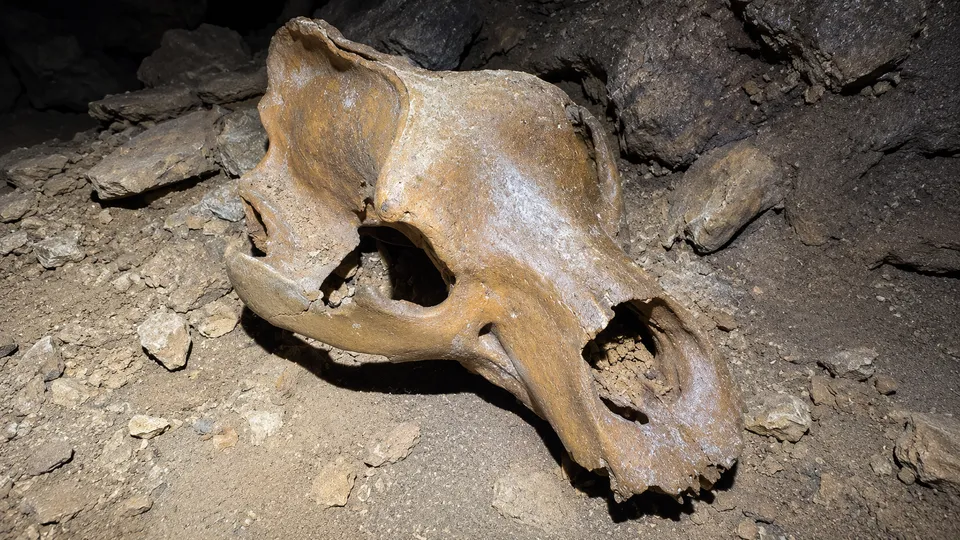
The first 60 metres or so of the cave run straight, ending at a large speleothem, a mineral deposit built up by dripping water. Near it a single bone lay on a raised slab of bedrock shaped like a table. Walde called the arrangement “mysterious”. Beyond it the passage drops away to the left, and there his head lamp found the rest: bones and skulls in large numbers, among them what looked like a skull still attached to its neck vertebrae.
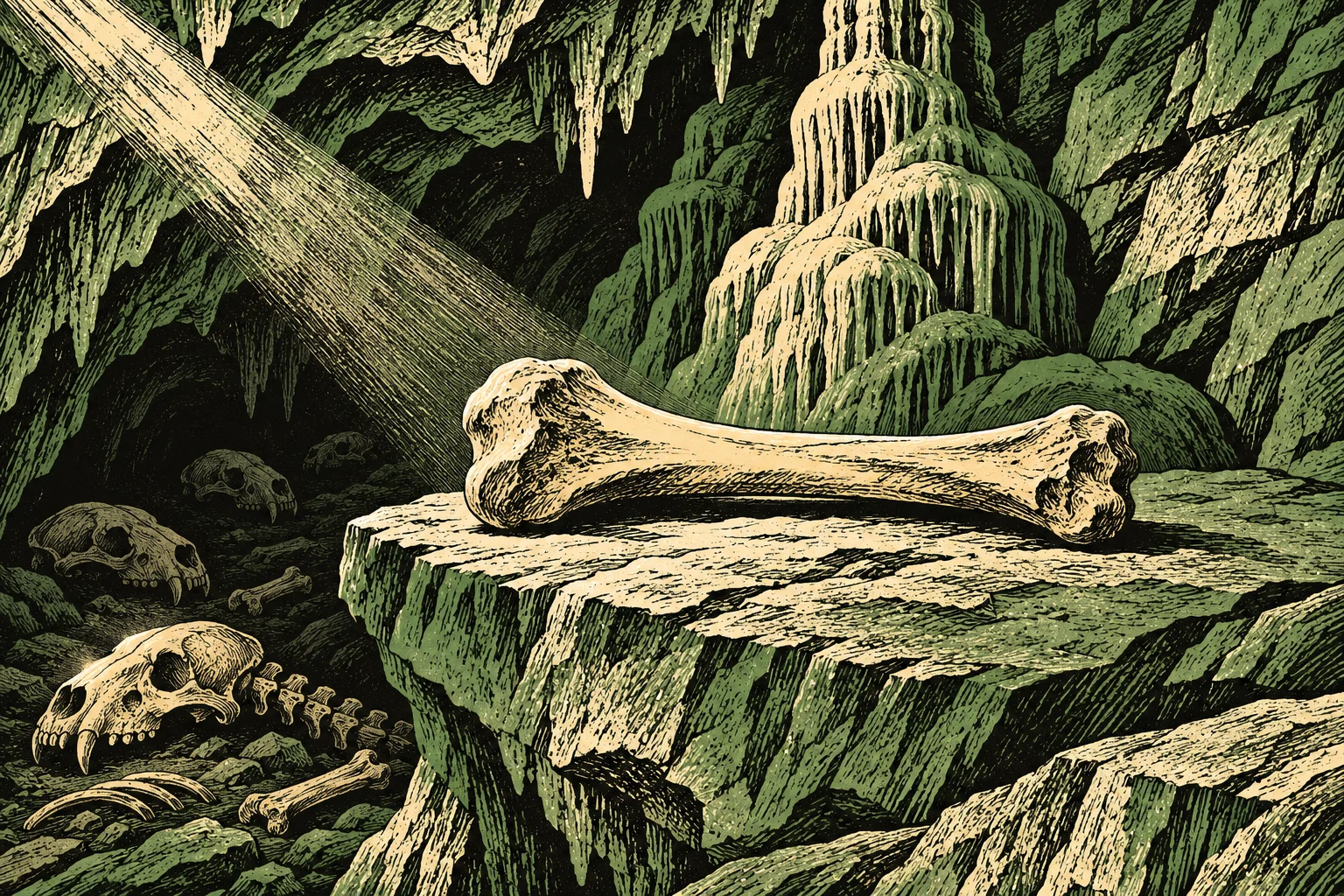
“I really did my best to control my emotions,” he said. He stepped as if on eggshells so as not to disturb anything. What struck him most was the thought that this had once been a place “full of life”.
A bear named for a people
The bones are thought to belong to Ursus ladinicus, a cave bear that, according to the BBC, died out about 24,000 years ago. So far its remains have been confirmed in only one place, the Conturines Cave, where Willy Costamoling found bear bones on 23 September 1987, according to the province. Some of the bones there belonged to the common cave bear. Others turned out to come from an animal nobody had described before, and it was named after the Ladin, the community that lives in these mountains. The Alta Badia tourism board puts that cave at 2,775 metres, by far the highest cave bear site known anywhere. The province’s July announcement is careful about the new find and names both Ursus spelaeus and Ursus ladinicus. Which bear it was has not yet been settled.
The Conturines bears weighed around 1,200 kilograms and were three metres long, males larger than females. Their teeth suggest they ate only plants: Alpine herbs, leaves and tougher grasses. A University of Vienna thesis on tooth wear found almost no abrasion on the Conturines teeth, which is unusual among cave bears. The BBC puts the bones at 46,000 to 50,000 years old or more. A radiocarbon study found most samples older than radiocarbon dating can measure, beyond roughly 49,000 years.
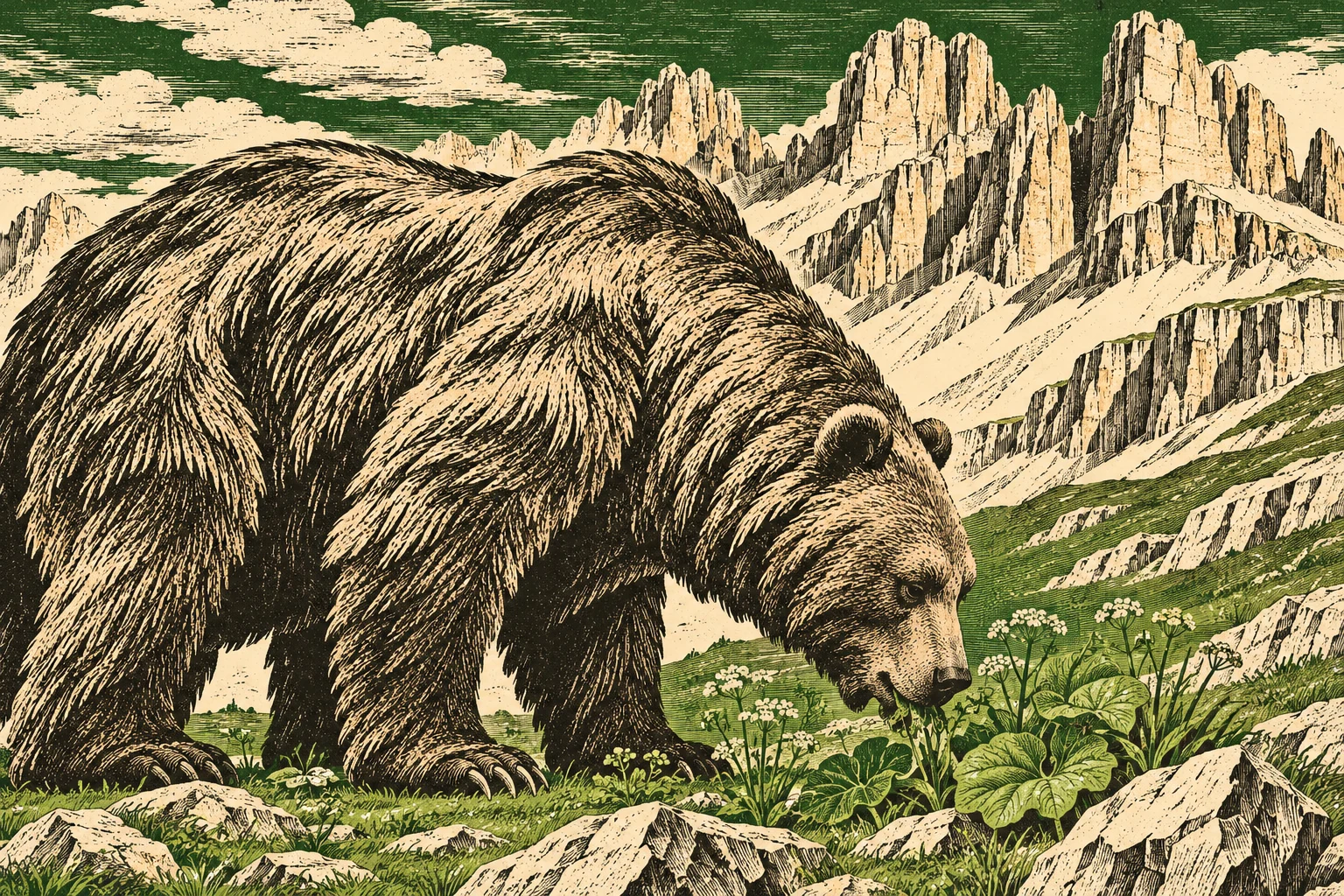
The bears were not alone up there. A cave lion jawbone and a separate tooth turned up at Conturines, and the remains of cave hyenas, lions and leopards have been found in other Alpine caves of the same period. Research at the cave suggests the Dolomites may have been warmer then than they are today, with the beech tree line higher up the slopes and perhaps feeding the bears. Some of the cave’s mineral deposits are six million years old.
It is a thought, not a finding, that mountains keep their records better than governments do. Empires have come and gone across these valleys while a bone lay on a stone table in the dark, with nobody to read it.
A door in the mountain
Then the paperwork began. The province says Walde reported the find on 17 July. On 24 July Hubert Steiner of the provincial archaeology office went up with him and two staff from ARC-Team, the excavation firm the heritage office hired, to seal the cave for the time being. The provincial heritage conservator, Karin Dalla Torre, called it a “paleontological sensation”, the province’s Italian-language release reports, and said the next task was a research project equal to the responsibility. Philipp Achammer, the provincial councillor for research, museums and cultural heritage, said the find would build on the Museum Ladin’s existing work on the bear.
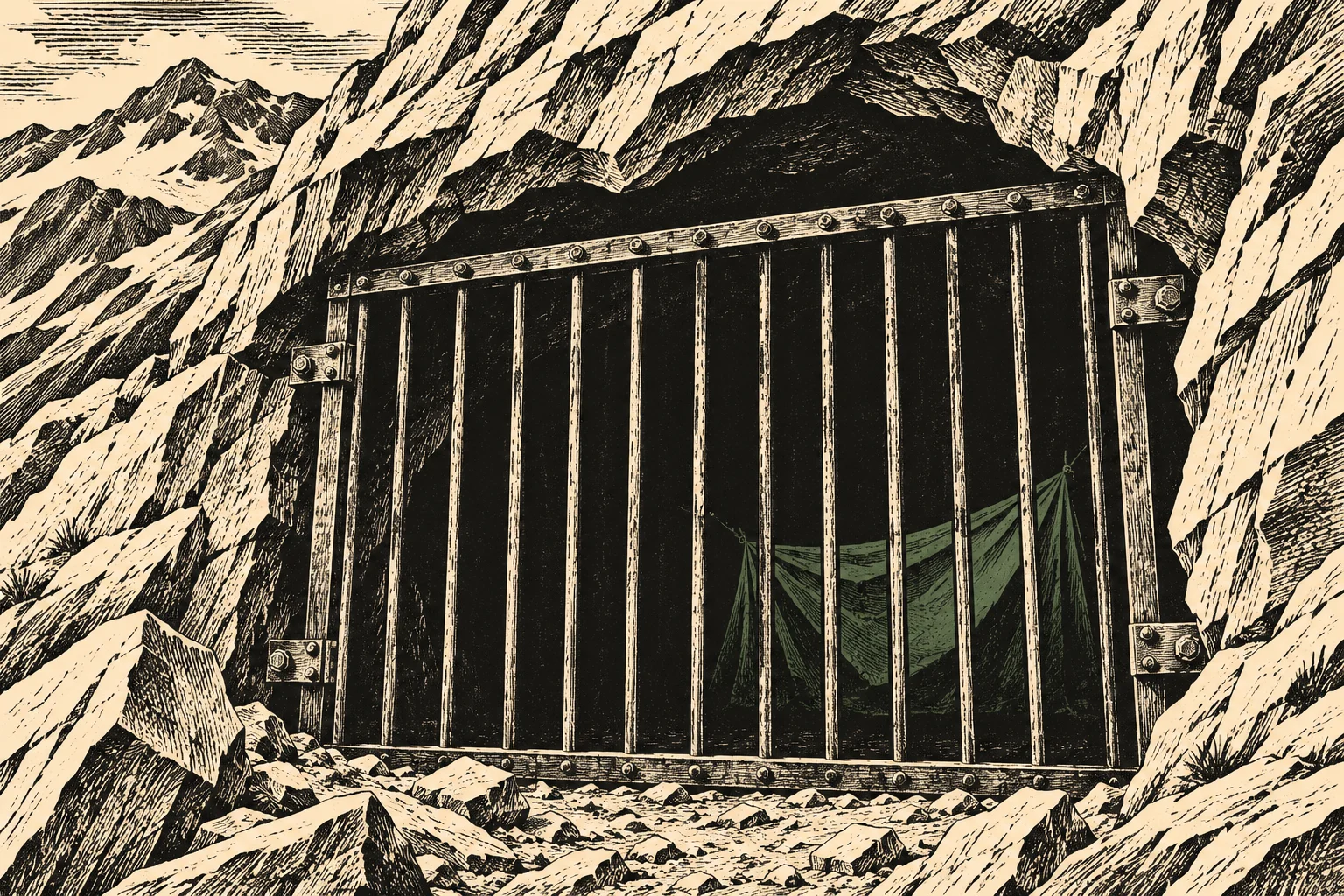
Christian Terzer took over as director of the Province of Bolzano’s Department of Archaeology in early August and walked straight into the discovery. He said he only grasped what it meant after talking to local palaeontologists, and then he started worrying the site would be contaminated. “I also had some sleepless nights.” The department put a gate about 20 metres inside the entrance and a tarpaulin deeper in. The materials had to be flown in by air.
Terzer visited in early autumn. “There are hundreds and hundreds of bones there,” he said. “I don’t know how many individual bears are inside, but it’s quite a lot.” He is fairly sure the new cave holds far more specimens than Conturines. The bone on the stone table bothers him too, and so do others like it. “It’s strange that some isolated bones are placed on big rocks,” he said. “Maybe through a natural process, or maybe there were humans inside thousands of years ago.”
Questions for June
Martina Pacher, a vertebrate palaeontologist at the Natural History Museum of St Gallen, dug at Conturines as a student in 1987. Her first question is how the bears got in at all. The entrance as it is today is almost impossible to reach, so at some point it must have been open, free of ice and warm enough for bears. There is no visible link between the two caves. “The old Conturines Cave and this new one may probably be connected somehow, but we’re not sure yet,” she said. The entrance may have changed over the millennia, but she says it is too early to tell how much.
She also hopes to learn what the animals looked like. “If we find many more-or-less complete skeletons we have much better possibilities to reconstruct the appearance of these bears,” she said. With skeletons or bones that can be put back together, “we might understand better about the family ties and social behaviour of these animals.”
Spyridoula Pappa, a senior curator of fossil mammals at London’s Natural History Museum who has studied Conturines teeth, wants “a much more complete assemblage”. From its teeth, skeletons, genetic material and geological setting she hopes to build a fuller picture of these “remarkable alpine bears”.
Winter has closed the mountain. Scientific work inside is due to start again in June 2027. Until then the single bone stays on its table of rock behind a gate and a sheet of tarpaulin, and nobody yet knows who or what put it there.