
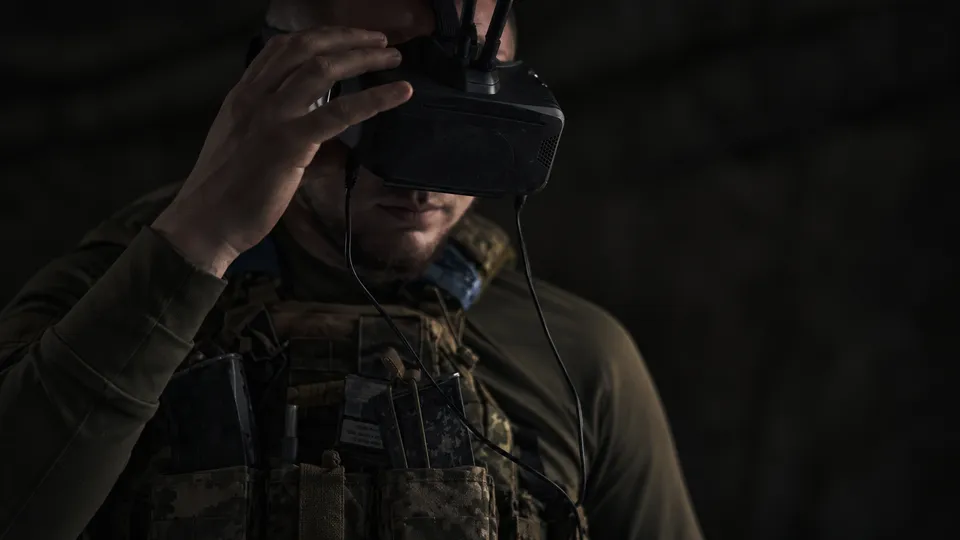
The number at the centre of this story is five hundred thousand. That is how many first-person-view attack drones Dmytro Zhluktenko would like some Western factory to build. He does not want clever ones. He wants plain drones that are well tuned and that work. “We are yet to find Western manufacturers that are able to produce, let’s say 500,000 FPV drones, simple ones that just work, that are fine-tuned without any extra autonomy or extra navigation or any features like that,” he said.
Zhluktenko goes by the call sign “Liber”. He used to fly drones himself. Today he is a lessons-learned analyst in Ukraine’s 413th Unmanned Systems Regiment “RAID”, and he spoke to Sinéad Baker of Business Insider. His job is to collect what the war teaches. He studies trends at the front, interviews operators, meets foreign arms makers, writes briefs for higher command and passes information between Ukrainian units. Few people are better placed to know what the soldiers actually want.
Features nobody asked for
“We need something that works great but doesn’t have superfluous features,” he said. “That is something that most of the Western defense technology manufacturers, they get it so wrong.” On FPV attack drones he was blunter still: “we need something that is really basic.”
He called Western drone technology “too complicated, often detached from the battlefield, and much more expensive than Ukrainian options doing the same job. Therefore, most of the drones used at Ukraine’s battlefield are Ukrainian-made.”
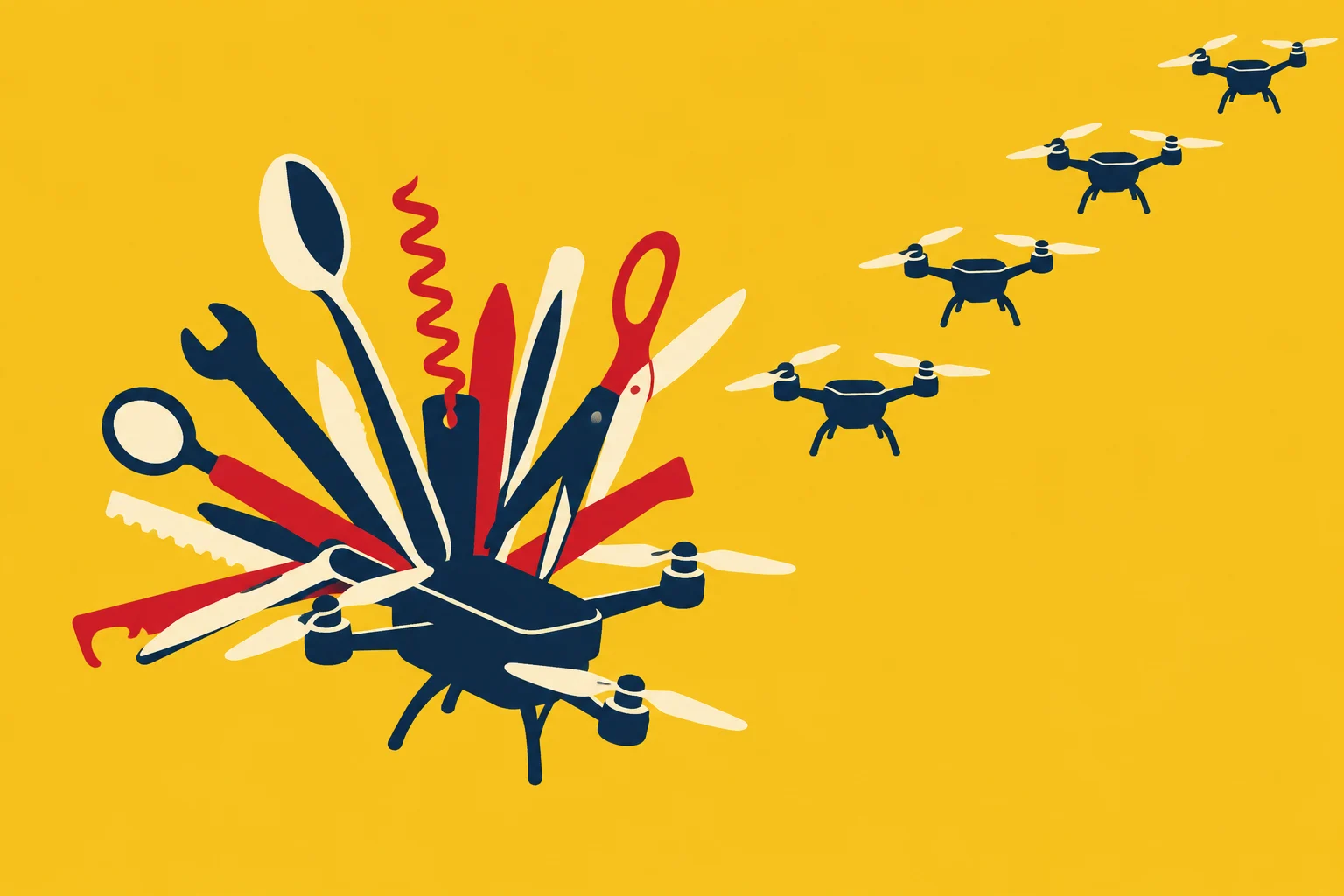
This is a war of attrition, and it uses up weapons faster than almost anyone expected. Whatever is built must be cheap enough to lose in huge numbers. Equipment also goes out of date within weeks, so it must be easy to change. A machine that is too polished to modify will soon be useless, however advanced it looked at the arms fair.
A platform, not a finished thing
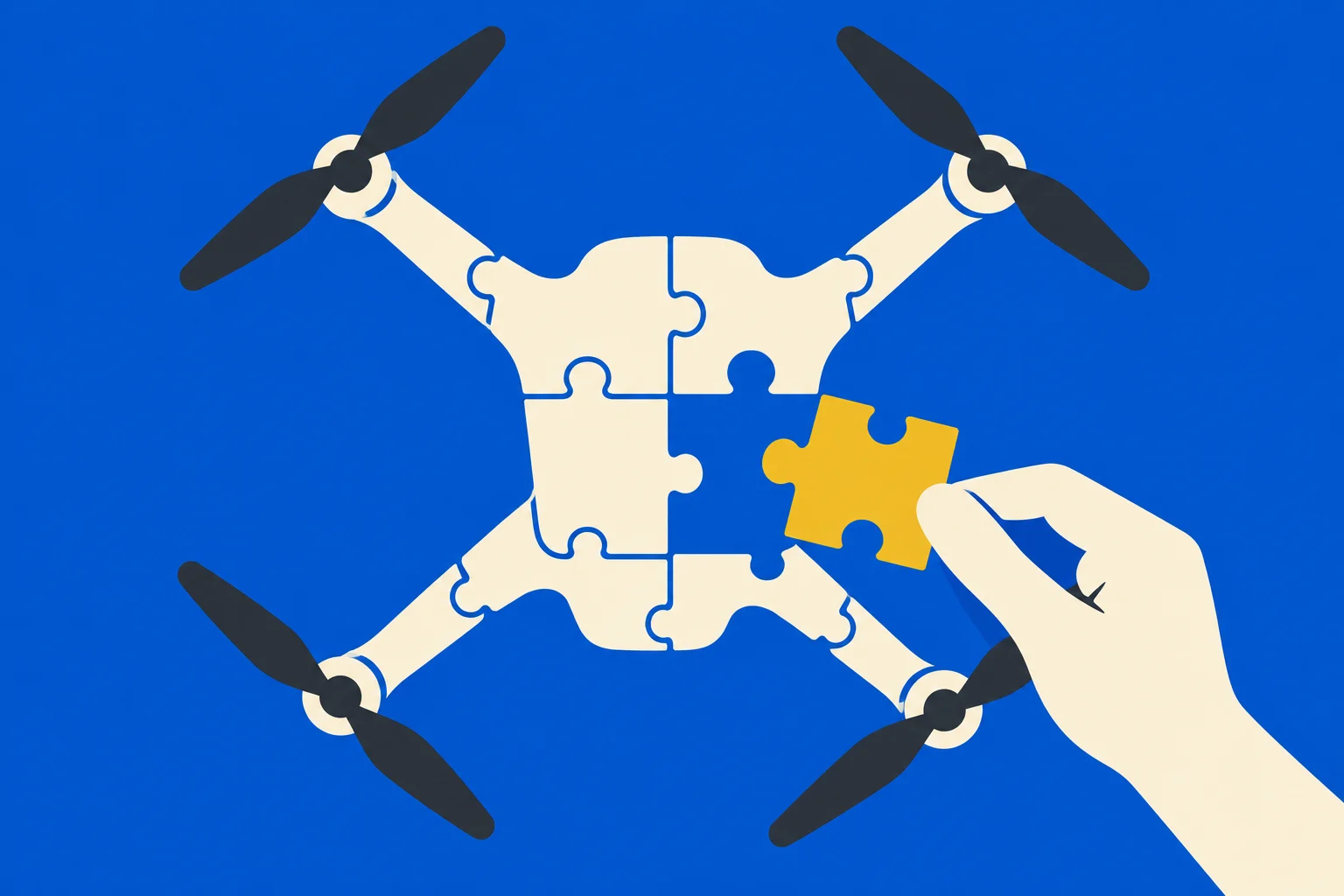
Near the front, soldiers routinely rebuild their weapons as the fighting changes, and some units run their own research and development centres. What they want is a generic platform they can strip down, upgrade or set up for a different mission. Ground robots are a good example: they are assembled from interchangeable weapons and parts, much like Lego, which Ukraine has already put to use in its robotic division of labour. Ukrainian and foreign companies that work with these units know this goes on. They work with unit engineers to keep products current, and they are often surprised by what the soldiers come up with. More and more of them now design their products to be modular, partly so that the front can do its own adjustments.
Ukrainian operators, Zhluktenko said, want something they can “tune ourselves, we would change the components or whatever as we need, because that’s the normal process. But something like the basic platform that it could build upon.” He finds it “bonkers” that the West, with its “significant industrial capacities,” has not produced anything simple and effective at scale. Many Western firms, in his view, are “stuck in this doctrine of building tools in small quantities that maybe yes, they do have some extra features, but that’s not something that is way too relevant for Ukraine’s combat.”
Peacetime and wartime
A representative of the Ukrainian drone and technology company TechEx gave an explanation that has less to do with engineers than with rules. She said Western manufacturers often work under heavier peacetime regulation. Their systems may carry “levels of additional software and hardware that’s put on top of it instead of making it a bare, functional, ready to go system here and now.” That can “overcomplicate the operation of the system,” she said. It also makes manufacturing more complicated, so it becomes harder to reach the volumes some Ukrainian producers manage. She put it as the difference between “wartime operations and the peacetime operations,” and suggested that Western firms might change their processes and priorities if they had to work faster and at greater scale.
A thought, offered as reflection and not as reporting: a state at peace builds things that will pass inspection, while an army at war builds things that will get through the next morning. When those two meet in one supply chain, the slower one usually decides the pace.
The arithmetic of loss
Ukraine says drones now cause as much as 95 percent of Russia’s front-line losses. Its own counts have gone higher. Al Jazeera reported that Kyiv put Russian casualties in March at 35,351, with 96 percent caused by drones. On 11 October, Euromaidan Press reported that Ukraine’s drone force says it has hit more than 100,000 Russian troops this year alone. These are Ukrainian claims. Outside analysts at CSIS cite estimates that more than 90 percent of Russian casualties come from drones.
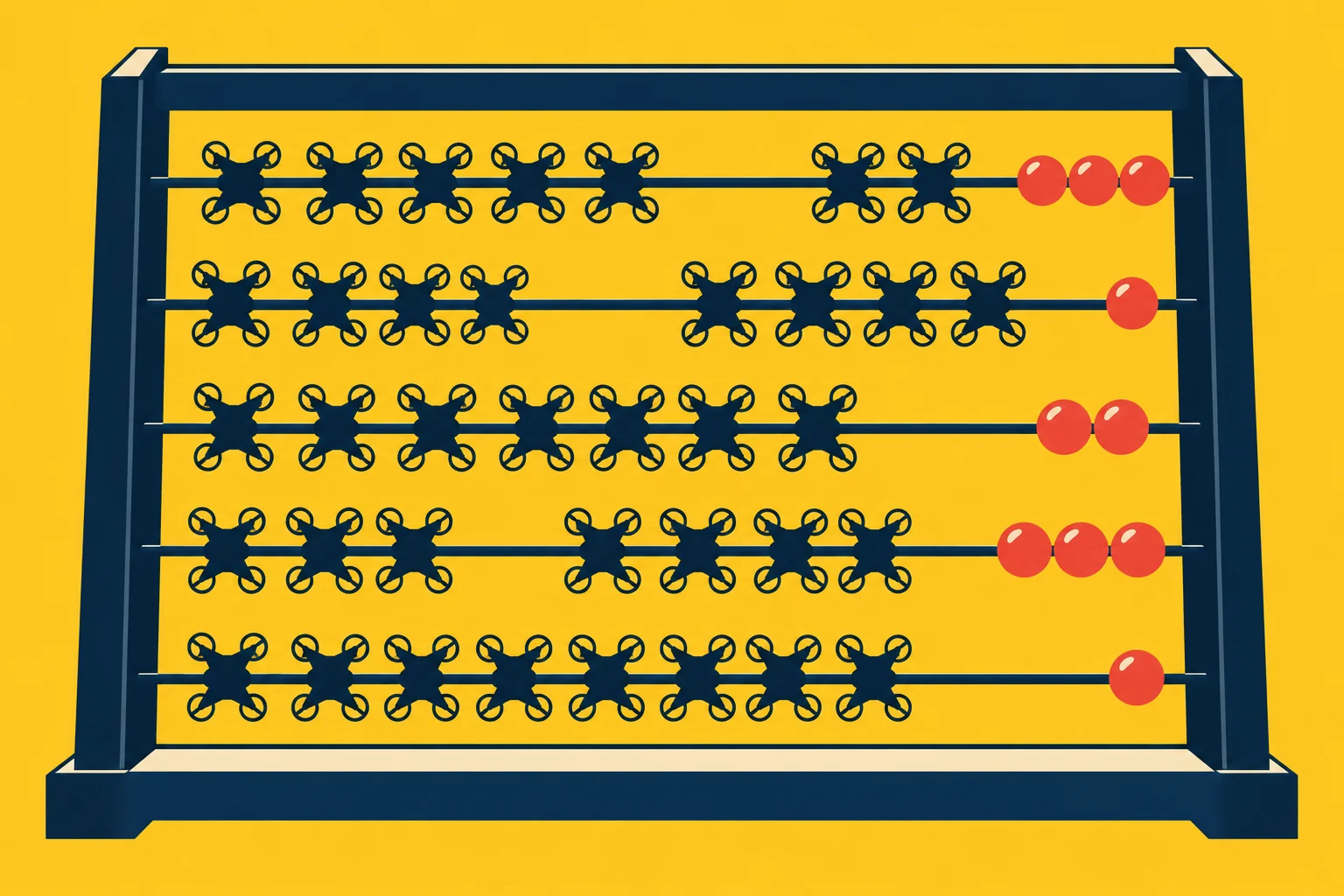
Drones get these results only when they are used in large numbers, and many of them never reach their targets. That is the point Zhluktenko keeps returning to: a weapon you expect to lose has to be cheap.
He is not against sophisticated machines. Ukraine still buys and builds advanced drones with autonomy and other new features. They matter for jobs like intercepting Russian attack drones, which is why the minister wants AI to fly the interceptor, and for long-range strikes that have to get through enemy electronic warfare. Zhluktenko said it comes down to “balance”. Simple drones are still essential, and far more of them are needed. Ukrainian companies such as SkyFall and General Cherry already build them at scale, he said.
A lesson already spoken aloud
Western officials say they have taken the point. Denmark’s defence minister, Troels Lund Poulsen, has told Business Insider that “one of the lessons” of Ukraine is that the West needs far more inexpensive weapons. NATO’s secretary-general, Mark Rutte, said “speed is of the essence, not perfection” in remarks on 23 January 2025. In the same remarks he contrasted Ukraine, which at war can accept a weapon that rates a six or seven out of ten, with NATO, which only fields what rates a nine or ten, and he said the alliance can no longer afford that.
For now, Zhluktenko says, the West has learned the words but not acted on them. His own rule for drones is short. The mindset should be about “spending thousands of dollars, not hundreds of thousands.”