
Picture, if you can, a triple-decker — the beloved three-storey, three-flat timber house of the Massachusetts streetscape — and now picture a second one behind it, in the backyard, but shrunk. Three storeys, each perhaps 15 feet by 20, staircases included. Not a doll’s house, but a dwelling, by right, under state law. This is the creature that has risen from the small print in Somerville, and as the Boston Globe reports, the city that loves housing more than almost any other now finds itself staring at a housing rule it calls flat-out goofy.
The law behind it is sensible on its face. In force since 2025, the Massachusetts ADU statute lets property owners build accessory dwelling units — granny flats, backyard cottages — by right in areas zoned for single-family homes. Local government cannot stop them, provided the units stay under 900 square feet and remain a single dwelling, not to be carved into separate apartments or condos. State regulators closed every escape hatch: local rules may not discourage ADUs by capping their height; the little house may rise as tall as the main house on the lot.
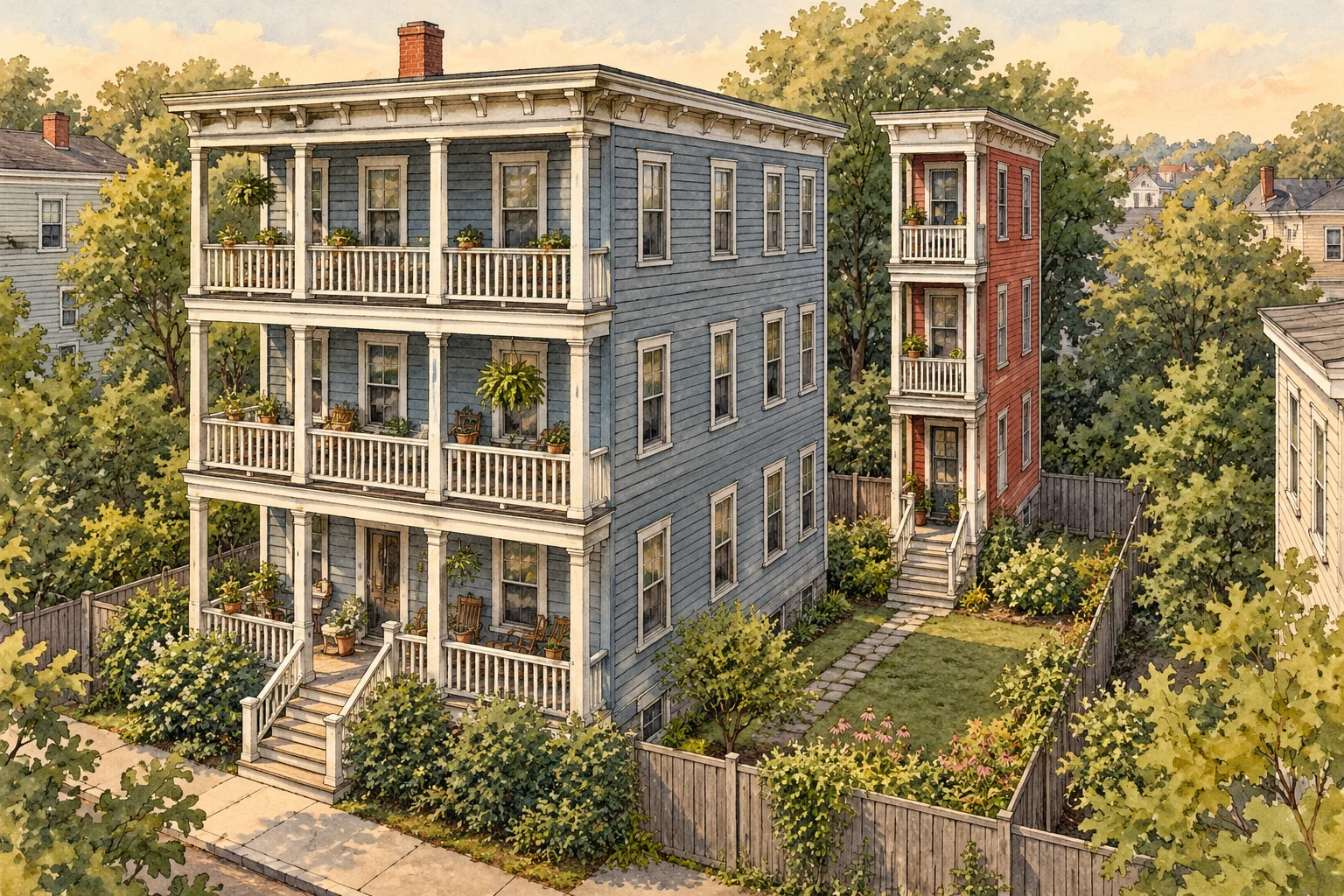
The loophole in the letter
Here, as the Globe’s account explains, things start getting weird. The parts of Somerville zoned for single-family homes are also zoned for duplexes and for triple-deckers. So if a triple-decker already stands on a lot — a triple-decker, the logic runs, is the main residence — then a triple-decker ADU must be permitted behind it. “It’s really bizarre,” said Ben Ewen-Campen, a Somerville city councillor and soon-to-be state representative. “The state has created a situation where by right you can put a miniature triple-decker behind every triple decker. I just can’t believe that was the legislative intent.”
Ewen-Campen admits his first reaction was disbelief: a joke, surely; no one would ever do this. City staff told him they think people might. And last month the Massachusetts Executive Office of Housing and Livable Communities removed all doubt, publishing a lengthy FAQ saying explicitly that the law applies to triple-deckers. The paragraph is now official, which is to say immortal.
Even someone who voted for the rules is startled. “I don’t know of anybody who thinks they intended to put three-deckers behind three-deckers,” said state senator Patricia Jehlen, who represents Somerville. “I think [the state office] should change their regs and follow the law. I’m serious.” The lawmaker instructs the regulator to obey the lawmaker. It is one of the oldest dialogues in government, conducted in the key of exasperation.

Nobody has built one — yet
For now the miniature triple-decker exists only as a thought experiment, because no one has built one, in Somerville or anywhere else. The state believes no one will. “Three-story ADUs are highly unlikely given state size limits, building requirements and construction costs,” a housing office spokesperson said by email. By July, the office said, nearly 2,100 ADU permits had been approved since January 2025 — mostly pool houses and low-slung sheds with a terrace for the grandchildren. None are three storeys. Yet.
But Somerville has earned its suspicion. The city put its own backyard-cottage rules on the books in 2019 — gentle things, one-and-a-half storeys, footprints a little under 600 square feet, imagined as cosy rooms for ageing relatives or a modest rental to help pay the mortgage. What arrived instead, critics say, are ‘cottages’ with basements pushed as much as six feet above ground, wearing the shape of two-and-a-half-storey single-family homes, some near 1,800 square feet, sold as condos for more than $1.3 million, according to online real estate listings. Intent is a bird; the loophole is the open window.
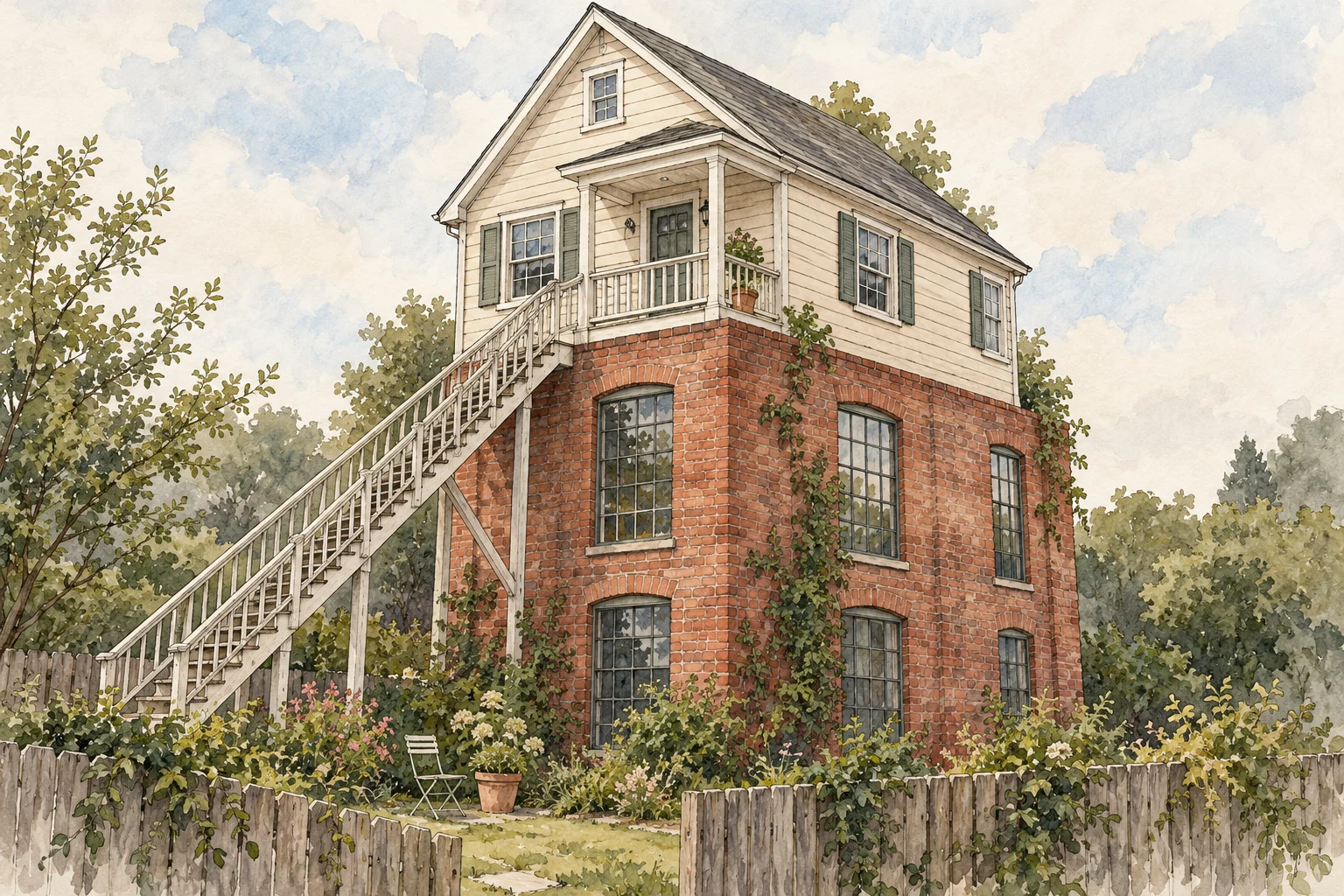
“Anytime you come out with something new, people are going to look for loopholes and ways to exploit it. That’s certainly happening here,” Mayor Jake Wilson said. He wants to shrink the maximum square footage allowed in backyard units — and he wants the record to show where Somerville’s predicament began: with the suburbs.
Wilson, a staunch supporter of accessory units, lays the strange clause at the feet of neighbouring communities that have gone to extraordinary lengths to refuse state housing mandates. Because they will not build, he argues, the state writes ever blunter one-size-fits-all rules — and the blunt rules land hardest in the most densely populated city in New England, which was already building housing. “Stubbornness on the part of suburban communities to adding housing is seeing the state get increasingly creative and aggressive with statewide legislation,” he said.
For now, when it comes to triple-deckers, Wilson prefers the real thing. Or triple-decker Little Free Libraries. Or triple-decker mini-golf holes — all of which, Somerville being Somerville, have popped up here. But triple-decker ADUs? Triple-no.