
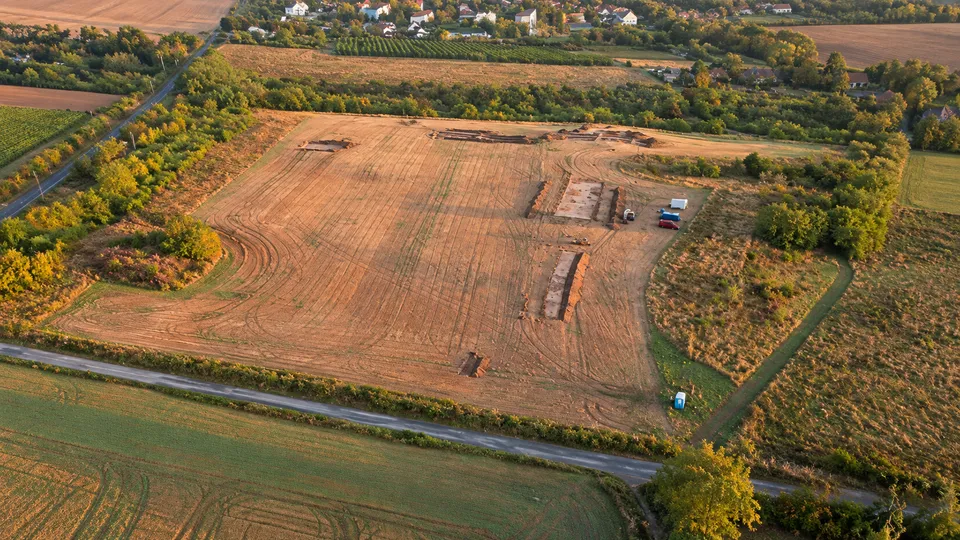
There is a hill above Lutherstadt Eisleben, in the German state of Saxony-Anhalt, where for centuries an empire survived only on paper. The royal palace of Helfta — a seat of the Ottonian dynasty that ruled much of Central Europe in the tenth century — had vanished so completely from the landscape that its memory lived in chronicles and nowhere else. On 12 October the State Office for Heritage Management and Archaeology of Saxony-Anhalt announced that the hill had surrendered another of its secrets: a stone building, a thousand years old, that may once have lodged the noble guests of Emperor Otto the Great. Arkeonews reported the find beside the former palace, on the rise known as the Kleine Klaus.
The structure is modest in size — roughly nine by five metres — but proud in build, with a cellar and an entrance staircase that has survived the centuries remarkably intact. The excavations, led by Professor Felix Biermann, began on 31 August.
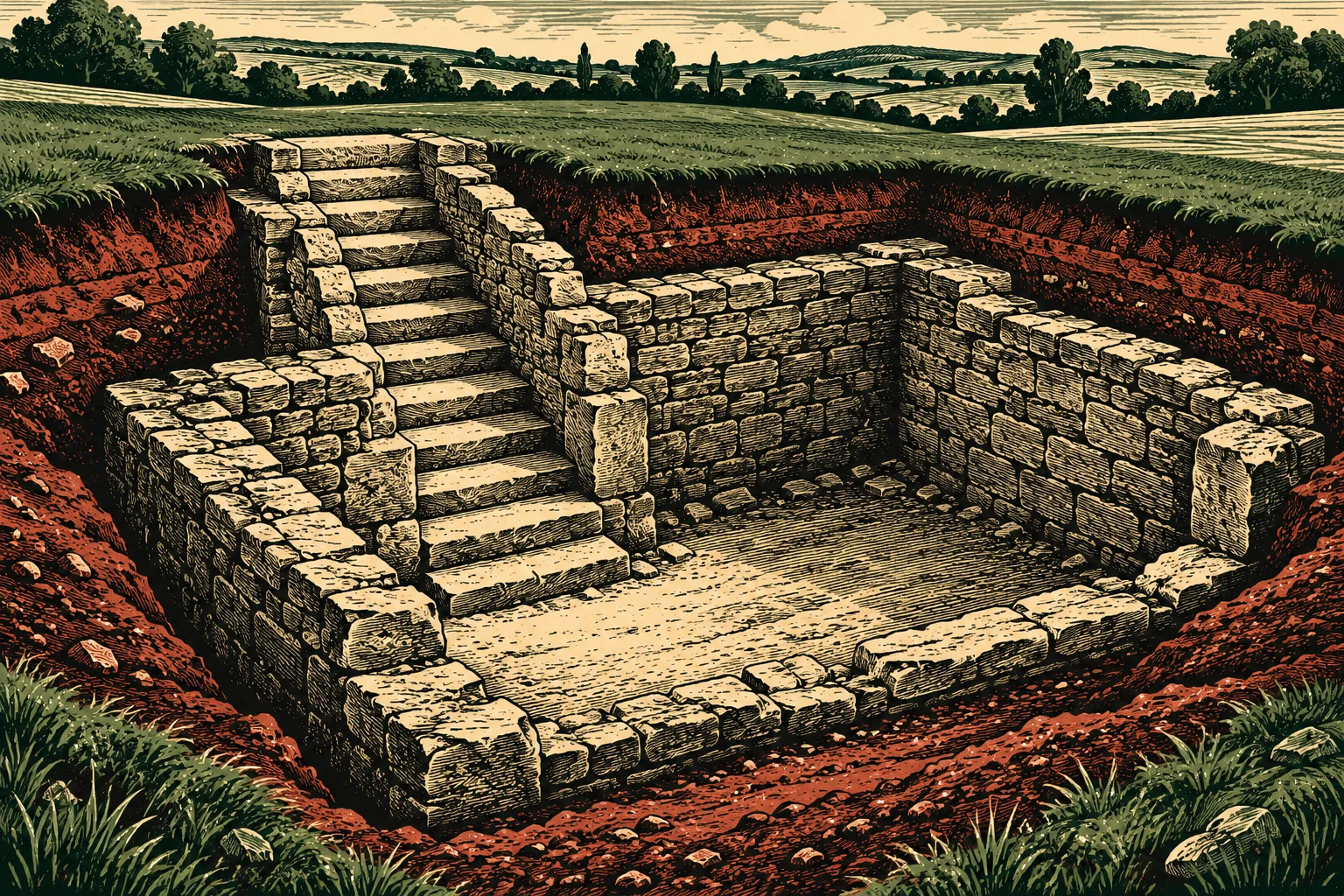
The palace itself came back into the light only recently. Excavations between 2020 and 2023 finally traced on the Kleine Klaus the foundations of a stone palace and of the Church of St Radegund, which Otto founded before the year 969. The chronicles record that the emperor came here; so did his son, Otto II, and Bishop Thietmar of Merseburg, whose pen preserves much of what is known of medieval political life. The new building joins that company. Associated finds date it securely to the tenth century, making it one of the earliest known secular stone buildings in all of Saxony-Anhalt.
What it was for, no one can yet say. Perhaps distinguished visitors slept within its walls; perhaps it housed the burgrave, the official who kept the residence in order while the emperor was away. Power, then as now, required a caretaker.
A stage for power
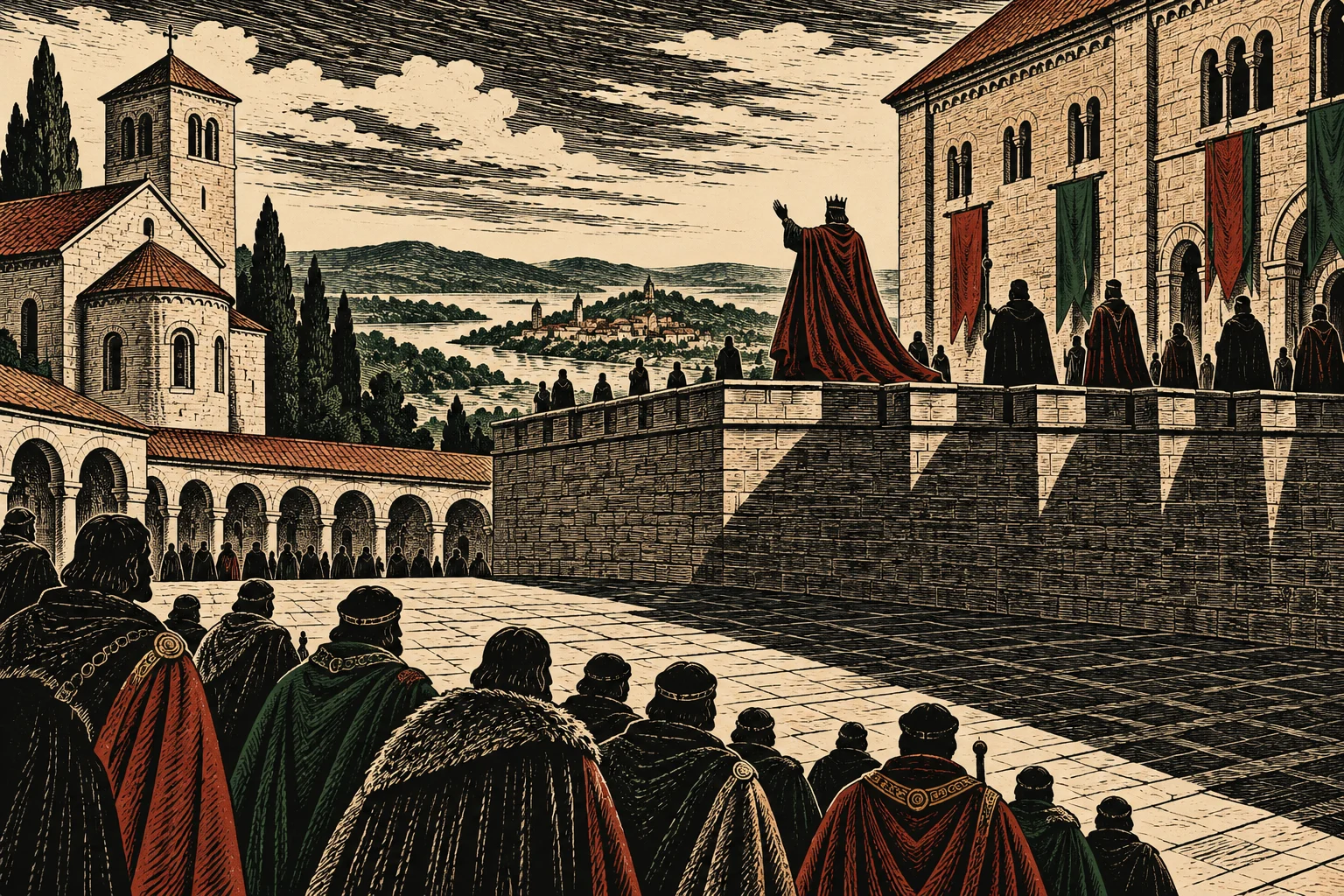
East of the palace the diggers found something that speaks more plainly of how authority displayed itself: a stone-paved terrace above the courtyard between the residence and the church. From such a platform, the archaeologists believe, the emperor or his officials may have addressed assembled nobles in the open air. Palace, church, guest house, terrace — an entire architecture of impression, built to make a visitor feel the weight of the crown before he ever saw the man wearing it.
But the hill keeps a second, quieter testimony. In the southeastern outer bailey the excavators uncovered the sunken-floor houses of workers and craftspeople: dwellings three to five metres across, walls of wattle and daub, roofs of wood or thatch, a simple hearth in each. Clay loom weights, crucibles and a lime kiln record the labour that sustained the court — cloth woven, metal worked, lime burned for the emperor’s masonry. Above them rose monumental stone; below, the smoke of small fires. The contrast between ruler and ruled is written here more legibly than in any chronicle.
Silver and song
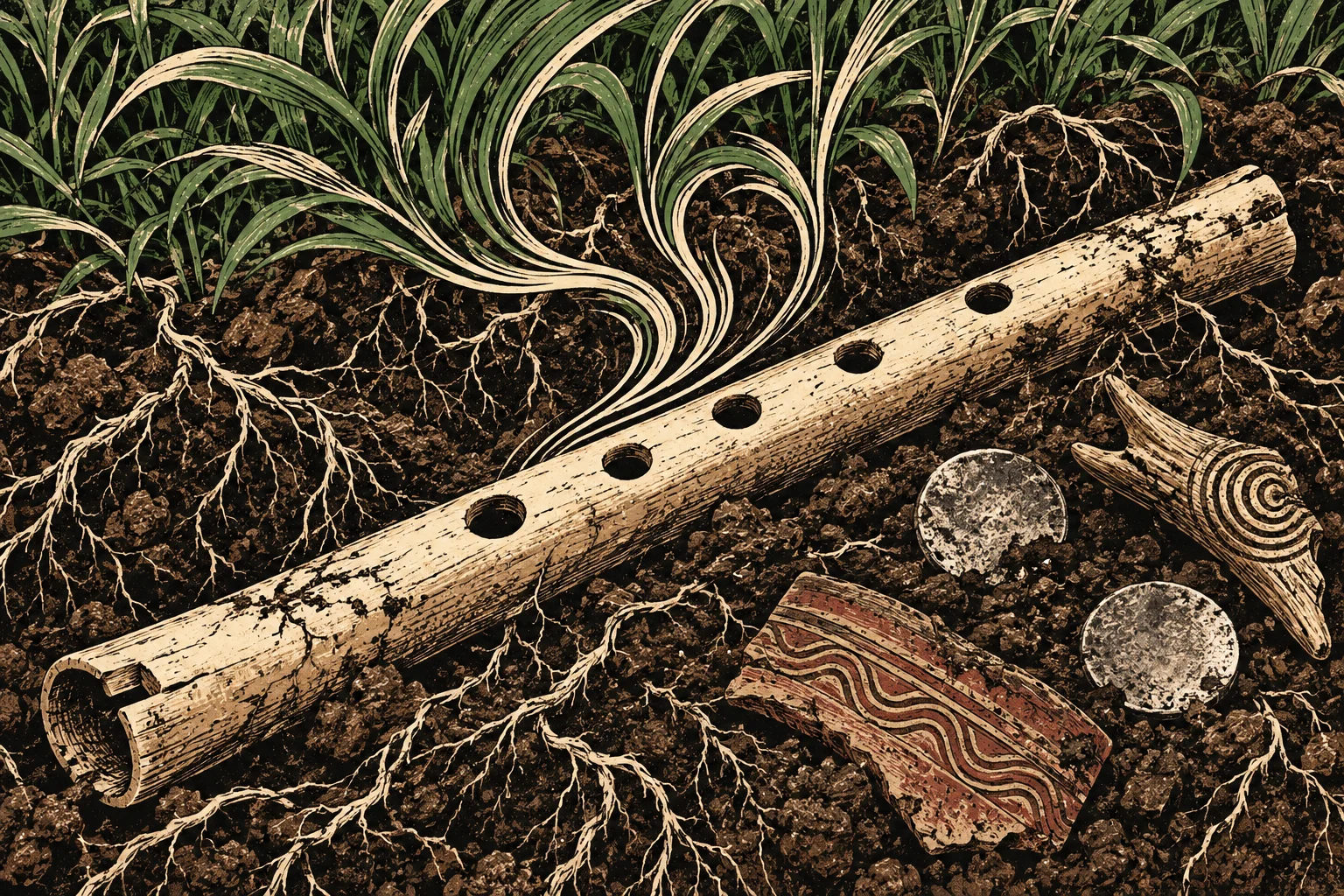
The objects emerging from the soil carry individual lives across an extraordinary span. Silver coins run from the tenth century to the fifteenth. There are Ottonian earrings and enamelled brooches, among them an unusual crescent-shaped fibula. Iron arrowheads; pottery bearing the characteristic wave patterns of Slavic making; a fragment of an antler casket from around the year 1000, decorated with concentric circles. And a bone flute — still almost playable, its finders report, after centuries underground. Somewhere on this hill, once, someone made music.
Helfta declined as a royal centre, but hills keep their magnetism for the powerful. In the twelfth century the noble Hackeborn family raised a fortified castle over part of the old imperial site. The current dig has exposed stretches of its defensive walls, cellars, the foundations of timber-framed buildings and the remains of a larger residence, along with a second, late-medieval underground passage and more graves belonging to St Radegund’s. The family counted among its kin two of the most influential religious women of the Middle Ages, Gertrud and Mechthild of Hackeborn, of the nearby Helfta convent; the castle may have been their family home, though the researchers have not yet established the link conclusively.
The excavations continue until 24 October, with some twenty volunteers working alongside the archaeologists. Each spadeful of earth restores a little more of a place where empires were celebrated, cloth was woven, coins changed hands and a flute played — the whole crowded republic of a thousand-year-old hill. The chronicles remembered the emperors. It has fallen to the archaeologists to remember everyone else.