
A Homeland Security Investigations agent filed a 60-plus page warrant application on October 31, 2025, asking a federal judge for permission to attach a tracking device to a white Tesla. A judge granted it the same day. The device never went on the car. The agent’s follow-up filing gives one line of explanation: “Search warrant not executed due to security protocols active on Tesla.” The warrant, reviewed by 404 Media, doesn’t say which protocol, or how an agent who’d already cleared a judicial hurdle got stopped by a parked car.
The target was Sam Stair, a Milwaukee landlord who owns S2 Real Estate Group and, according to the Justice Department, more than 150 rental properties. HSI had been watching him for close to two years on suspicion that his apartments were being used as stash houses for a cocaine and fentanyl operation. Agents wanted to know where the Tesla went when they couldn’t keep a physical tail on it, which is the textbook reason to want a GPS tracker instead of a surveillance team: one device replaces a rotating crew of agents in unmarked cars, at a fraction of the manpower cost, for weeks at a stretch.
Why a warrant at all, for a tracker on a car parked on a public street? United States v. Jones, decided unanimously by the Supreme Court in 2012, settled that question: physically attaching a GPS device to someone’s vehicle to monitor it is a Fourth Amendment search, because the government is trespassing on private property to get the information, regardless of whether the car is sitting in a place the owner has no privacy claim to. Since Jones, agencies get a warrant first and then install the hardware, usually a magnetic unit stuck to the undercarriage, during a window when the car is unattended. That’s the step that failed here.
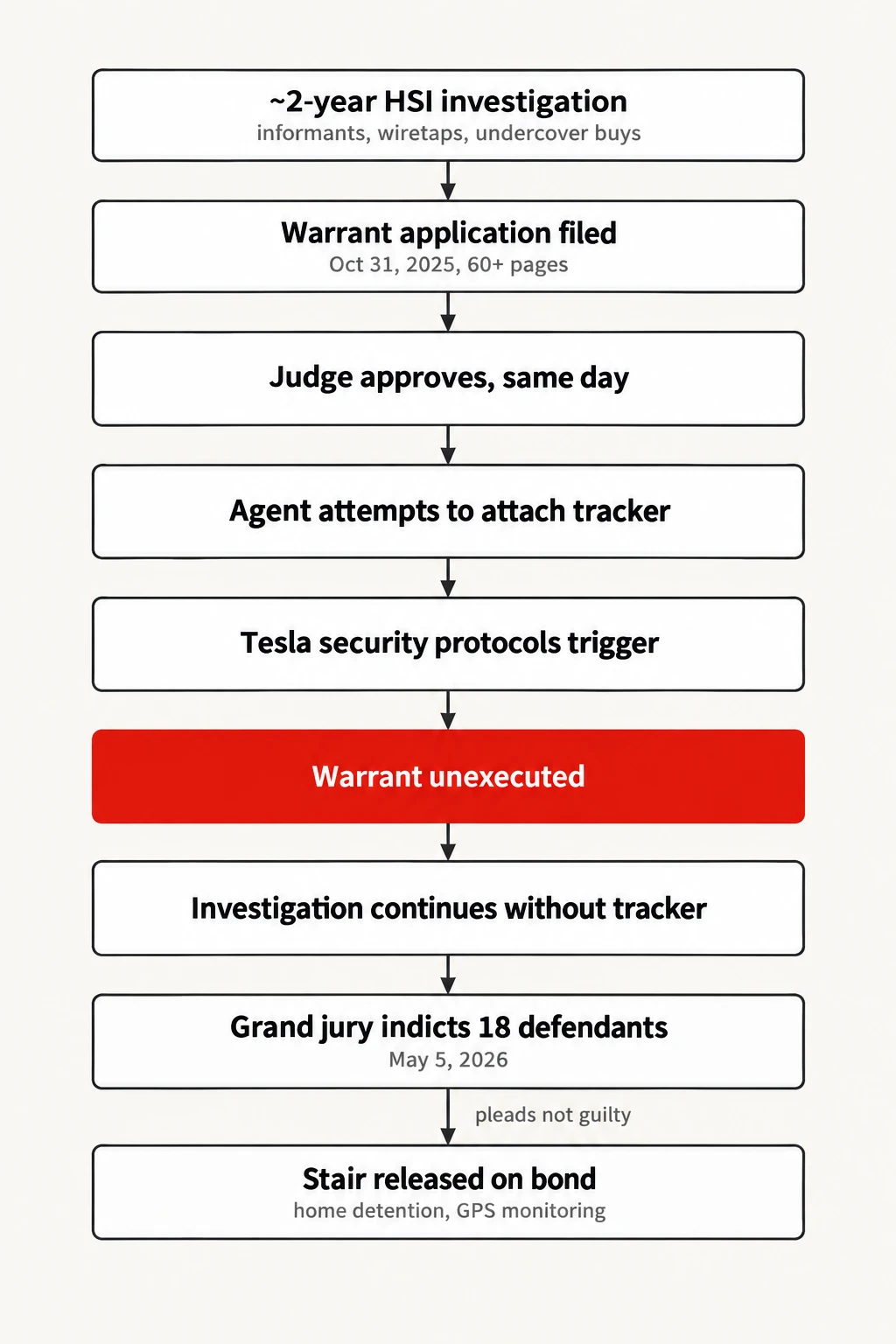
| From | To | How |
|---|---|---|
| ~2-year HSI investigation (informants, wiretaps, undercover buys) | Warrant application filed (Oct 31, 2025, 60+ pages) | |
| Warrant application filed (Oct 31, 2025, 60+ pages) | Judge approves, same day | |
| Judge approves, same day | Agent attempts to attach tracker | |
| Agent attempts to attach tracker | Tesla security protocols trigger | |
| Tesla security protocols trigger | Warrant unexecuted | |
| Warrant unexecuted | Investigation continues without tracker | |
| Investigation continues without tracker | Grand jury indicts 18 defendants (May 5, 2026) | |
| Grand jury indicts 18 defendants (May 5, 2026) | Stair released on bond (home detention, GPS monitoring) | pleads not guilty |
What Sentry Mode actually does
Tesla’s own description of the feature, and reporting by 404 Media, point to Sentry Mode as the likely culprit, though the court record never names it. Sentry Mode runs in three escalating states, the way a home alarm panel does. In standby, the car’s exterior cameras monitor the area but record nothing. A person lingering near the car, or touching it, pushes the system into alert: the cameras start recording, the dashboard screen lights up with a message saying so, and the owner gets a push notification through the Tesla app showing a live view, if they’ve paid for the cellular data plan that enables it. A break-in attempt, like a shattered window, escalates to alarm: the car flashes its headlights, sounds a siren, and keeps recording. None of this requires a human to be watching; the car does it unattended, off battery charge it won’t spend if parked below 20 percent.
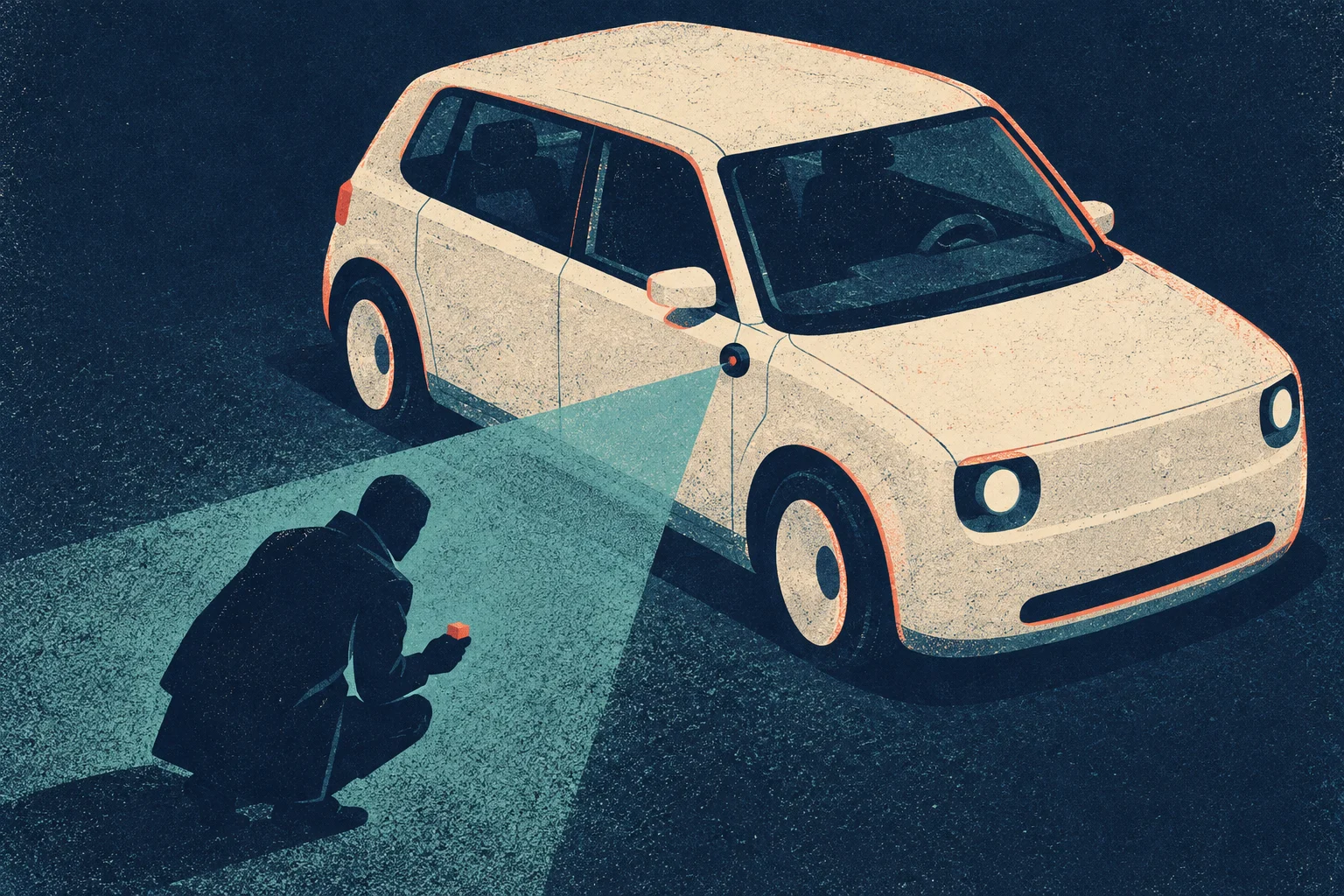
An agent sliding under a car at night to stick a tracker to the undercarriage looks, to a parked Tesla’s cameras, exactly like someone trying to break in. The practical effect is that Sentry Mode did to a federal agent what it was built to do to a car thief: light it up, film it, and tell the owner. A 2019 software update put the feature on every Tesla built since, after a wave of Model 3 break-ins; it was never marketed as a counter-surveillance tool, and Tesla has made no public comment on this case.
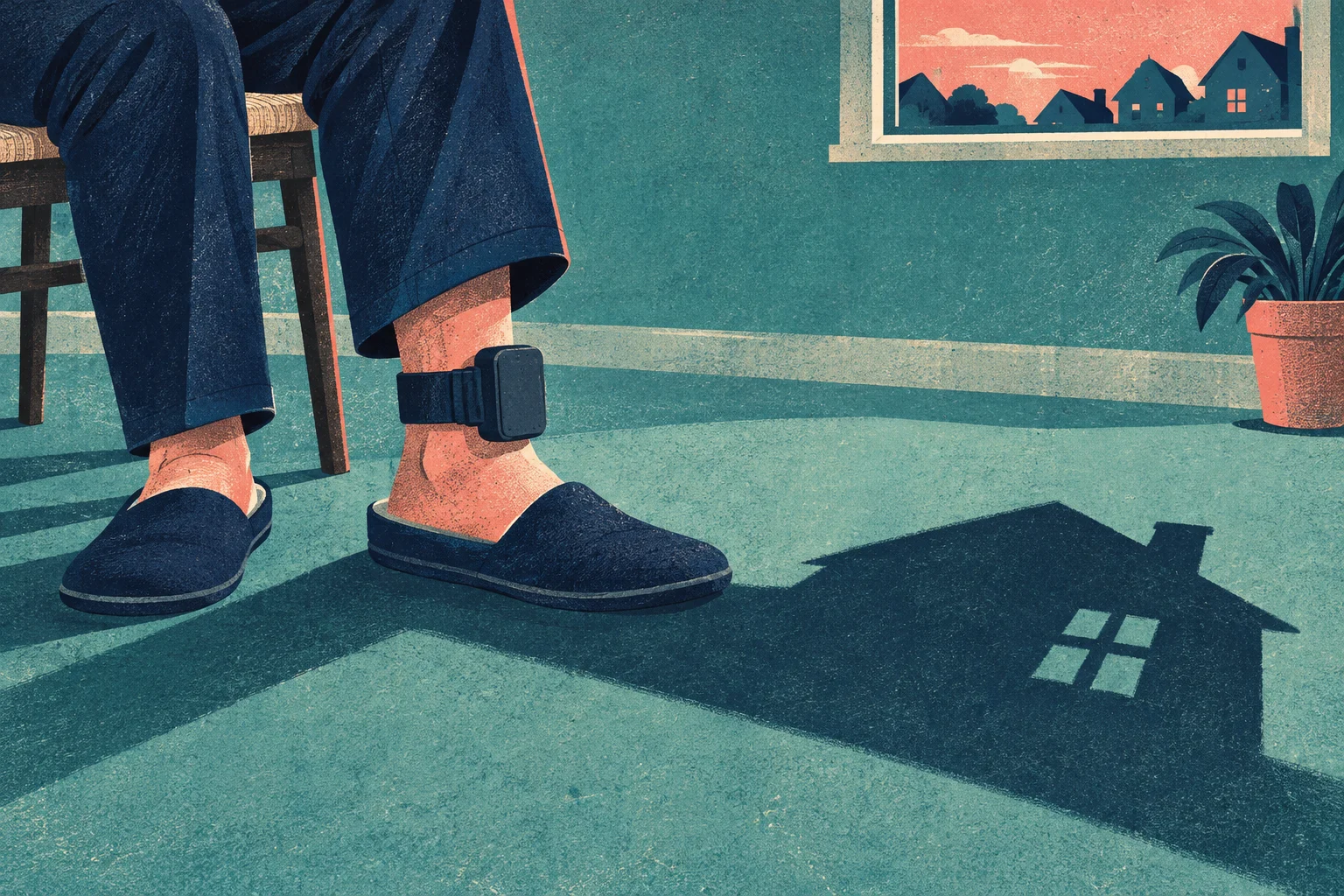
The setback cost the investigation nothing in the end. HSI kept working the case through confidential informants, undercover buys and wiretaps, the methods a tracker was meant to supplement rather than replace. A grand jury indicted Stair and 17 others on May 5, 2026, on charges covering distribution of cocaine and fentanyl, maintaining a drug house, and in several cases firearms possession in furtherance of trafficking, according to the Justice Department’s press release. Prosecutors allege Stair made more than $1.5 million renting to the operation, and that by January 2026 nearly $225,000, close to a quarter of his rental income, traced back to drug-associated properties. The indictment seeks forfeiture of his stake in 43 property-holding LLCs, six specific properties, and over $700,000 seized from his home and accounts. Stair pleaded not guilty and was released on bond, under home detention, with a condition that reads as its own small irony: GPS monitoring.
A feature, not a policy
The episode says less about Tesla resisting law enforcement than about what the car’s consumer security feature happens to be good at. Tesla runs a law enforcement portal for formal data requests and, per its privacy notice, will turn over vehicle data to comply with a subpoena or warrant; a Mozilla Foundation study of 25 car brands found 56 percent, Tesla included, will share driver data with government requesters on something short of a warrant, an “informal request.” Other reporting on connected cars has documented how much of that data routinely reaches advertisers and tech platforms. None of that data-sharing infrastructure was in play in Milwaukee. What stopped the agent was the same camera array that’s supposed to catch a catalytic-converter thief, doing its job against a target it was never designed to recognize.
The warrant application doesn’t say whether the agent tried again, parked elsewhere, waited for the battery to drop below the 20 percent threshold that disables Sentry Mode, or simply gave up and fell back on informants. Nor is there a public count, from HSI or any other federal agency, of how often a consumer anti-theft feature has derailed a physical surveillance operation before this one. That number, if anyone is keeping it, would say more about where covert tracking is headed than any single case file does.