
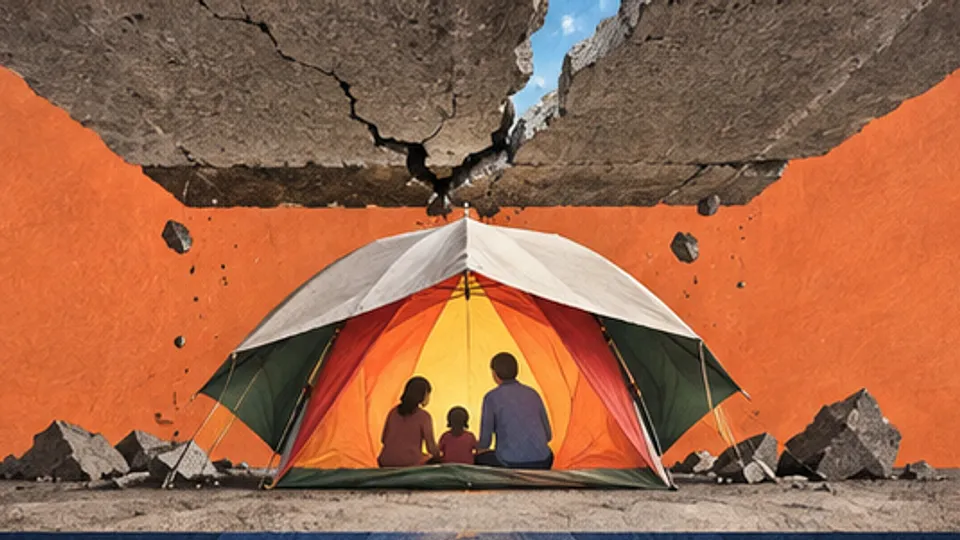
The roof over Masada Abu Jarad’s apartment is broken concrete. Twisted steel bars stick out of its edges. Part of the building has already fallen, and that part of the room stands open to the sky.
Under the open section her family has pitched a tent. That is the shelter they have in Gaza City. She is 60 years old and she knows the structure is dangerous, Al Jazeera reported. She stays because there is nowhere else to go.
She is not alone. Three years of war have ruined Gaza’s housing, and with no real reconstruction under way, displaced families are living inside damaged buildings that could come down on them. The alternatives have run out.
The danger stopped being theoretical on September 16. That day a six-storey war-damaged residential building in Gaza City collapsed, killing 21 people, among them 12 children, according to the United Nations and Gaza Civil Defence.
So the families weigh the risks the way Masada Abu Jarad weighs them. A broken building is a roof. A tent under the broken part is a little more of one. In the ruins of Gaza City that counts as enough, and they stay, with the steel bars hanging over them and the winter coming on.