
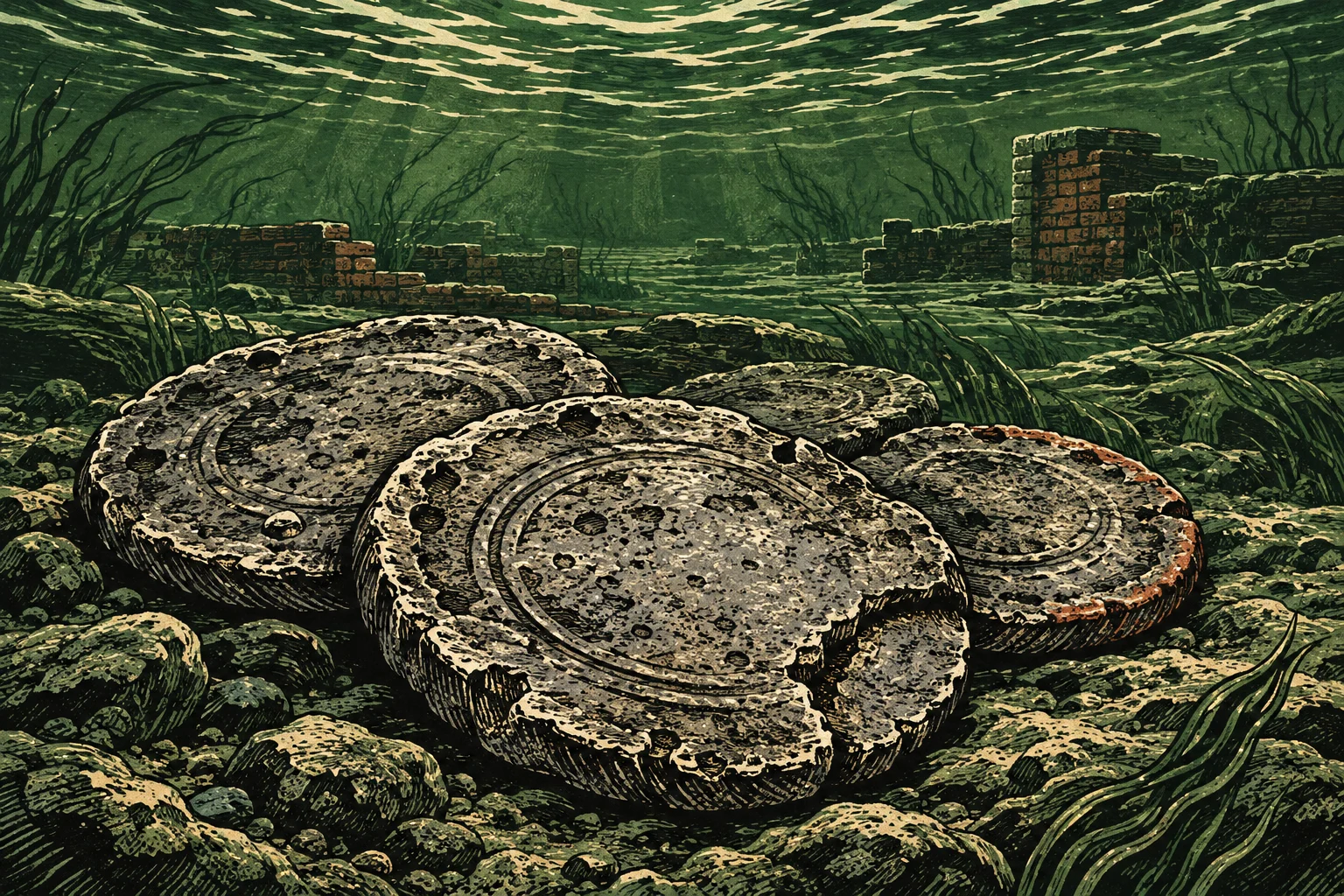
One basic fact about coins is that the stuff they are made of matters, until suddenly it doesn’t. Underwater archaeologists working at Toru-Aygyr, a medieval settlement now under Lake Issyk-Kul in Kyrgyzstan, have found coins from the Karakhanid period, dated to the 10th and 11th centuries. As Arkeonews reported, the researchers suspect the coins contain an unusually large amount of lead. Maxim Menshikov, an archaeologist with the Russian Academy of Sciences who co-leads the underwater work, thinks lead may make up as much as 90 percent of the metal in some of them.
His explanation is about as simple as monetary history gets: the locals were apparently short of copper, so they used something else. In comments carried by the Kyrgyz outlet 24.kg, Menshikov also observed that lead coins are extremely rare in human history. The 90 percent figure is an estimate, though. Nobody will know the actual metal content until the coins have been through a laboratory.
I think this is the interesting part, so let’s take a hypothetical. Say you run a mint and your town needs small change, because people buy bread and pay tolls and settle up at the caravanserai. Copper runs short. You can stop making coins, and then the bread trade falls back on barter and IOUs. Or you can keep making coins out of whatever metal you can get. If you go with the second option, the coin stops being a little lump of valuable copper. It becomes a token, worth whatever people agree it’s worth because of the stamp on it. That deal works perfectly well as long as everyone keeps agreeing to it, and every modern currency runs on it. A town of Silk Road traders that went 90 percent lead was, if Menshikov is right, making something close to a fiat token about a millennium early, and probably because it had no choice.
Sure. Necessity has always been the main driver of monetary innovation.
There is a practical cost to all that lead, though. The coins are in bad shape. According to 24.kg’s account, the metal is brittle and porous and has inclusions that look like sand. That makes the inscriptions hard to read, which in turn makes it hard to say where the coins were minted, and for a coin the mint is most of what you want to know. A rare coin is usually exciting because it’s beautiful or because hardly anyone else has one, like the silver hoard that doubled the known supply of a rare Swedish coin. These are exciting because they barely hold together. Even so, they are physical proof that money was circulating under the Karakhanids, a dynasty that ruled across a large part of medieval Central Asia.

The town under the water
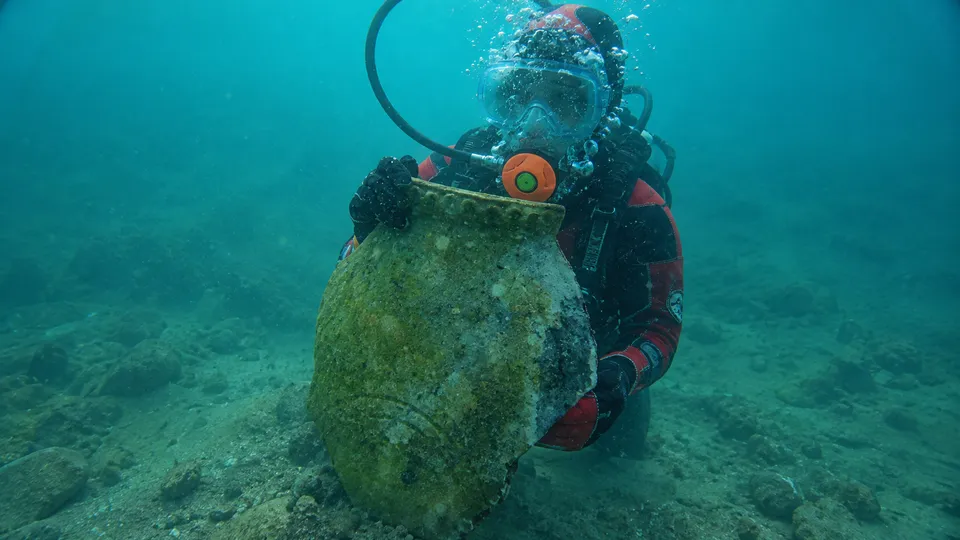
Toru-Aygyr sits in the northwestern part of the lake, on what was once an important stretch of the northern Silk Road. The settlement existed from at least the 10th century to the 13th, and there are signs of later activity across the wider complex. Most of what survives now lies under roughly four meters of water. Nobody is sure what the town was called. An international expedition has been working there since 2023, and Rossiyskaya Gazeta reported the latest finds in early October. After several seasons, the team estimates it has examined only 15 to 20 percent of the complex.
The coins aren’t the only find. The divers have identified seven medieval structures built of fired brick. Menshikov says about six comparable medieval brick structures had previously been documented in the rest of Kyrgyzstan. So one drowned town has more of these buildings than the rest of the country combined, seven against roughly six, which tells you it was a substantial place. What the individual buildings were used for is still under investigation. Earlier seasons turned up architectural pieces that may have come from an important public building, along with a brick structure linked to a millstone. This year added a fragment of a cast-iron cauldron and pieces of large ceramic vessels.
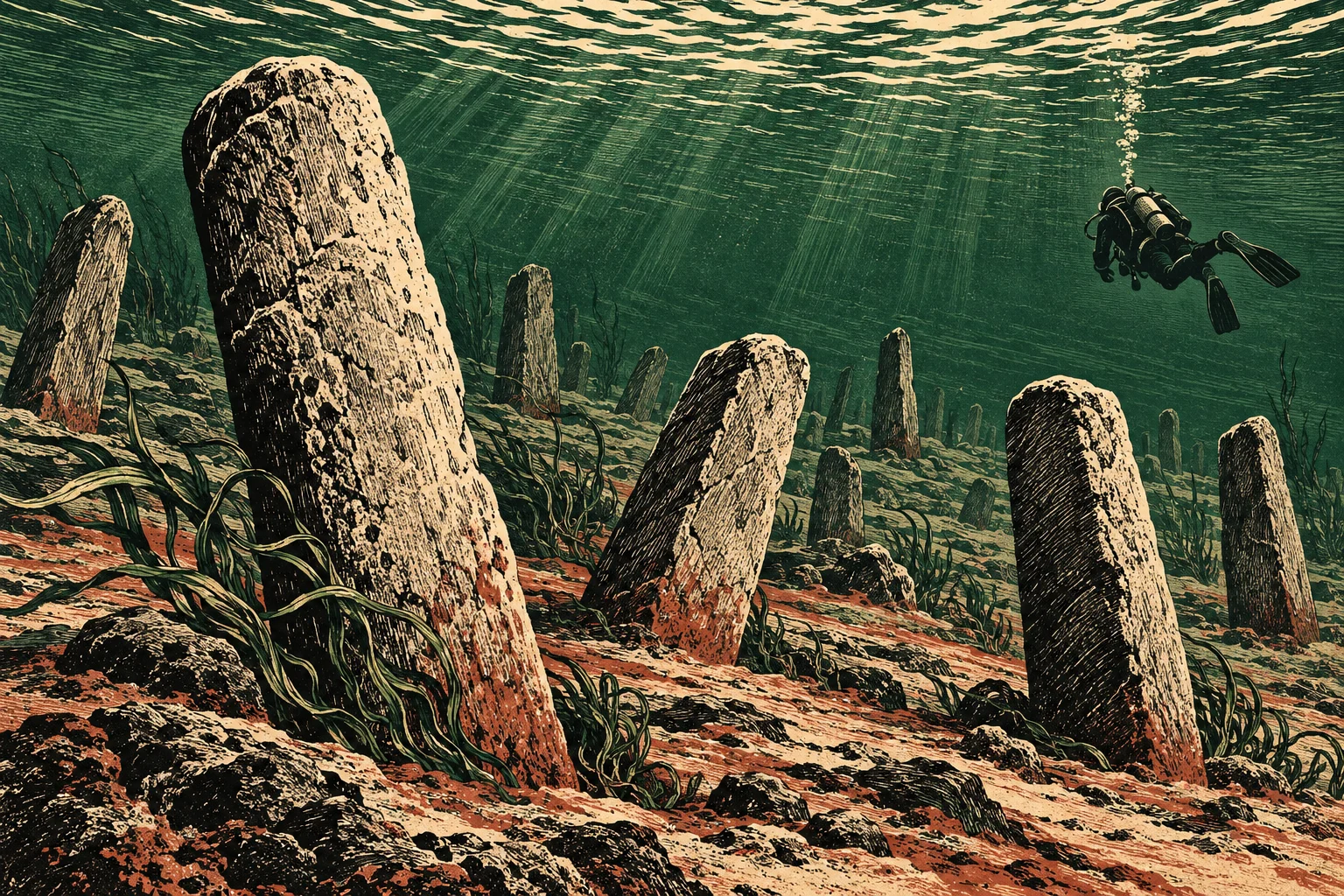
The site also includes a submerged Muslim cemetery from the 13th and 14th centuries. Underwater erosion has exposed some of the burials, and the human remains have had to be recovered for anthropological study.
How it got wet
The big open question is how a trading town ended up underwater. The researchers are weighing two explanations. One is that a strong earthquake caused part of the shoreline to collapse. The other is that slower tectonic changes gradually raised the lake. Specialists from the Schmidt Institute of Physics of the Earth at the Russian Academy of Sciences are working with the archaeologists on paleoseismology, trying to line up the settlement’s history with geological activity in the northern Tian Shan. Underwater drilling has produced samples of buried soil and of old mudbrick walls, which may let them work out the order in which things flooded. They are also using radiocarbon dating and tree-ring analysis.
Earlier coverage was more confident about the answer. In 2025 the Jerusalem Post reported that scientists blamed a 15th-century earthquake for the town’s fall, and the expedition’s Institute of Archaeology has described the site as submerged in the 15th century. The current work treats the mechanism as unsettled: either a single sudden event or a slow rise, and the drill cores are supposed to decide which.
The original objects are not allowed to leave Kyrgyzstan. According to economist.kg and other Kyrgyz outlets, ceramicists in Moscow are making copies of the finds and restoring them to complete form for a future exhibition. So the town’s goods are being reproduced from substitute materials because the real thing isn’t available, which is more or less how its coins were made in the first place.