
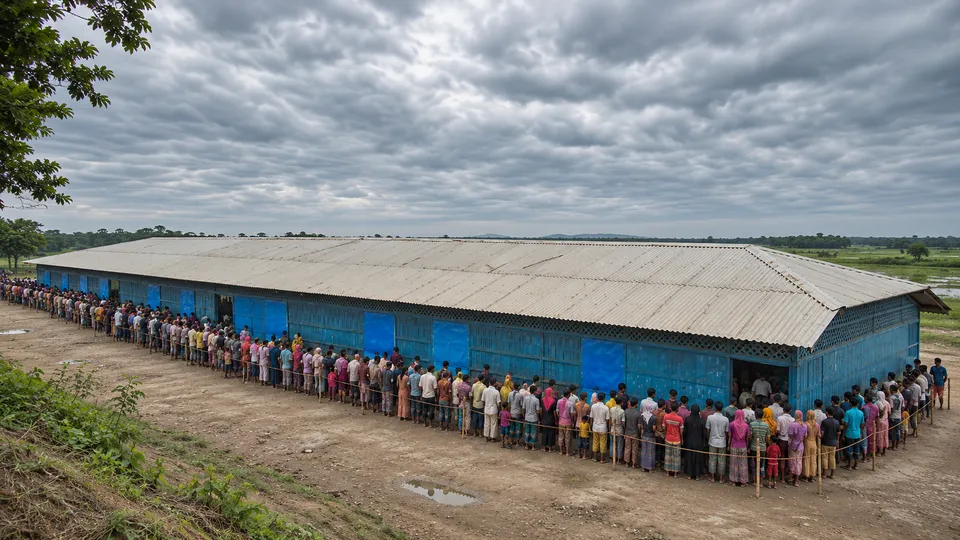
On Thursday, 19 November, at ten in the morning, the International Court of Justice in The Hague will read its judgment in the case The Gambia brought against Myanmar. The court set the date on 3 November, with its president, Judge Iwasawa Yuji, presiding. The question before it has been waiting since August 2017: was what happened to the Rohingya genocide? The ruling is final. It cannot be appealed.
As Marium Ali lays out for Al Jazeera, the verdict comes seven years after The Gambia filed, and more than nine years after an army crackdown in northern Rakhine pushed more than 740,000 Rohingya into Bangladesh within a few months.
A small country, a distant crime
The Gambia has no direct connection to the violence. It brought the case on behalf of the 57-member Organisation of Islamic Cooperation, in which it is an active member. Some observers point to its own past: while the Rohingya were fleeing, Gambians were investigating killings and abductions carried out under Yahya Jammeh, who ruled for 22 years until 2017. A country that had only just begun counting its own dead put its name to the case for someone else’s. That, at least, is one way to read it.
The Rohingya, a mostly Muslim minority, have lived in Rakhine State for centuries. Every government since General Ne Win’s military rule (1962 to 1988), up to and including Aung San Suu Kyi’s civilian administration (2016 to 2021), has treated them as illegal immigrants from Bangladesh. A citizenship law passed in 1982 left most of them stateless. In August 2017, after fighters of the Arakan Rohingya Salvation Army (ARSA) attacked police posts, the army began what it called “clearance operations”. Survivors described massacres, rapes and whole villages burned down.
When the case was filed, Suu Kyi’s government held office, but the security forces answered to Senior General Min Aung Hlaing. He took power in a coup in 2021, and his government has defended the case ever since. So the general’s administration now argues in The Hague on behalf of operations his own troops carried out. Myanmar denies genocide and says its forces were responding to armed attacks.
Through mud, hills and water
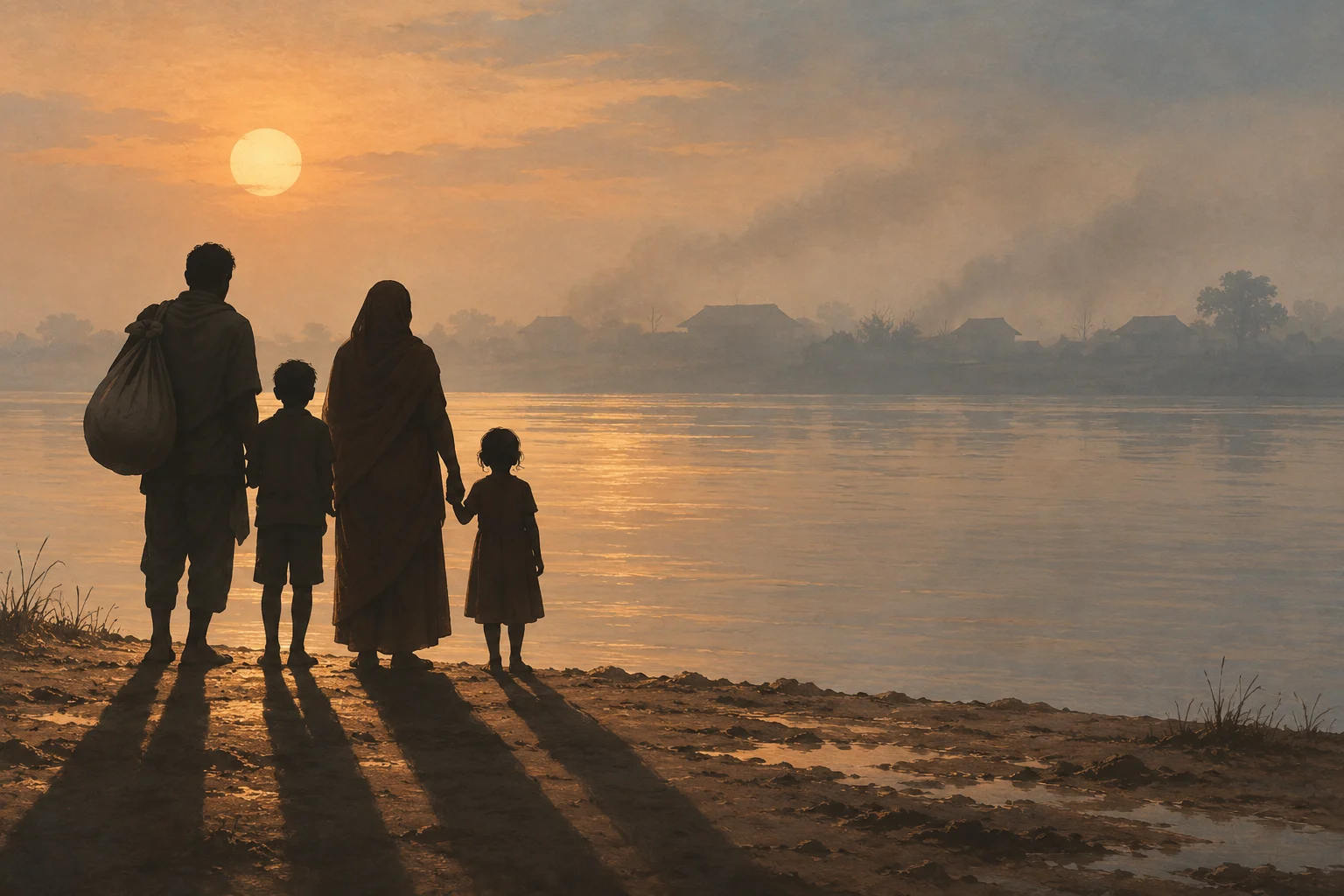
In 2017 Dil Hossain and his wife Alinnesa fled with their newborn daughter, Ishara. Dil’s elderly parents could not escape and were killed, along with several other relatives, Masum Billah reported for Al Jazeera from Cox’s Bazar and Dhaka. “We ran for our lives through mud, hills and water, with the baby tied to us,” Alinnesa said. Ishara has spent almost her entire life in a camp. “The court will find the truth. We suffered, so we know,” her father said.
Nurul Amin, 25, remembers houses, big trees and farmland that fed his family. “The difference is like that between heaven and earth,” he said. “It is 24 hours of depression.” Mohammad Rehan, now 18, still sees the burning houses. Mohammad Zubair, who taught for some two decades in Myanmar and chairs the Arakan Rohingya Society for Peace and Human Rights, said: “They called us Bengali and committed genocide on us.” Then: “The refugee life is worse than jail. There is no hope, and this is unbearable. We want to go back.”
The arithmetic of exile
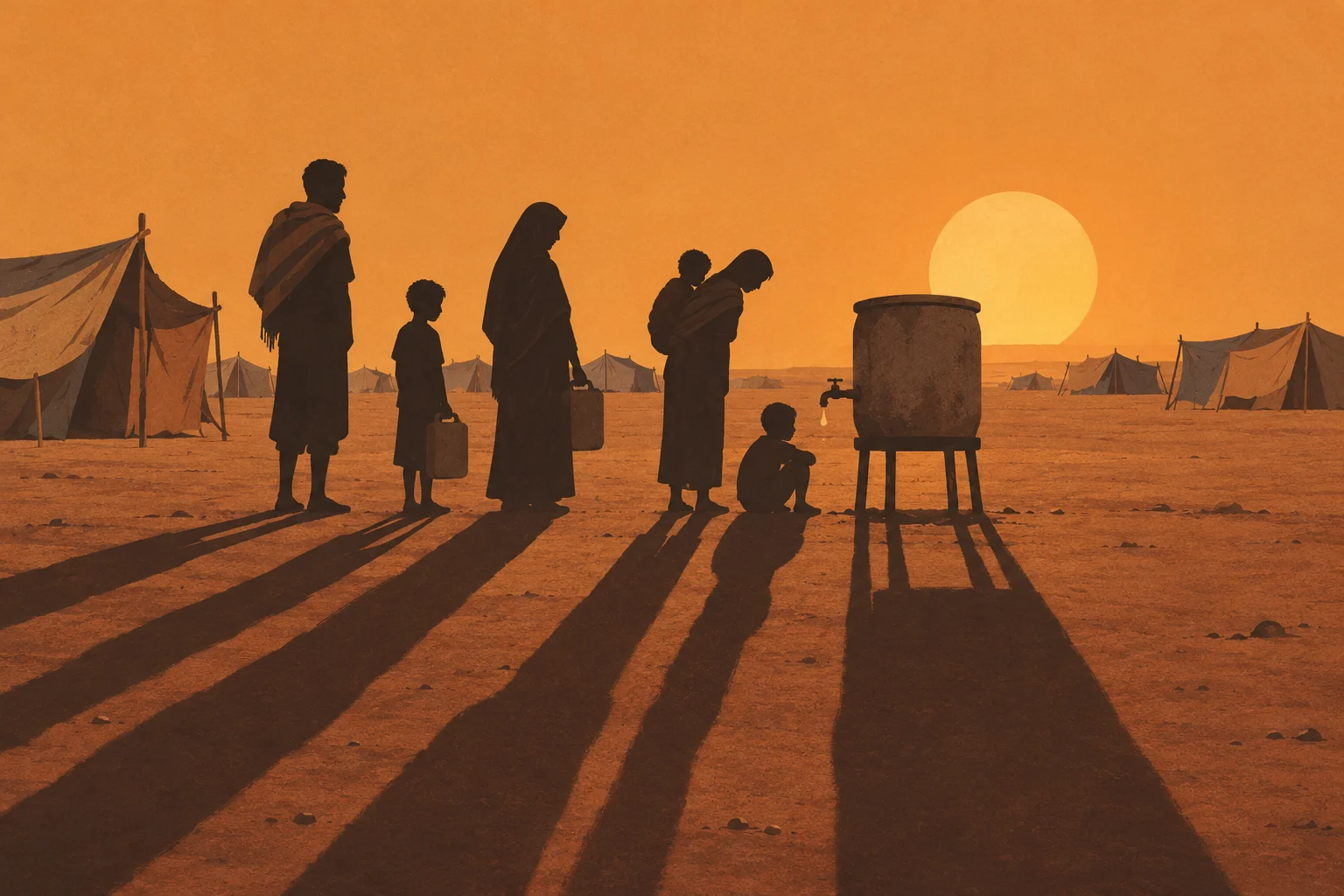
About 1.2 million Rohingya live in Bangladesh, most of them in the camps at Cox’s Bazar. Dhaka wants them to go back, limits where they can move and keeps them out of most formal work, so they live on aid. That aid keeps shrinking. Early in Donald Trump’s second term in 2025, his administration froze or cut much of America’s foreign aid, and other donors have also spent less. A UNHCR study found the cuts weakened registration, legal aid, healthcare, schooling and child protection, leaving refugees more exposed to trafficking, forced labour and child marriage.
Some 520,000 Rohingya remain in Myanmar. Most of Rakhine is now held by the Arakan Army, which has been accused of land seizures, arbitrary killings and torture, while the military has forcibly conscripted Rohingya men to fight against it. In August 2024 hundreds of people fleeing Maungdaw were reportedly killed by drones and artillery as they crossed the Naf River. “These conditions prevent any safe, voluntary, or dignified return of Rohingya refugees,” said Su Mon, a senior analyst at ACLED.
That leaves the sea. UNHCR estimates that 3,135 people have died or gone missing on the crossings since 2022. In April the agency said nearly 900 were lost in 2025, more than one in seven of the roughly 6,500 who set out. Reaching land does not mean staying there: Malaysia has begun sending 1,500 Rohingya back and calls it voluntary.
The word that must be proved
The court judges states, not people. The Gambia accuses Myanmar of killing Rohingya, causing them serious harm, imposing conditions meant to destroy them and preventing births, with sexual violence at the centre of the campaign. As evidence of intent it cites the brutality of the attacks, official tolerance of hate speech and the failure to investigate. Myanmar answers that there is no direct proof of intent, and it denies that The Gambia can seek reparations for the victims. Those reparations would include prosecutions, a safe return, restored property, compensation and the right to the name Rohingya. Human Rights Watch notes that this could be the first time a permanent international court treats sexual violence as an act of genocide.

The ICJ has never found a state responsible for genocide, said Michael Kugelman of the Atlantic Council. In 2007 it ruled that Serbia had not committed genocide in Bosnia but had failed to prevent Srebrenica, where more than 8,000 Bosniak men and boys were killed. Nasir Uddin, an anthropologist at the University of Chittagong, expects a mixed result: “I would not necessarily expect an entirely black-and-white judgement.” Four other genocide cases will be read against this one, among them South Africa’s against Israel.
A court without police
Myanmar is bound by the judgment, but the court cannot enforce it. The Gambia could take the matter to the Security Council, which has never used that power. China and Russia have protected Myanmar there before. Kugelman expects a genocide finding to put pressure on Dhaka to protect the refugees better. He expects much less from Myanmar’s neighbours, which “would likely continue to take a pragmatic position,” he said. “And of course this would redound to the regime’s benefit.” Uddin fears the other result: “I fear that genocide denial is now prevailing over the recognition of genocide around the world.”
Nay San Lwin, cofounder of the Free Rohingya Coalition, asks for citizenship, equal rights and a return to the original villages. He also said what the camps will do whatever the judges decide: “Our commitment to justice does not depend on a single verdict.”