
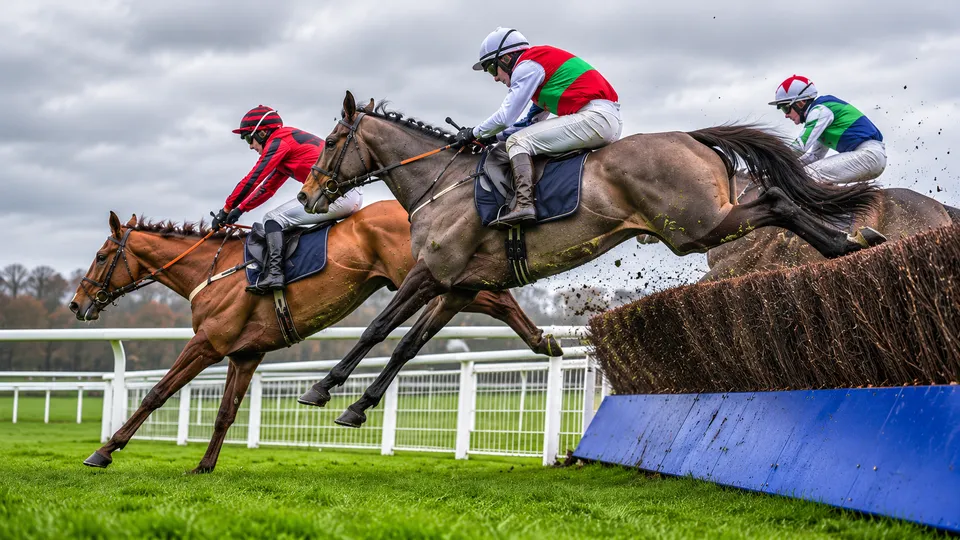
Rain hung over Fergal O’Brien’s racing stables in the Cotswolds, where steam rose from horses returning from the gallops and the smell of hay mixed with wet grass. Behind the doors of the boxes were Miss Tillytucks, Cool Customer, Ignite the Night and Renegade Girl, some of the almost 100 Thoroughbreds at a yard hosting a world-first experiment. As India Bourke reported for the BBC, the subject of that experiment was Sióg Geal—“Bright Fairy”—a young bay mare.
Max Kendrick, a 31-year-old jockey turned assistant trainer, fastened a wide elastic band around her ribs. Beneath its wicking fabric, rubberised electrodes transmitted an electrocardiogram to his phone. A small red light flashed with her heartbeat; on the screen, the trace pulsed like a hospital monitor. A trainer has long learned to read a horse through its movement and behaviour. Here was another kind of reading, addressed to what the eye cannot see.
From Kentucky to Melbourne, tens of thousands of horses already wear devices measuring performance and health. The lightweight monitor tested on Sióg Geal developed from equipment Kendrick used in May 2025, when his ride, Ted’s Friend, became the first horse to wear a heart monitor in an official race. The ambition now reaches beyond winning: wider raceday use could expose cardiac dangers before a horse collapses.
From snapshots to a film
Celia Marr, an internal medicine specialist at Rossdales Veterinary Surgeons working on the British Horseracing Authority’s pilot scheme, says the data could open a “black box” of cardiological secrets. Kamalan Jeevaratnam, professor of clinical physiology and head of the University of Surrey’s School of Veterinary Medicine, leads a team using it to build AI systems that screen for cardiac risk. The purpose, he says, is to understand the heart in ways previously impossible.
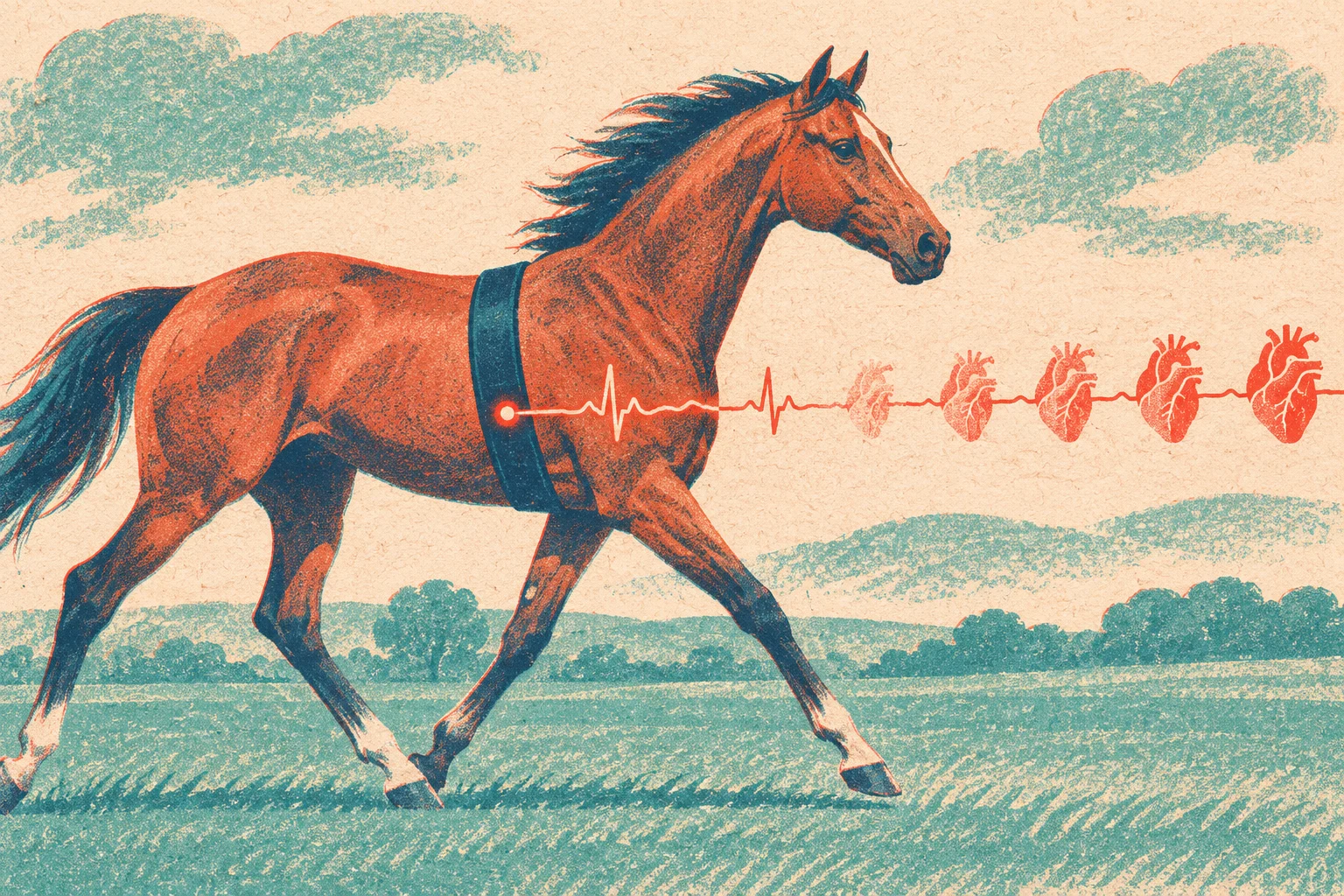
Until recently, equine hearts were generally monitored briefly, often in clinics or other controlled settings, and people could inspect only so many ECG beats. Wearables permit longer observation while a horse moves, revealing subtle changes as well as conspicuous abnormalities. “We are moving from taking occasional snapshots of the heart, to watching the heart’s electrical behaviour almost like a continuous film,” Jeevaratnam says. The advance is especially promising for cardiology, though wearable technology and AI might also help detect musculoskeletal injury, racing’s leading cause of raceday fatality.
The deaths that leave few clues
Sudden death remains unusually difficult to diagnose: many victims show no obvious cardiac abnormality before collapsing or during post-mortem examination. Yet equine cardiologists at the universities of Minnesota and Pennsylvania have collected ECGs from racehorses that subsequently died from the condition and shown a connection with the irregular heartbeat seen in atrial fibrillation. Sian Durward-Akhurst, an assistant professor in large animal cardiology at Minnesota, says such irregularity is already “relatively easy” to screen for before exercise with a stethoscope and smartphone ECG device.
At Surrey, researchers have developed two AI-led approaches: one identifies irregular ECGs associated with atrial fibrillation, the other addresses exercise-associated arrhythmias and helps predict potential cardiac problems. But Marr cautions that no AI tool is close to screening every horse arriving at a track and alerting vets immediately. The systems still need refinement; researchers must establish which arrhythmias are harmless and which may be fatal; and the ECGs must be interpreted in real time.
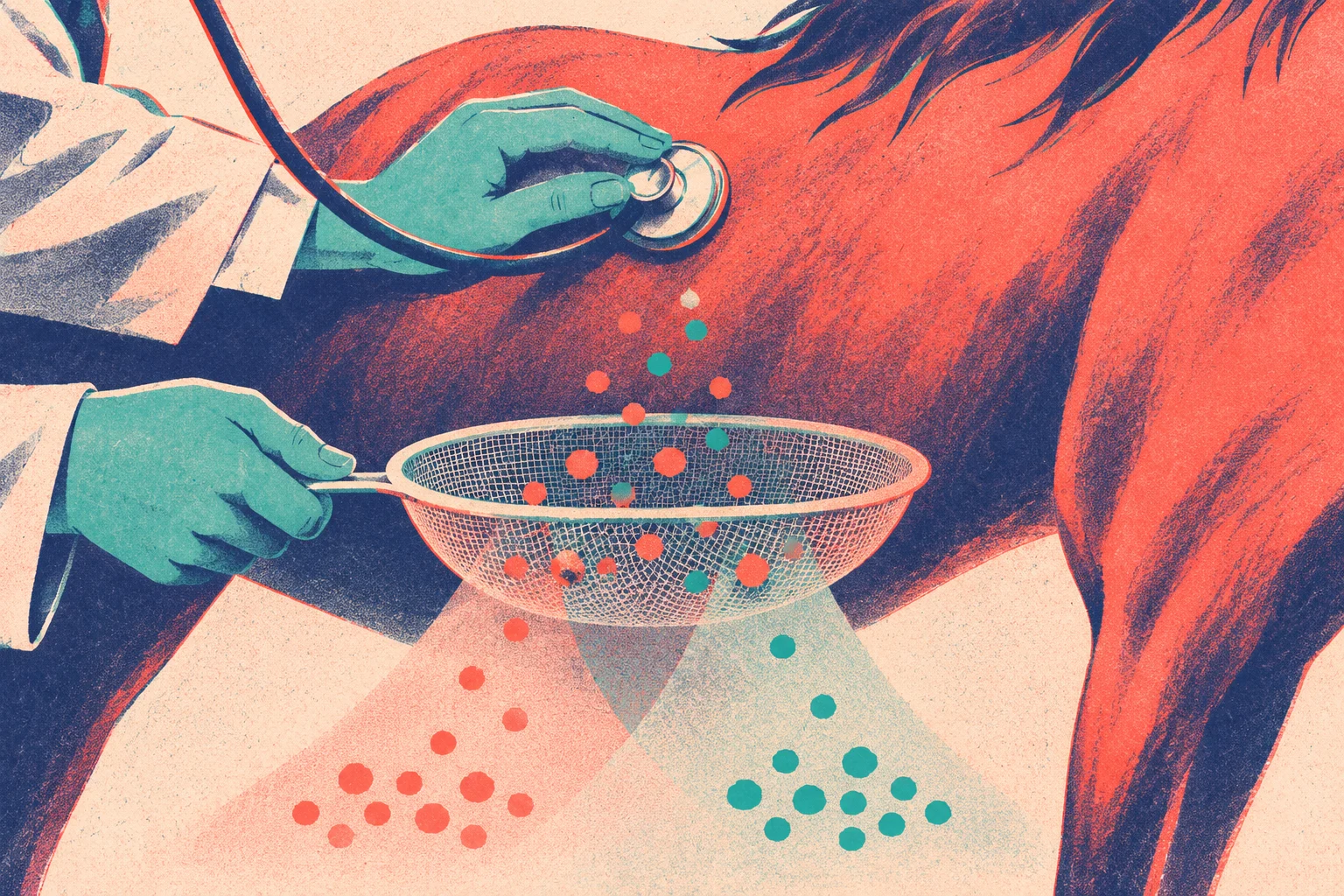
The hoped-for endpoint resembles a warning from a consumer watch. “The horse would be on its way to the start line, and the AI would be sending a signal back to say not to let it run,” Marr says. In that imagined moment, the algorithm would hold the power to stop a race—but only if people were prepared to act on it.
The measure of a good morning
Trackers also record heart rate and stride length, allowing AI to establish what normal looks like for an individual horse. Kendrick sees them as additions to trainers and vets, not replacements: another means of deciding when to rest a horse and when to race. He points to comparable technology in Premier League football, New Zealand’s All Blacks and the NFL. Training yards already use devices including the Arioneo Equimetre and Equimetrics V-Pro, both employed in the BHA scheme. Racing camels wear them in Dubai, while US tracks are deploying StrideSafe sensors to help predict musculoskeletal injury.
Until last year, Kendrick says, a race’s effect on cardiac response was “essentially guesswork”. He approached Sally Taylor, the BHA’s head of equine regulation, safety and welfare, about changing that. Raceday records matter because, as Jeevaratnam explains, they show horses at their physiological limits under genuinely competitive conditions, rather than at rest in a clinic.
What the machine cannot decide
The horse’s exceptionally powerful, adaptable heart may also teach researchers about extreme exercise in humans. Jeevaratnam cautions that the work is unlikely to translate directly into human treatments, but it could inform screening for exercise-related arrhythmias and understanding of their triggers. Marr puts the wider purpose plainly: “In all sports – human too – risk will exist. This is about how we reduce that.”
At Ravenswell Farm, risk still announced itself in an older fashion. A fresh horse leapt sideways on the gallops, throwing its jockey into the mud before bolting with the others. O’Brien, the yard’s 54-year-old Irish “bossman”, hurried to the rider; her body protector was smeared with mud, but she was unharmed. Riders and watchers are trained to remain calm because panic spreads, and relief came only when the loose horse was caught. “I love a Monday,” O’Brien said of the horses’ high spirits, performing a small jig.
He welcomed anything that improves the countless judgments a trainer makes about fitness and health: “You just hope you get more right than wrong.” Difficulties remain. Marr points to the problem of separating cardiac signals from electrical “noise”. Jeevaratnam warns against becoming “over-dependent” on AI and losing the boldness to reject an automated instruction. For now, the technology has not displaced the practiced eye. Watching Sióg Geal jump, O’Brien saw no sign of pain: she was, he said, “looking for the next jump”.