
Over the past year, Ben and Amy Pirri’s effort to reopen Ferns, Carlisle’s general store of more than 180 years, has exposed failing septic systems and repeated contaminant warnings across its compact village center, The Boston Globe reported.
Ferns closed in 2025 after serving generations as a meeting place, a stop for cyclists and the only local source of a jug of milk. The Pirris planned a cafe with a full kitchen, seating and groceries. Then they found there was no sanitary way to handle the building’s sewage.
That problem reaches beyond one store. Carlisle has no municipal water or sewer service, and some lots in the village are roughly the size of three basketball courts. Aging septic systems and drinking wells sit near one another, while water at Town Hall, the library and the school keeps triggering contamination alarms.
The first unmistakable sign came during a tour on Aug. 7, 2025, when Stephen Sousa, a restaurant architect from Brookline, inspected Ferns’s bathroom. He found an unusual toilet and, beneath it, a metal unit as large as four refrigerators. The label identified it as a Clivus composting toilet, the kind associated with remote trails.
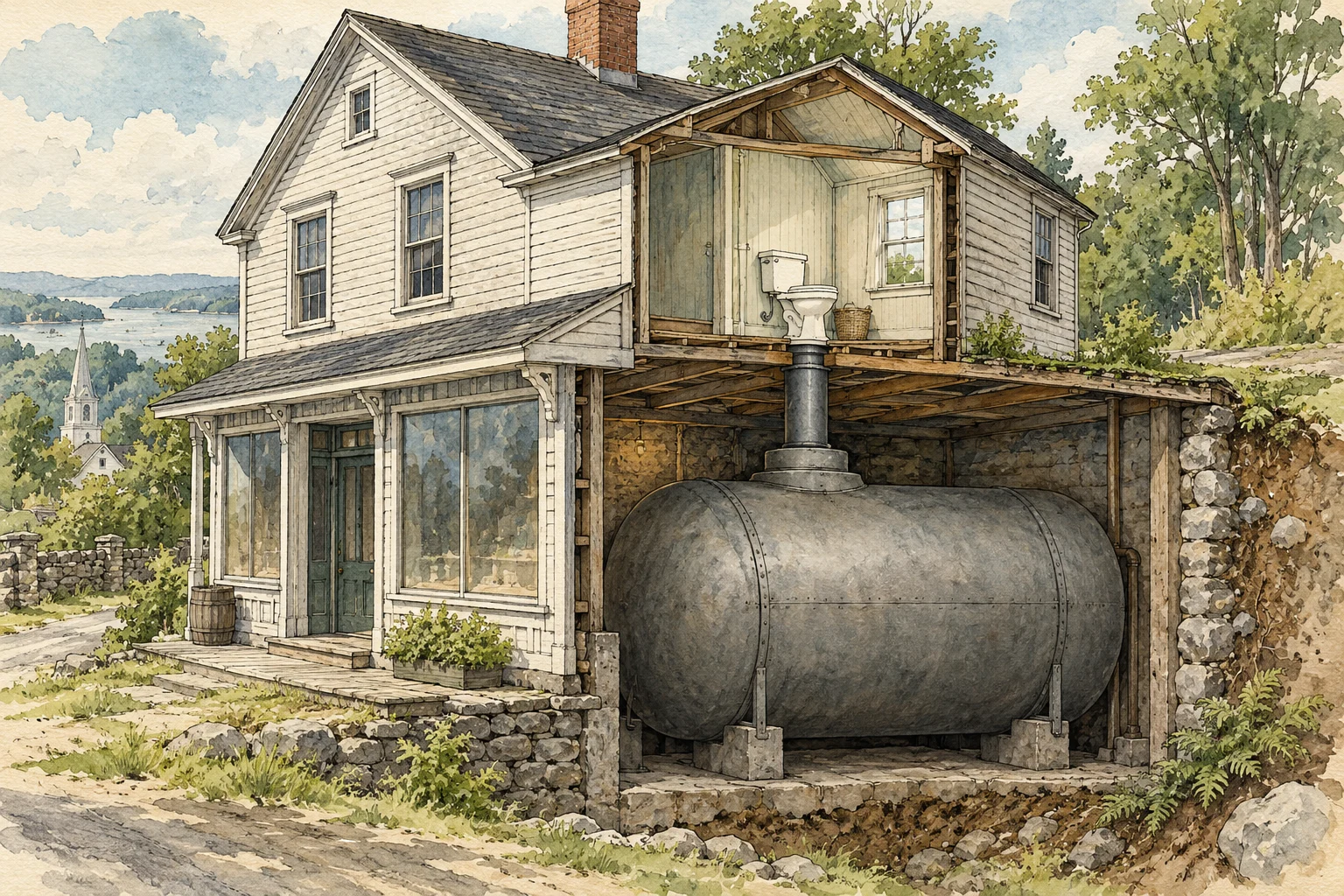
The store needed such a system because its lot lacked enough soil for a conventional septic field. Those fields rely on earth to filter liquid waste before it can reach wells. Carlisle’s fractured bedrock can make that filtration harder and allow wastewater to move more quickly. As septic equipment ages and leaks, local wells face a growing risk.
Susan Murcott, a wastewater lecturer at the Massachusetts Institute of Technology, said that leaving the problem untreated could make it “deadly” over the next few decades. Asked whether she meant to property values, she answered, “to human beings.”
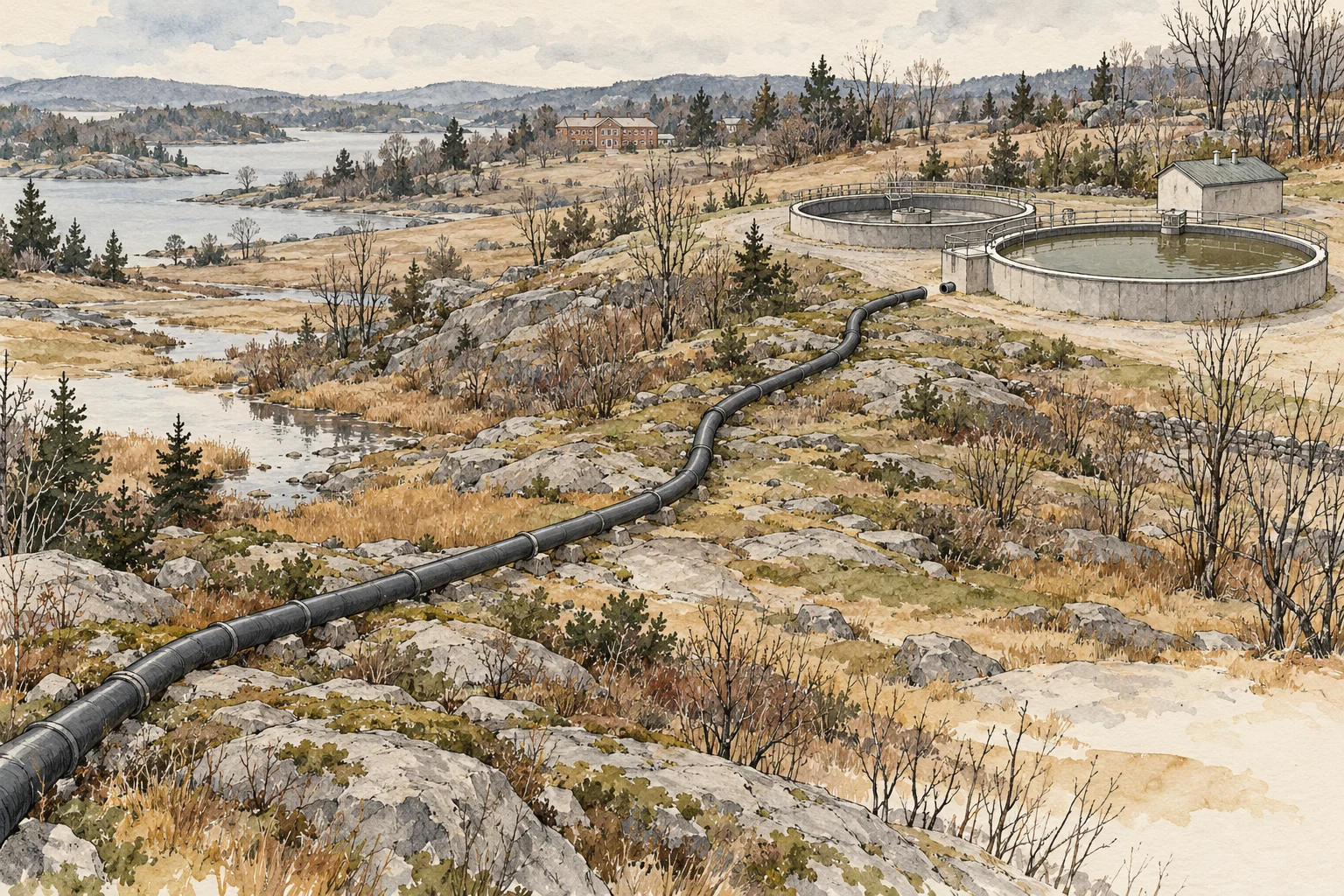
Last spring, the Pirris considered putting a leaching field beneath a neighboring park, but an environmental engineer rejected that option. The police station’s system was too small to accept Ferns’s wastewater. Town Administrator Ryan McLane called the remaining choice a “moonshot”: running 2,100 feet of pipe to the town-owned treatment plant that serves the public school, if the plant had enough unused capacity.
Mr. Pirri recalled that when he asked Carlisle’s health director, Kelli Calo, about spare capacity, she told him: “Yeah. Since the illegal dumping stopped in March, there should be plenty.” Ms. Calo denies making that statement. Plant data do show that wastewater flow rose from November 2025 to March 2026, sending about 750,000 excess gallons of effluent through the plant and into a nearby leaching field.
What began as a store project has become a proposed fix for a wider municipal problem. It has also revived concerns that sewer infrastructure would invite development and change Carlisle. “Carlisle is the town that Carlisle is because it doesn’t have public water and public sewer,” one resident wrote on a forum where the objections fill dozens of pages.
Angus Beasley, a builder who owns the buildings beside Ferns, spent 12 years seeking approvals to restore a deteriorated historic house, including fighting over where its wastewater could go. He calls the town’s committee system “gridlocracy”: groups can block or overrule one another until a project stops.
A wildlife conservancy abandoned a property purchase after neighbors threatened litigation, and a foundation withdrew money for pickleball courts. Mr. Beasley said a planning consultant once returned Carlisle’s money and resigned the town as a client. Mr. Pirri, who is 34, runs a car-detailing company named No to the Man Brands, drives a $315,000 Porsche and did not attend college.
He is betting that persistence and the pipe to the school plant can make both the store and the village system workable. “The Romans figured this out a long time ago,” he said. “When you have density, you can’t put your [expletive] there. You gotta take it somewhere else.”