
At midnight on 31 October a United Nations mission expired, and a promise went with it. The promise was in its name. MINURSO stands for the United Nations Mission for the Referendum in Western Sahara. It was created in 1991 to watch over a ceasefire between Morocco and the Polisario Front and to prepare a vote on who the desert territory belongs to. The 1991 accord said that vote would come within six months. It never came. For thirty-five years the mission carried the word “referendum” the way an old official carries a title for a post that no longer exists.
On Sunday, the day after the mandate lapsed, the Secretary-General spoke through his spokesman. “The Secretary-General said he remains concerned about the security situation throughout the territory and the risk of hostilities escalating,” Stephane Dujarric said in a statement, as Al Jazeera reported. António Guterres, whose own decade at the head of the organisation is drawing to a close, is losing one of the oldest missions under his authority.
The quarrel over one word
The end came in the Security Council on Friday, 30 October. The United States had drafted a resolution that would have kept the mission alive for one more year, but changed. The word “referendum” would leave its name, and Morocco’s autonomy plan would become the only basis for future negotiations, Al Jazeera explained. According to Western Sahara Resource Watch, the text would have extended the mission to 31 October 2027 and, from 1 November 2026, renamed it the United Nations Mission in Western Sahara: MINUSO. One letter lost. A whole history inside it.

Eleven of the fifteen Council members voted for it, France and Britain among them. Russia voted against, and Russia holds a veto.
The American ambassador, Mike Waltz, complained that the veto had been used to “preserve the letter R” for referendum. The plan, he said, “would have moved the 50-year conflict forward”, and the status quo could not stand. Vassily Nebenzia, for Russia, answered that the draft took one side and that the Council “cannot automatically predetermine matters relating to sovereignty.”
Russia then put forward its own draft, a plain renewal with nothing changed. It failed too, short of the nine votes a resolution needs, though accounts of the tally differ. Al Jazeera gave it two votes in favour, one against and eleven abstentions. The Washington Post counted three in favour (Russia, China and Somalia) with one against and eleven abstaining, so Washington never had to use its own veto. Either way, two great powers had each sunk the other’s text, and the mission sank between them.
Celebration in El Aaiun
In Rabat the failure was taken as a victory. The royal palace called the non-renewal a “significant development” and said Western Sahara should now come off the Security Council’s agenda altogether. UN staff and equipment, it said, should leave. It also said Morocco remained committed to the ceasefire. Morocco’s envoy at the UN addressed the Sahrawis directly: “Let these people go back to Morocco… let them go home.” In El Aaiun, the territory’s main city, people celebrated. After the vote the United States declared that a referendum “will not happen”, Morocco World News reported.
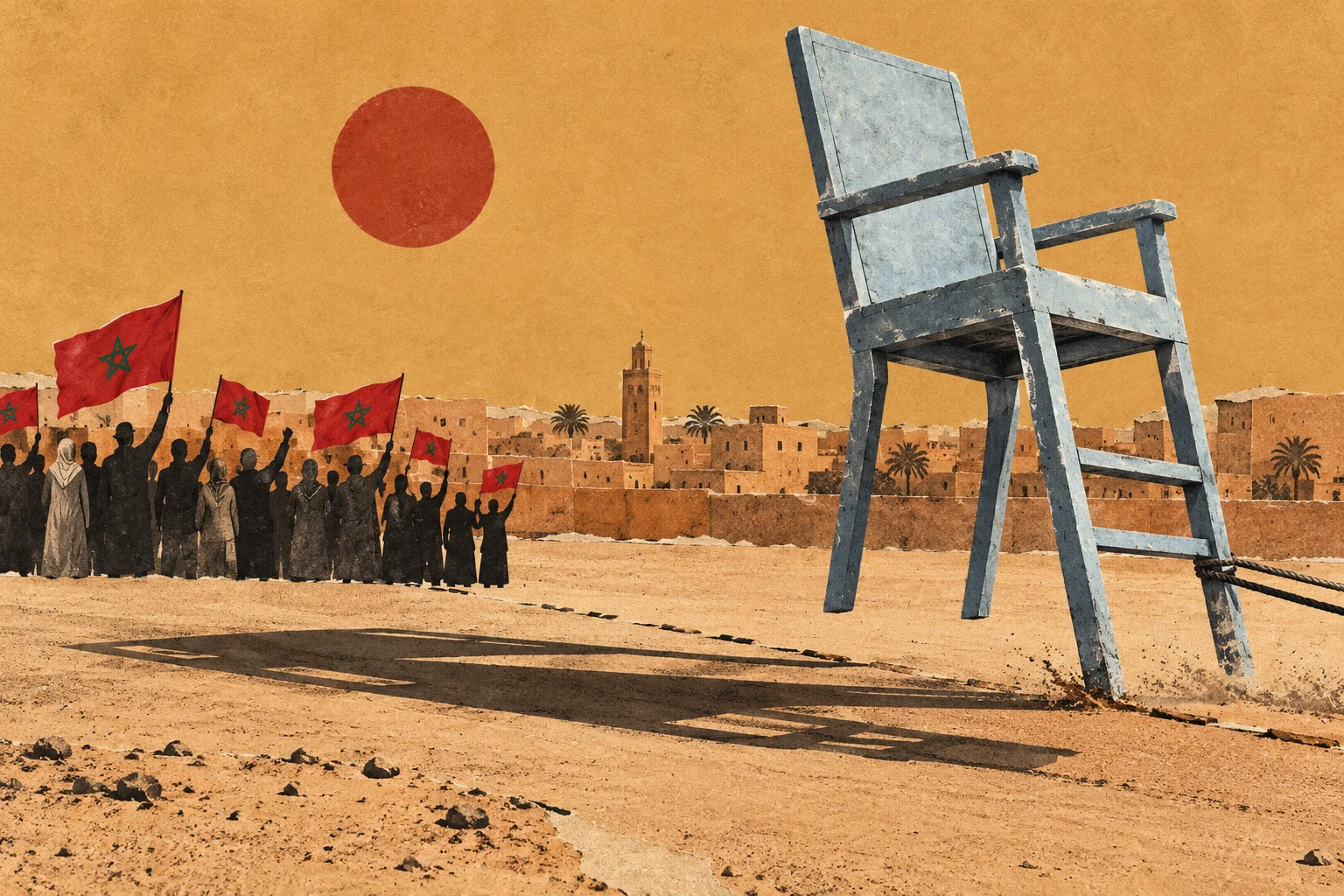
There is an irony here, and it is worth saying plainly. Morocco wanted the mission reshaped. Instead it was abolished, and Rabat finds the second outcome better than the first. Perhaps the lesson, offered as reflection and not as fact, is that power often has no need to win an argument. It is enough for the argument to stop. Last October the Council had already endorsed Morocco’s proposal, under which the territory would run its own internal affairs under Moroccan sovereignty, as a basis for talks. The historian Selim Balouati Lakhloufi told Al Jazeera that the latest events back Morocco’s strategy and move the debate toward autonomy and away from independence, which he warned could drift “further and further out of reach.”
The camps at Tindouf
The other side measures time differently. The Polisario declared the Sahrawi Arab Democratic Republic in 1976. In 2020 it announced it was returning to armed struggle, and low-level fighting has gone on ever since. At least 170,000 Sahrawis live in refugee camps around Tindouf, in Algeria. Sidi Omar, for the Polisario, welcomed the veto and said the American text would have undermined the Sahrawis’ right to self-determination.
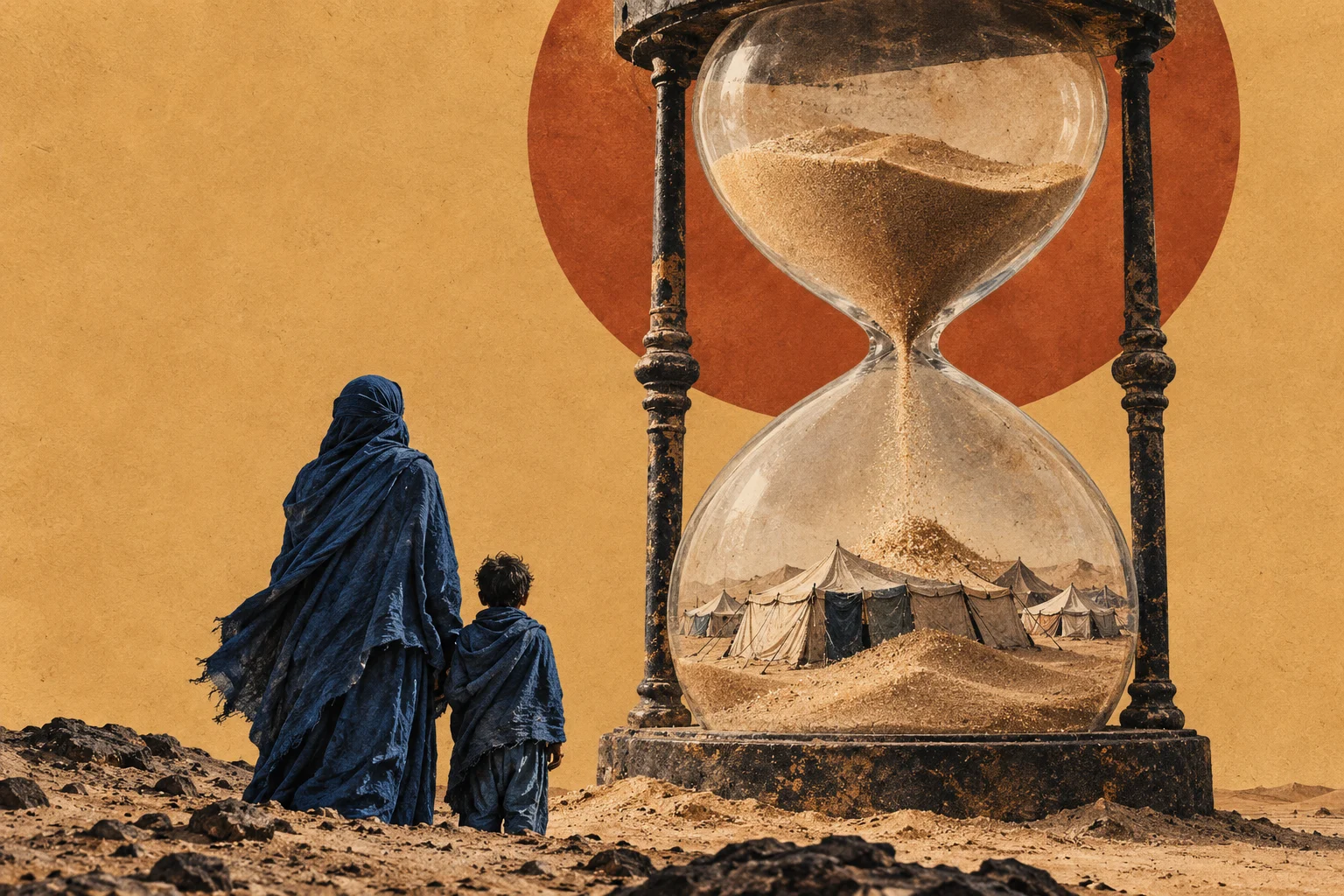
Algeria, which hosts the camps, regretted the American draft and called it excessively pro-Moroccan. Its envoy thanked Russia, called the text “a flagrant attack” on “the very foundation of our organisation”, and complained that the Sahrawi cause had been “diluted to the concept of refugee populations.”
Set the numbers side by side. MINURSO had 155 military personnel and a budget of $62m for the fiscal year that began in June. Morocco is estimated to keep between 100,000 and 140,000 troops in the territory. The mission was never an army. It watched the ceasefire. Now nobody from the UN is watching.
What is left
The Secretary-General’s office insists that something survives. The end of MINURSO’s work does not cancel the people of Western Sahara’s inalienable right to self-determination, Guterres said, according to UN News, and the UN will keep supporting talks through his personal envoy, Staffan de Mistura. Oxfam warned that “the loss of MINURSO’s monitoring and de-escalation functions risks undermining security and stability, with serious consequences to civilians and prospects of a peaceful resolution.”
Nor is the door formally shut. The United States, or any other Council member, can table a new draft. Until someone does, the ceasefire line runs through the sand with nobody from the UN standing on it, for the first time since 1991.