

For eleven years a man from eastern Massachusetts carried one fact through the waiting rooms of American medicine. He took it to Massachusetts General Hospital in Boston and onto a machine that did the work of his heart and lungs. He took it to doctors in primary care, cardiology, nephrology, rheumatology, general medicine, sleep medicine and psychiatry, and later to an endocrinologist and a hematologist. Each of them examined him and wrote down what they found. He told none of them.
The fact was trenbolone. It is a synthetic derivative of testosterone, one of the anabolic-androgenic steroids, and it is approved only for veterinary use. In the United States it goes into beef cattle. The original federal application, filed by Roussel-Uclaf, describes it as an ear implant placed under the skin with an implanting tool. A current product, Revalor-H, combines 140 mg of trenbolone acetate with 14 mg of estradiol so that heifers fed in confinement for slaughter put on weight faster and get more out of their feed.
His doctors pieced the case together without his help, and as Beth Mole reported for Ars Technica, they have now written it up for the New England Journal of Medicine. The case record, Case 32-2026, “A 50-Year-Old Man with Recurrent Cardiomyopathy”, appeared on November 11. Among its authors is Harrison G. Pope.
The first collapse
He was 39 when it began. He came home from the Caribbean with a fever and chills and could not breathe properly, and he went to Mass General. Tests showed an acute kidney injury, liver damage and a damaged heart. The left ventricle was pushing out only 21 percent of its blood with each beat, where a normal heart manages more than 50. Within hours it got worse, and he was put on venoarterial extracorporeal membrane oxygenation, or ECMO.
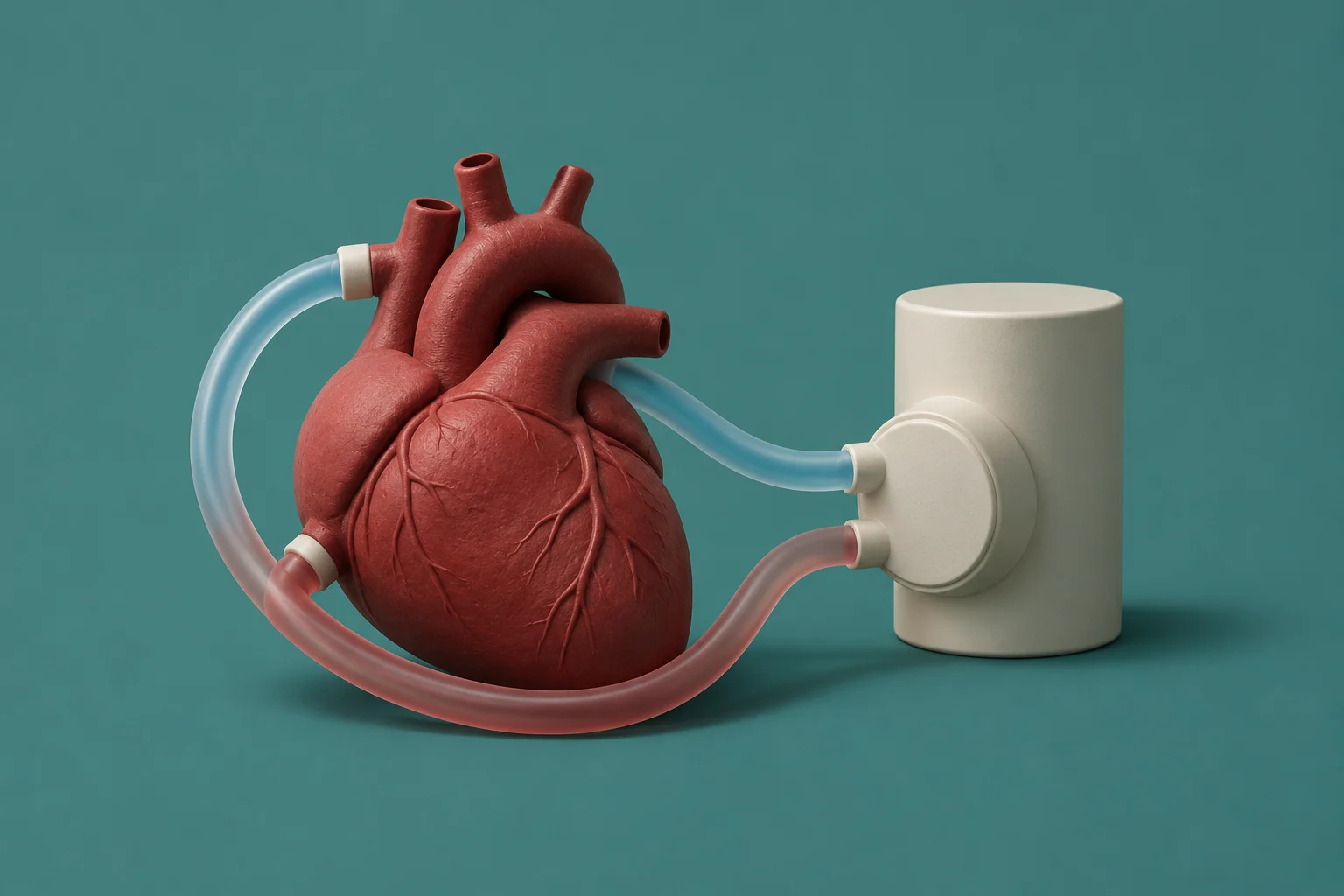
He recovered quickly. A few days later he came off the machine and his heart function was back to normal. The doctors looked for a cause and found almost nothing: only a slightly raised level of antibodies against a toxin made by Streptococcus bacteria. That pointed to poststreptococcal myocarditis, a rare complication of strep infection. It was their best guess. They sent him home with antibiotics and blood pressure drugs.
Two years later he went to a different hospital with sharp pain in his abdomen and legs. Doctors there found dying tissue in his kidneys, narrowed renal arteries that suggested renal-artery stenosis, and inflamed blood vessels. They could not say why. He left with anti-inflammatory drugs.
An answer for every symptom
Then came five years of specialists. At about 46 he told his primary care doctor he was tired, and his testosterone came back low. He told an endocrinologist about the fatigue, a weak libido and poor sleep, and was advised to get treatment for obstructive sleep apnea, which can lower testosterone. A year later a routine blood test showed too many red blood cells. The hematologist recorded a blood pressure of 150/108 mm Hg, found nothing else wrong, and put the erythrocytosis down to the sleep apnea and the narrowed arteries.
Every office gave a reasonable answer to the question in front of it. Large institutions tend to work this way. They are thorough within their own walls and slow to see what connects them, and they depend on what people are willing to tell them.

The return
In 2026, aged 50, he came back to Mass General. He had once again just returned from the Caribbean, and his heart was once again failing. This time the record filled in his life. He lived with his wife and children, worked as a facilities manager, and called himself a workout “fanatic.” He used tanning beds and spray tans. For years he had had erectile dysfunction and a reduced libido. He had mildly enlarged breast tissue, worsening insulin resistance, low HDL cholesterol and fatty liver disease.
He had had five days of worsening chest tightness and pressure, tiredness, swollen legs and trouble breathing. His heart rate was 134 and his blood pressure 146/106 mm Hg. The doctors described him as “muscular, tanned, anxious, and in mild distress.” His left ventricle was ejecting 20 percent of its blood.
They ruled out the infections that inflame the heart, autoimmune disease, side effects of medication and toxins. What remained was high-dose testosterone or an anabolic steroid, and it explained more than his heart. It accounted for the breast tissue, the liver damage, the insulin resistance, the kidney injuries, the blood pressure and the excess red cells. The fatigue, poor sleep and low testosterone that had been blamed on sleep apnea could instead be hypogonadism: the body stops making its own hormones after a flood of artificial ones.
The doctors got ready for a delicate conversation. When they raised the subject, he confessed. He had been taking high doses on and off to build muscle, with the most recent dose just before the trip. The drug was trenbolone. His total testosterone was above 1,500 nanograms per deciliter, the top of what the assay could measure; the test’s normal range is 249 to 836. The final diagnosis was androgen excess–related cardiomyopathy.

Millions of users
The authors do not present him as a curiosity. “Use of AAS has now become a major international substance use disorder,” they write. In the United States an estimated 2.9 million to 4 million people use these drugs, most of them male athletes. That is more Americans than are living with HIV. According to the journal’s teaching points, anabolic steroids are estimated to cause 1.5 percent of cardiomyopathy cases in people younger than 65.
“Clinicians should be prepared to encounter increasing numbers of patients presenting with the long-term effects of AAS exposure, including cardiomyopathy, atherosclerotic disease, and anabolic steroid–induced hypogonadism.”
The slow road back
The main treatment was simple: stop taking the drug. He was given medicines for blood pressure, heart failure and diabetes. Four months later his left ventricle was ejecting 49 percent of its blood, and his liver had improved.
The hormones were harder, and the doctors call this kind of recovery “lengthy and varied.” He was over 35, had used steroids for more than a decade, and already had dysfunction before he stopped. Six months in, his hypogonadism symptoms were still significant. Clomiphene, a drug sometimes used to restart a man’s own testosterone production, did not work for him. Testosterone applied to the skin did not end the erectile dysfunction. His doctors warn that the hypogonadism could take up to three years to resolve.
At his last follow-up, eight months after the diagnosis, he said he was still off the steroids. He had no symptoms of heart failure.