
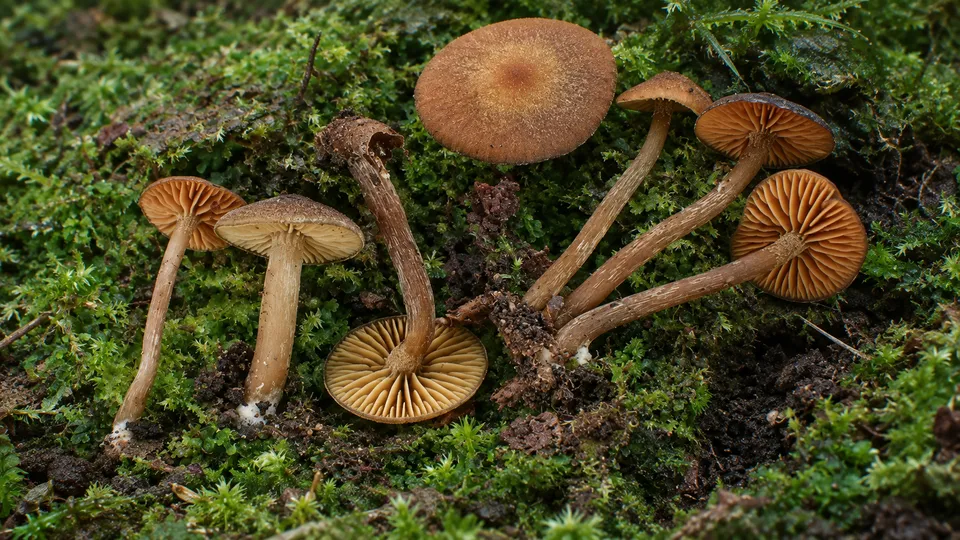
Researchers at the University of Florida have identified the first mushroom known to contain both a psychedelic compound and a deadly toxin, in a study published on Wednesday in the journal Current Biology.
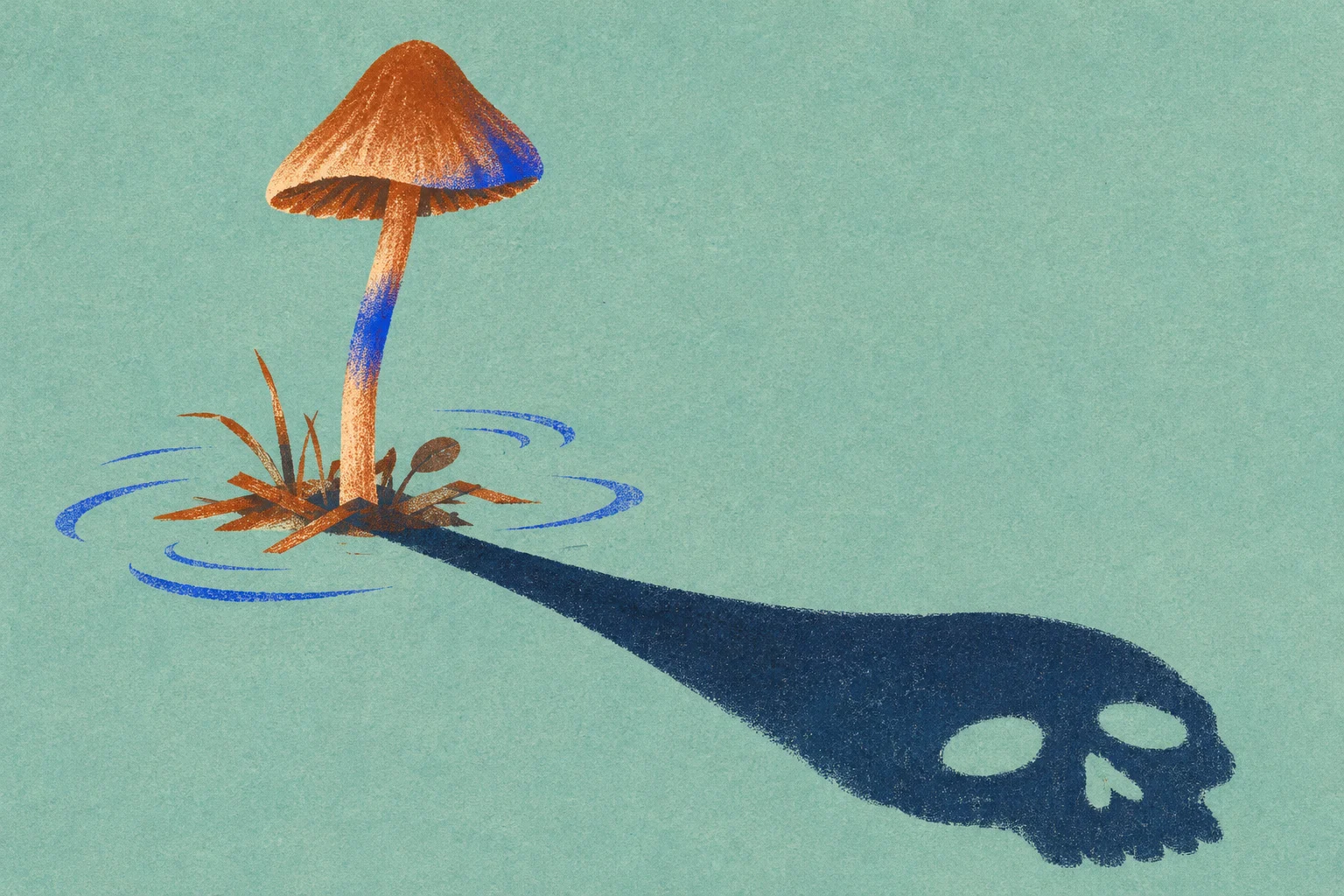
The species, Galerina indica — now dubbed the “dark magic mushroom” — carries psilocybin, the naturally occurring Schedule I substance behind magic mushrooms’ hallucinogenic effects, alongside amatoxins, the compounds responsible for fatal mushroom poisonings. The two were not previously known to occur together in a single fungus, according to the University of Utah, in an account adapted from a University of Florida report by Chris Vivian.
Andrew Kunik found the mushroom while documenting fungi as an undergraduate at the UF/IFAS Ordway Swisher Biological Station, working in the lab of Matthew E. Smith, a professor of plant pathology and Florida’s state mycologist. It was an unremarkable-looking little brown mushroom of a genus already known to harbor deadly amatoxins — except that it stained blue when handled, a tell of some psychedelic species.
“I did the bioinformatics and genome work, and Michael did the chemical analysis. We matched up our findings and confirmed that we saw both compounds,” Mr. Kunik said. “I could hardly believe it. We knew it was possible but tried not to get too excited until we did a more rigorous analysis.”
The chemical analysis was done by Michael Christopher and Timothy Garrett of the University of Florida’s chemistry department, with Ben Lemmond of Dr. Smith’s lab and Jason Slot of Ohio State University. The team concluded that the genes for producing psilocybin and amatoxins most likely entered Galerina through at least two separate instances of horizontal gene transfer, in which genetic material moves between distantly related organisms rather than passing from parent to offspring.
“Horizontal gene transfer is like if we shook hands and some of my DNA incorporated into your genome,” said Bryn Dentinger, a co-author and mycologist at the University of Utah who guided the evolutionary analysis. “Two independent horizontal gene transfer events for these specialized metabolites in one mushroom genus are unheard of.”
Why a mushroom would make both compounds is an open question. Amatoxins may deter animals from eating the fungi, but psilocybin’s ecological role is not understood either, Mr. Kunik said, and the researchers suggested future experiments could disable the relevant genes and observe the effects.
The species has been documented only a handful of times worldwide. “These mushrooms are really hard to find. They are small and brown, like hundreds of other mushroom species,” said Dr. Smith, the study’s senior author. The specimens used in the research are now held in the Natural History Museum of Utah’s collection for future study, and Mr. Kunik, now a postbaccalaureate researcher at Harvard, is continuing his work on fungi.