
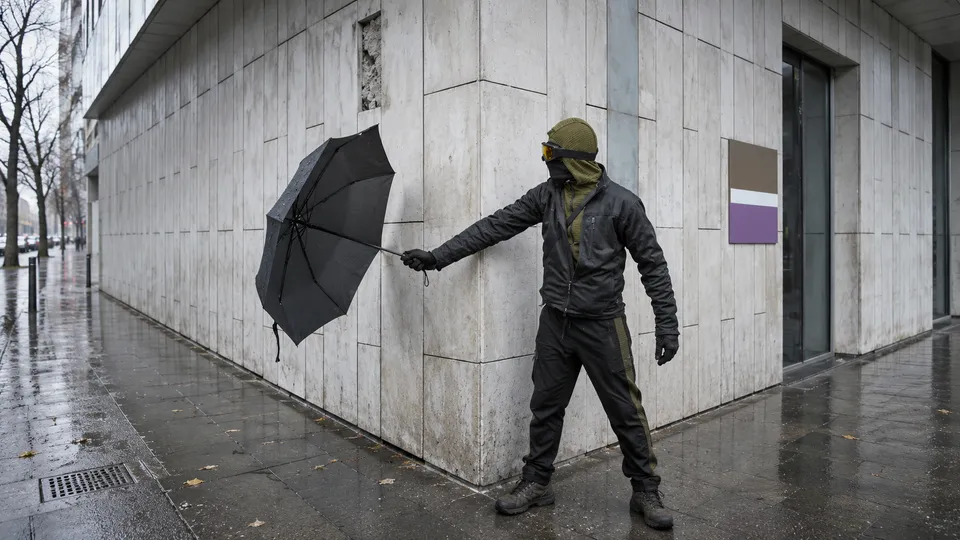
A few hundred people dressed in black are enough to change the policing arithmetic of a march. Al Jazeera reports that groups of that size have appeared repeatedly in France, Italy, Spain and Albania, clashing with law enforcement, smashing public and private property, setting fire to cars and buildings, and facing accusations of break-ins and thefts ranging from food to jewellery.
The important mechanism is not the colour. It is attribution. Identical black clothing, covered faces and movement as a cluster make it harder for police to connect a specific smashed window or thrown projectile to a specific person, which is what an arrest and later a prosecution require. The tactic converts a crowd into a compliance problem: officers can see an offence and still lack an individual suspect.
That is why the same account stresses mobility. It cites a report describing a “high degree of mobility” used to maximise potential damage while minimising the risk of activists being arrested. Mobility matters because fixed battles favour the police: lines hold, cameras record, reinforcements arrive. A moving group forces officers to decide between protecting storefronts, containing the march and chasing suspects, usually with too few units for all three.
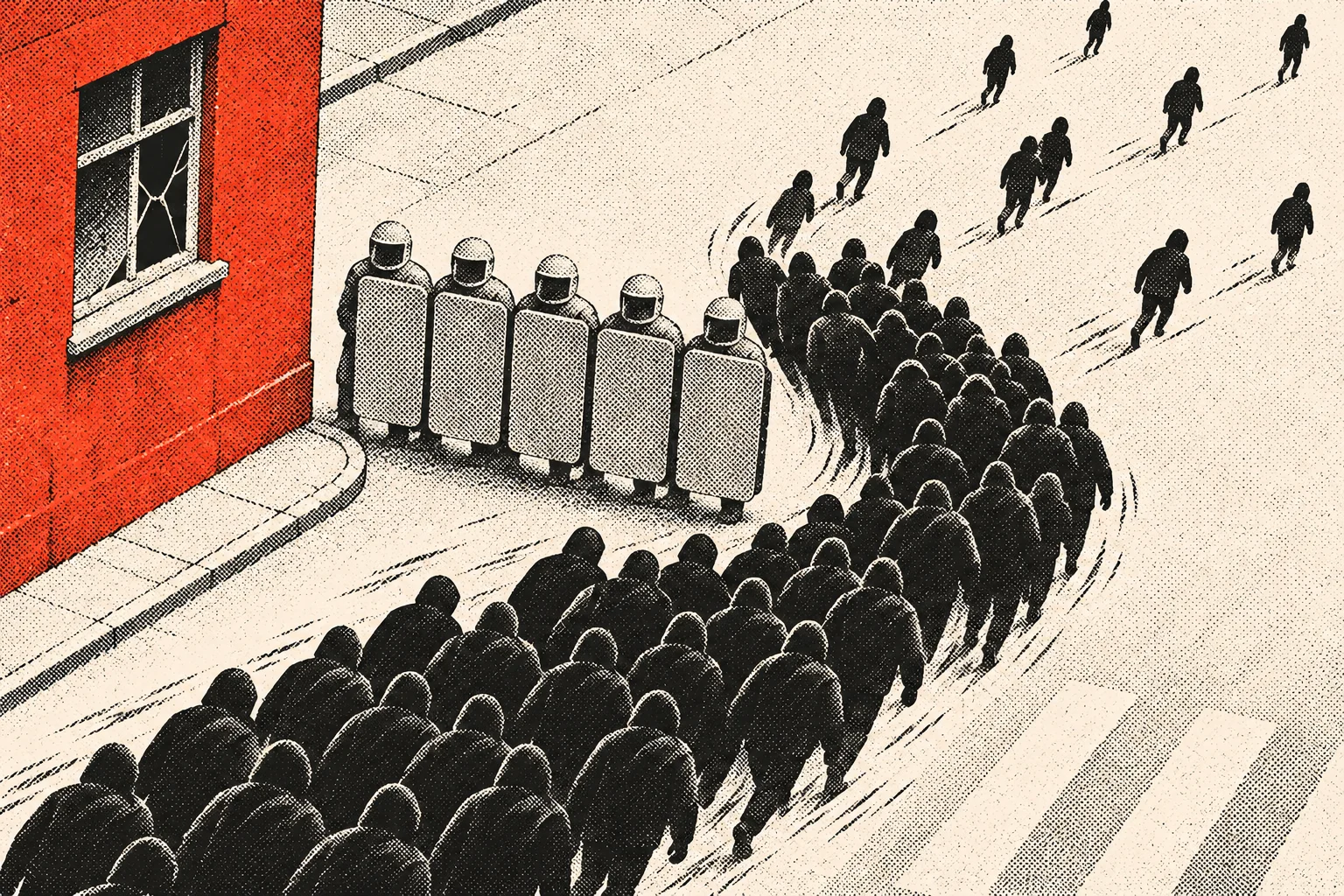
The label is older than the current European unrest. Al Jazeera’s account points back to the 1999 World Trade Organization ministerial meeting in Seattle and to France’s June 2016 protests against the Loi Travail labour law as earlier cases where black-clad contingents confronted police. The continuity is the tactic, not evidence of one durable organisation issuing orders across borders.
The numbers that would settle the argument are mostly absent from the public record assembled so far. A claim that “nobody can stop them” is weaker than it sounds if later case files show named defendants, phone records, seized clothing or convictions for identifiable acts; it is stronger if events repeatedly end with damage and no matching arrests. The bundle of reporting establishes presence and allegations, not a clearance rate.
There are at least three different measurements officials can make after one of these appearances: arrests during the event, charges days later after video review, and convictions that survive appeal. News reports usually capture the first and sometimes the second; the third is the one that tests whether anonymity actually worked. Comparing “hundreds present” with “some arrested” without the later denominator overstates impunity.

The political cost is also asymmetric. A few broken windows and burned cars can dominate coverage of a demonstration whose organisers numbered it in the thousands, letting opponents reclassify a wage, rent or foreign-policy march as a public-order story. That does not require a conspiracy. It requires only that Property damage is easier to film than a pay demand.
What to watch next is concrete: per-city counts of participants, arrests on the day, later identifications from footage, injuries by side, insured and uninsured damage where published, and whether prosecutors charge participation in a black-clad group or only individual acts. If those denominators stay missing, the Black Bloc remains legible as a tactic and unmeasurable as a movement.
The open question is not whether such groups can be seen; they are designed to be seen. It is whether European police forces can turn visibility into admissible identification faster than a few hundred mobile people can move, disperse and change clothes. The next useful number is convictions per identified participant, not arrests per headline.