
It was a Tuesday night, the night for cards and bocce. According to the Boston Globe, when the women of the Santa Maria di Prata Society arrived at their hall on Walnut Grove Avenue in Cranston, Rhode Island, they found the lounge door locked. The men were already inside. Anthony Mastantuono, the society’s president, wanted the women to prove they were members before he let them in.
“I’ve been a member for 17 years. I’ve never had to show my card, never, ever,” one of the women answered. Then she and the others held up their auxiliary cards and walked past him.
A door, a card, a man asking for papers. Small institutions are no different from large ones here. They tend to remember who built them only when someone starts asking who is allowed inside.
Brick, marble and a statue from Prata
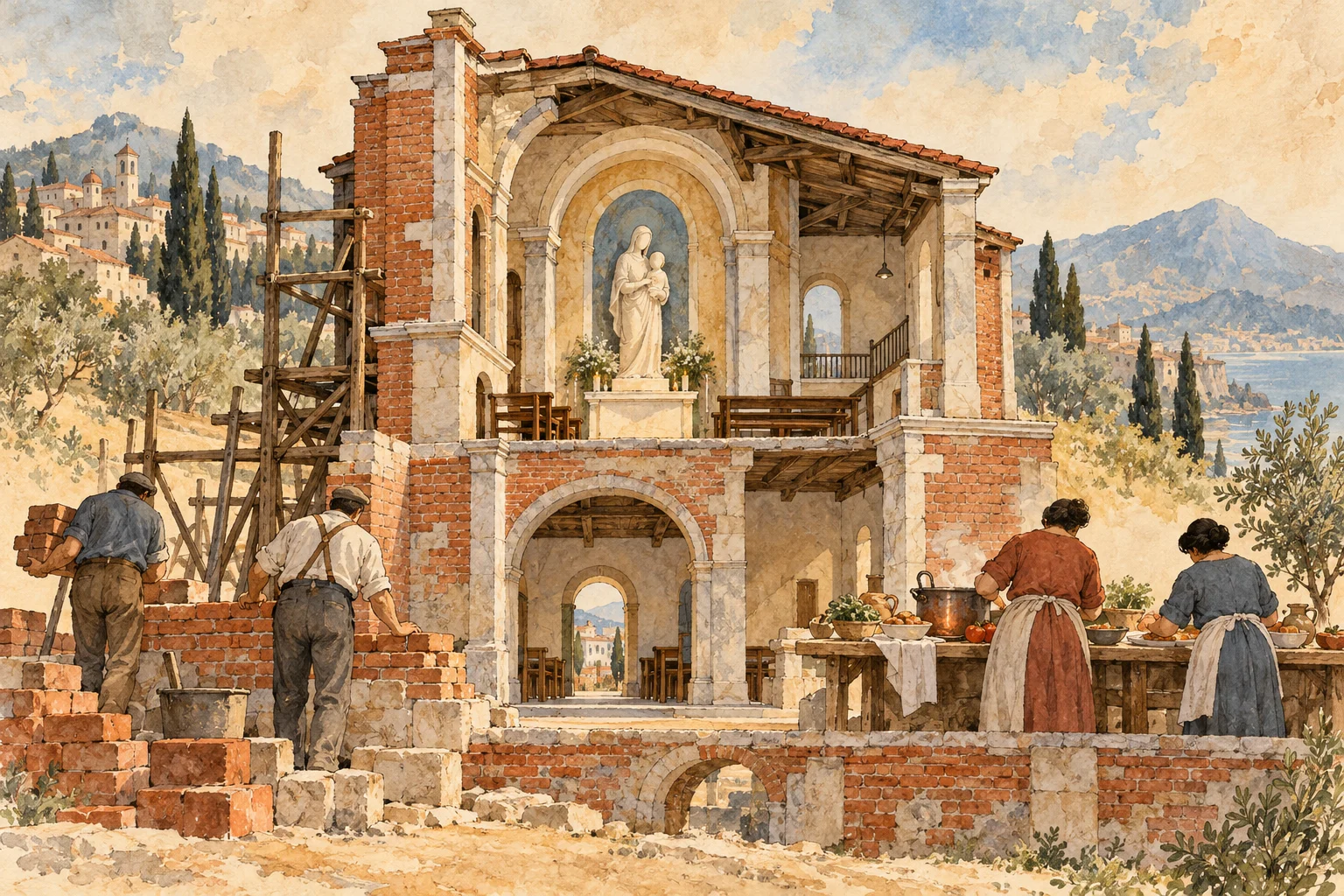
The society goes back to the early 1900s, when Italian immigrants founded it to help one another settle in Rhode Island. It faded during the Second World War. New immigrants revived it in the late 1970s, and by the mid-1980s the community had grown large enough to need a hall of its own. Francesco and Carmella Graziano gave the land. For two years the families built it together: the men put up the building while the women raised money and cooked for the feasts. The result was a two-story building of brick and marble, with a banquet hall upstairs, a lounge downstairs, bocce courts indoors and out, and a chapel holding a Madonna and Child statue brought over from Prata, Italy.
Cranston is Rhode Island’s second-largest city, with 82,934 residents at the 2020 census, and about a quarter of them are Italian American. For generations the society has hosted their weddings, special masses, Christmas parties and annual feasts. Its stated mission is to preserve Italian heritage for “our members, their families, friends and community.” The current dispute is over the first word in that phrase.
What the bylaws say
The men’s reading of the bylaws is simple. Only Roman Catholic men can be full members, and they become eligible at 17. Women of any age can only join the auxiliary, and in the men’s view the auxiliary exists to help out. The men say the bylaws give them the final say on everything.
The women live under the details of that rule. They have no keys to the building, apart from the chapel. Except at the feast or public events, they cannot be guests in the lounge unless they are a member’s wife or relative, and even then only after an outdoor event has ended. They have to ask permission to use the building and grounds, and permission for what they serve at the annual feast. They collect donations for the raffles, and the proceeds go to the men. They are asking for equal treatment, an equal share of fund-raising and grants, and recognition for the auxiliary’s work.
The eggplant question
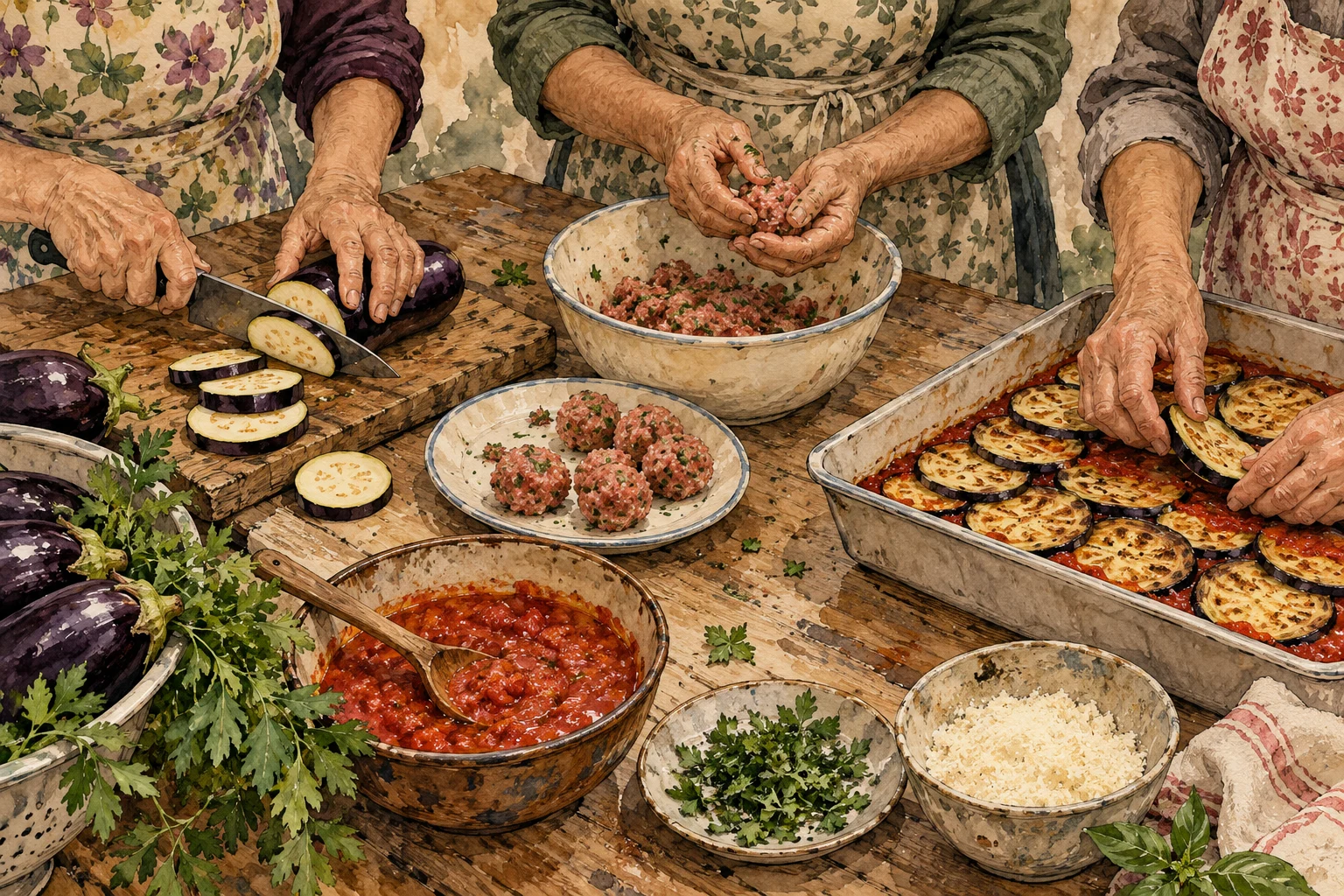
For decades the women cooked for the three-day Labor Day weekend feast. Mary Ann Rocchio, 87, the auxiliary’s spiritual leader, remembers spending most of a week on it: “One day, we make eggplant. One day, would be meatballs. So, that was a bond, that we all worked together.” Angelina (Girardi) DeFilippo, according to her 2022 obituary, was one of the society’s founders and led the auxiliary for 12 years, organizing and cooking for the festival of La Madonna di Prata and the St. Joseph’s polenta dinner.
Last year the auxiliary’s board refused to cook, saying the women were tired of being treated rudely. The executive committee hired Ralph’s Catering. “Because they were rude to the women, the women decided not to help with the feast, and then they were mad,” said Lori Martin, an auxiliary member.
Mastantuono said the society doesn’t need the women for the eggplant, and that the current members don’t cook as well as the women of years ago. “Let’s not insult their cooking,” he said, and then added: “But come on, be realistic. Most of your good cooks now are men, not women.”
An order served by a constable
A week before the night at the lounge door, Mastantuono called the police on Stephanie Giarrusso, the auxiliary’s vice president. He said the executive committee had banned her for calling one man a “condescending [expletive]” and comparing another to Fredo, the traitorous brother in The Godfather. The police declined to get involved. The men then obtained a no-trespass order, which means she can be arrested if she comes back. A constable served it at her home, barring her indefinitely because of her conduct. Giarrusso and other women believe the real reason is that she stood up to the executive board.
Her great-grandfather, Pasquale Girardi, was one of the founders. She thinks most of the men would work with the women but that some are afraid to say so. “One time I said to the men, isn’t it ironic that it says in the bylaws the club is named after a woman, and yet you engage in this discriminatory behavior against women,” she said.
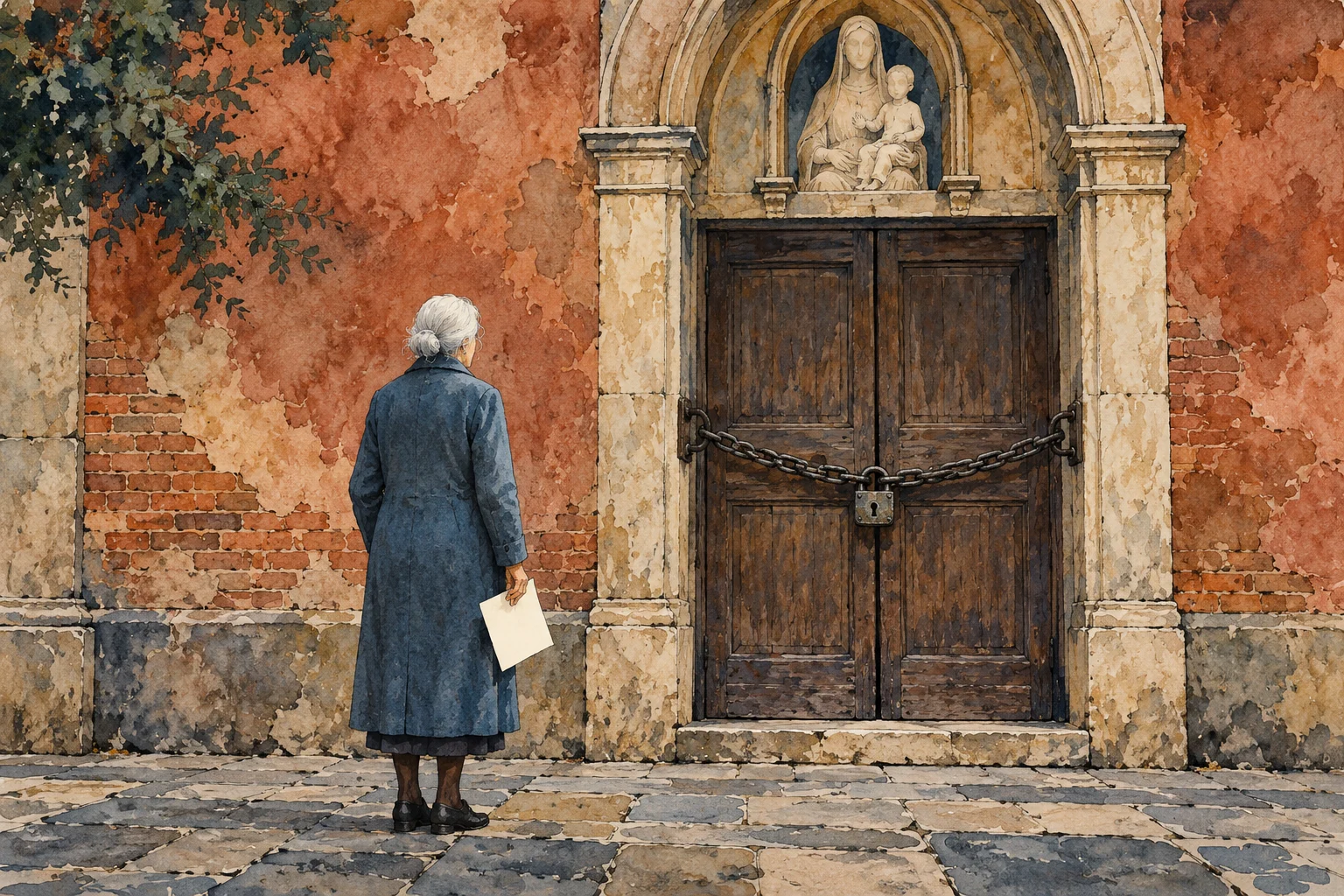
Evan Kirshenbaum, a lawyer and associate member, offered his own solution. “I mean, four swipes of Wite-Out, and there’s no more Women’s Auxiliary,” he said. He insisted this was not a threat, but said of the women: “They don’t have a right to be here; they have permission to be here.” He called their demands “too extreme.” He is only an associate member himself, because he is not Catholic. So a man kept out of full membership by one clause in the bylaws is defending another. “Why change them when it’s going good?” Mastantuono said. “It’s been going good for 40 years.”
The founders’ children
Vittorio Lauro is 91. He came from Prata and sat on the board when the incorporation papers were signed. He says the society was meant to treat women as equals. “For so many years, the women did so many work,” he said. “Before, we used to do everything together.” Then he began to cry. “It’s no fair. It’s a shame. It’s a shame. I don’t know why the reason.” His wife, Dora, also 91, listed what the women used to make: biscotti, pizzelle, spaghetti and meatballs. “The woman does everything for the Blessed Mother, for the charity. This is not fair.”
Lori Ann Carlino, the auxiliary’s treasurer, is Pasquale Girardi’s granddaughter. She suspects the men want the auxiliary to disappear “because they are fed up with us.” “Who does this club belong to? It belongs to the men and the women,” she said. “And if I’m wrong, let the court decide.” Her husband, Mario, agreed with her: “This is 2026, not 1926.”
The court may get the chance. Amanda Corrao, a lawyer and auxiliary member, said she plans to file a civil rights lawsuit against the club this month, citing “a long pattern of the mistreatment of the women members.” The women say the suit is about fairness, not money.
“It breaks my heart,” Carlino said, thinking of how hard the grandparents worked for the hall and its Blessed Mother. “The society belongs to her, and we serve her.”