
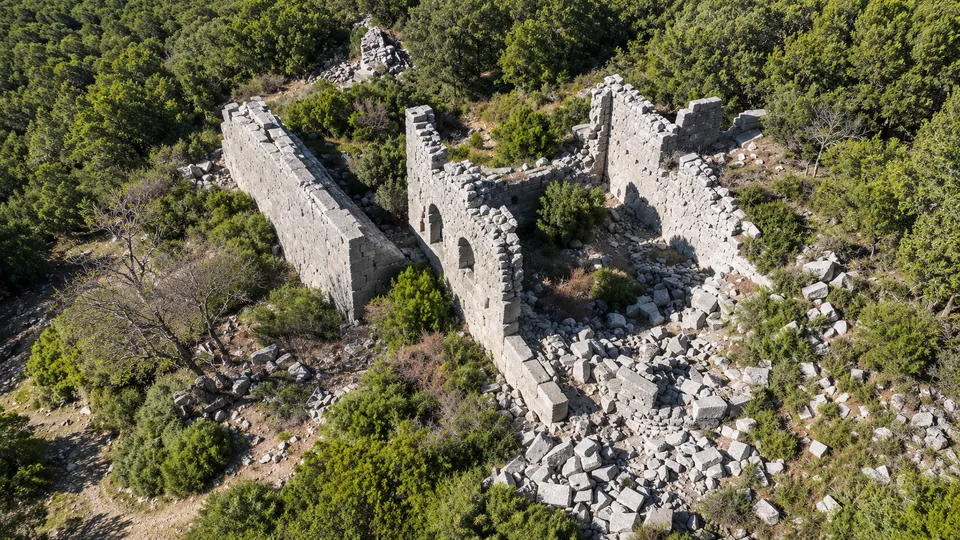
Here is the situation. Adada is an ancient city in Pisidia, near the village of Sağrak in the Sütçüler district of Isparta in southwestern Türkiye. In its southern valley stands a Late Antique church, and in that church’s courtyard are rows of stone seating that were there before the church was. Two archaeologists from Süleyman Demirel University, Nurittin Çelik and Ahmet Mörel, have now published a study in the Journal of Archaeology about what the Christians may have done with the seats. Their suggestion, as Leman Altuntaş reported for Arkeonews, is that the steps served people who were not yet allowed into the church proper: catechumens, the converts still being taught before baptism.
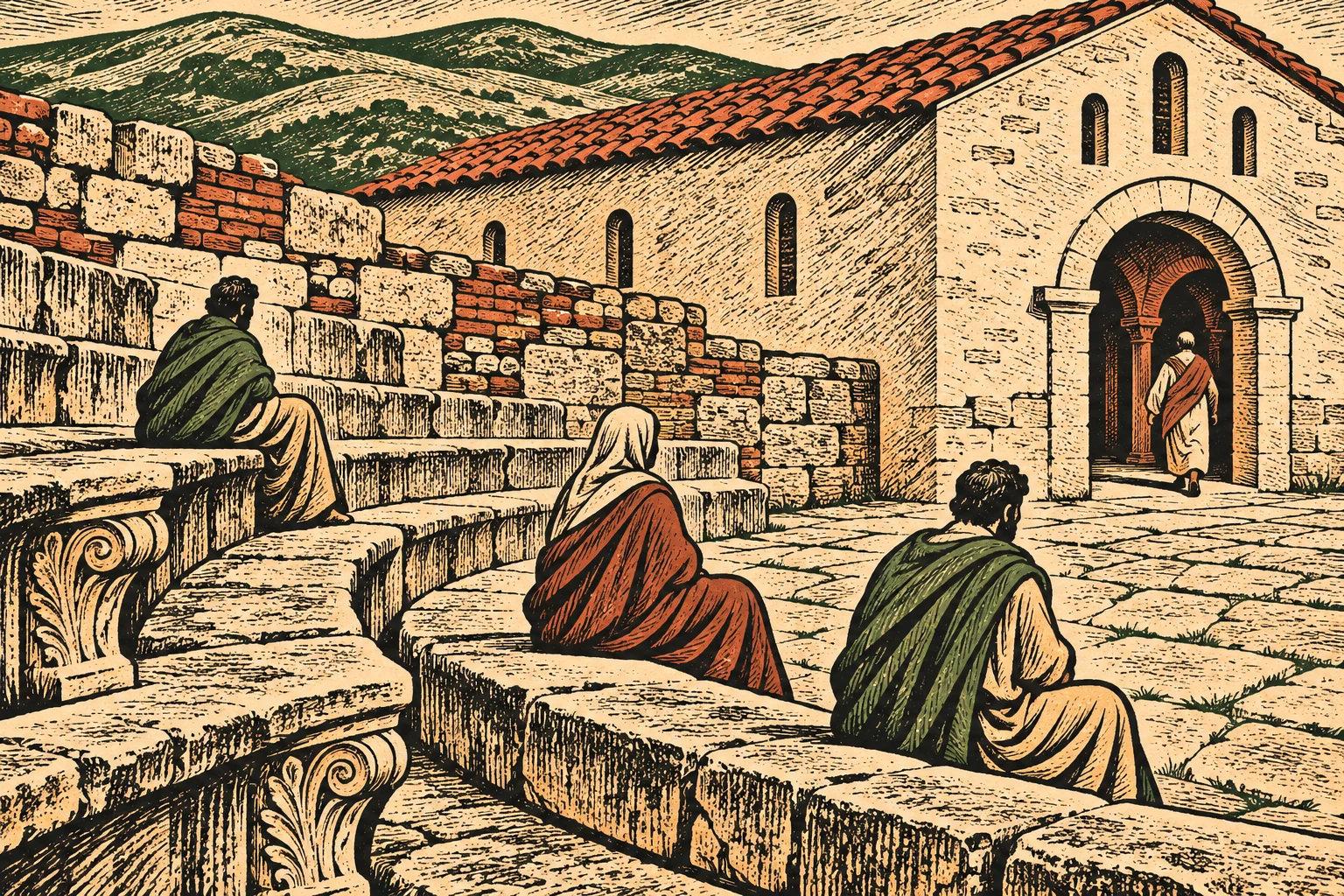
I like this idea because it treats a building the way a building should be treated, as a set of decisions about who goes where. Imagine you are putting up a church in the 5th century on top of an old Roman structure. The stone seating is already there, it’s well made, and moving it costs money. Your congregation also comes in two kinds: full members, and people still in training who can’t attend everything. Since you have the benches anyway, the obvious move is to find a use for them.
Here is what the archaeologists actually report. The South Valley Church is a three-aisled basilica that opens onto a wide courtyard, beside an ancient transport route. It was built on the remains of a public or religious building from the Roman Imperial Period. On the northern facade, Roman walls still stand where they were built. Hellenistic stone blocks were reused, and the masonry techniques vary, which means the building went up in more than one phase. Nobody knows whether the Roman original was a temple, so the researchers are careful not to call this a temple converted into a church. What can be said is that the Christian builders used an older building’s foundations and stones. Based on architectural parallels, they date the first church phase to the 5th or 6th century AD. The eastern end looks like churches in Northern Syria and Cilicia. The apse and two side rooms sit behind a straight outer wall, and a corridor behind the apse links the rooms. An annex to the north probably housed a clergyman and service spaces. Its doorways changed over time, so the church gradually grew into a small complex.
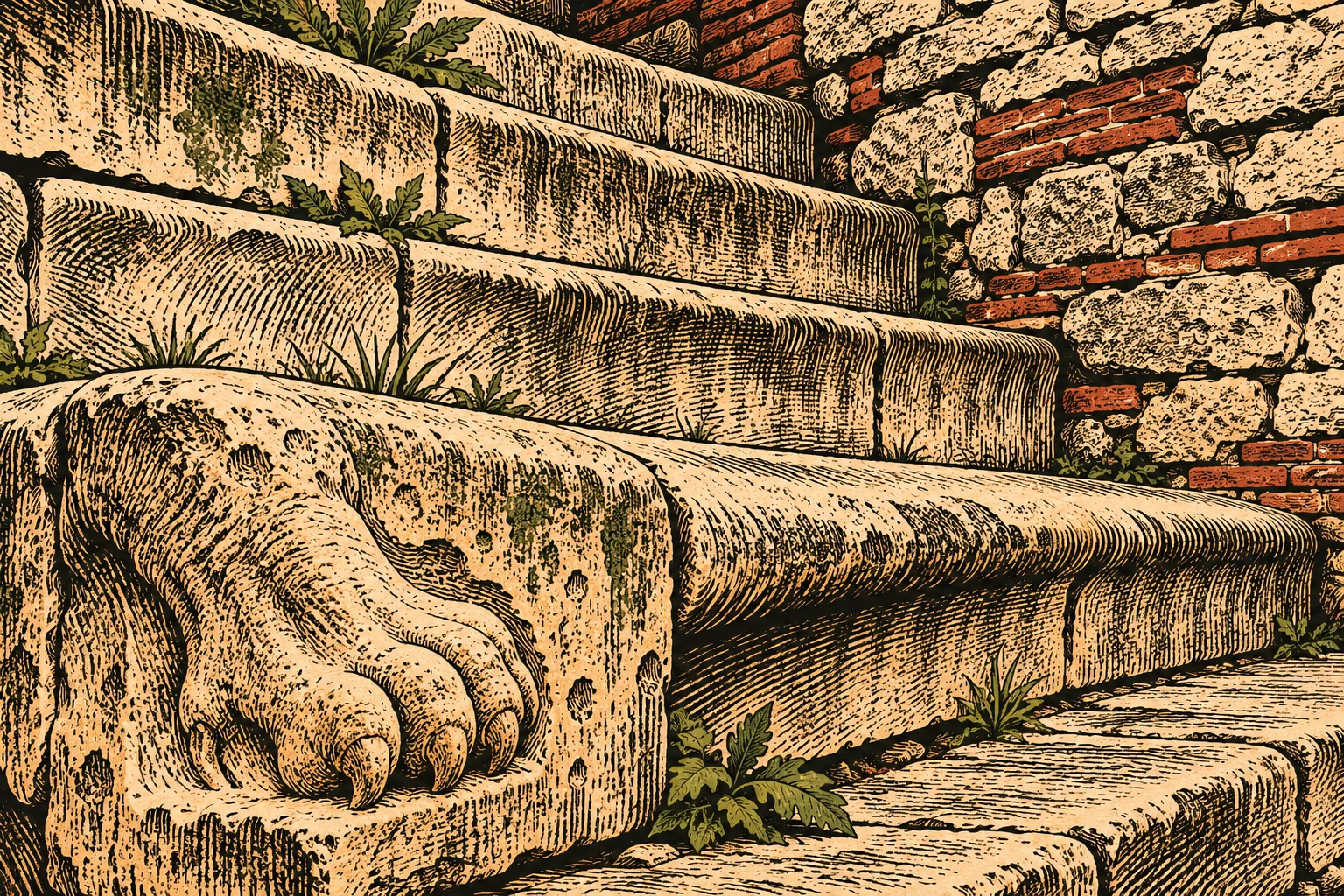
Then there are the steps. The whole complex covers 832 square metres. In the western courtyard, Roman-period stone rows run along the southern and western edges, and the southern run is about 15.55 metres long. Some of the western blocks carry reliefs of lion paws, which is a nice touch for a bench. The stones are cut differently from the church, and they don’t quite line up with its walls. That is the evidence that the seating came first and the church was fitted around it.
In the early church, catechumens studied before they were baptized and fully admitted to the community. Church architecture often kept them apart; the standard place for them was the narthex, an entrance hall at the west end. Çelik and Mörel propose a route for Adada. People gathered on the courtyard steps, walked along the church’s southern facade into one of the side rooms, and from there reached a possible baptismal area behind the apse. On that route, an unbaptized person could finish the whole preparation without ever entering the main worship space. In other words, the beginners got their own entrance.
The seating is not the only evidence for this reading. The researchers also point to the openings on the church’s south side, the corridor behind the apse, and similar layouts in other Early Christian churches. They also say plainly what they don’t have. No inscription or document says catechumens were taught here. Nobody has confirmed that the supposed baptismal area was a baptismal area. The steps could just as well have held the ordinary congregation during festivals and group worship. That is an honest list of caveats, and it leaves you with a plausible guess that fits the floor plan, which is roughly where archaeologists ended up when they read a church floor in Karabük as moral instruction.
Adada also had plenty of places to sit. The Agora Church and the Theatre Church have similar seating arrangements, so this may have been how the town did things rather than a one-off. Sitting was a civic habit there long before Christianity: the university’s survey page lists a 20-step open-air meeting place and a theatre for about 5,000 people.
The boat
The second finding is smaller. On a block in the top row of the steps, someone engraved a small boat, a human figure and what the researchers read as the Tree of Life. The boat is about 15 centimetres long and 3 centimetres deep, the person is 2.55 centimetres tall, and the tree is 12.7 centimetres. So the tree is roughly five times the height of the person and almost as long as the boat. It rises from the spot where you would expect a sail.
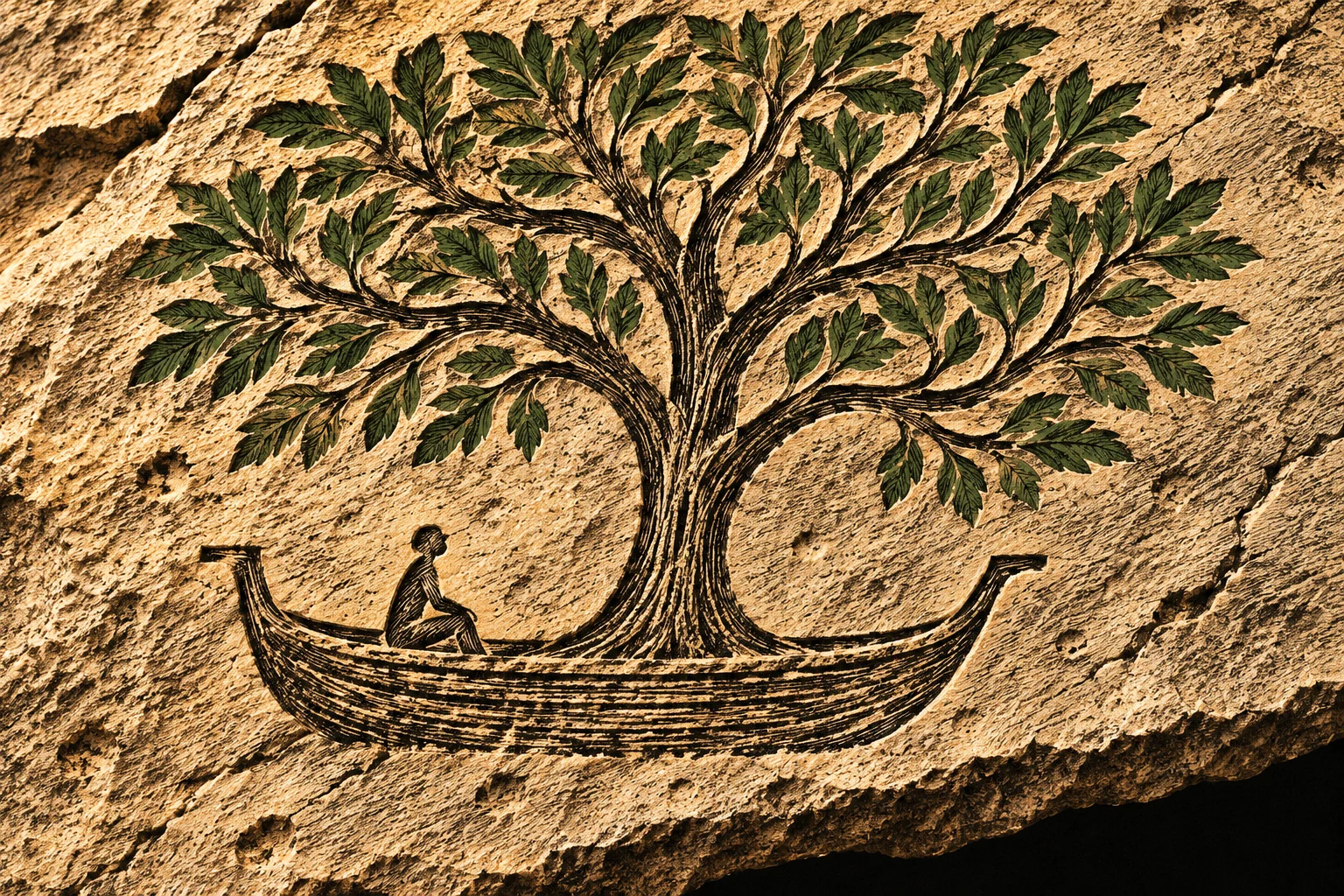
Ships are carved all over the ancient world, in temples, churches and public buildings, and they are often read as personal marks connected with trade, fishing or travel. A tree standing in for the sail is what convinces Çelik and Mörel that this one is religious. They suggest it may be linked to someone, probably of Jewish origin, who arrived by sea and went through Christian instruction. The Tree of Life’s place in Jewish tradition carries much of the weight of that suggestion. But nothing is known about the carver’s identity, faith or journey, and the picture cannot be taken as proof that any particular person converted. It gives the debate more to work with, and no more than that.
How might such a person have arrived? Adada sat where routes from the Mediterranean coast met roads into inland Anatolia. The roads between Perge and Pisidian Antioch, which Saint Paul used on his missionary journeys, ran close by. Researchers think he probably took the Via Sebaste to Antioch, and it is not known whether he ever visited Adada itself. The same roads carried merchants, travellers and ideas, which matters more over the long run. The researchers count 13 churches in and around Adada: six in the city and seven in rural settlements. Christianity here was not limited to the town centre. Church records from the 4th to the 12th century list the city as a bishopric under the names Adada, Dada or Atada, which is roughly eight centuries of paperwork.
If the catechumen reading is right, the steps were a waiting area, and the boat is what someone carved there while waiting. Graffiti on waiting-room benches has never been unusual.