

Last week Donald Trump announced a ceasefire in the Russia–Ukraine war. Not negotiated between Russia and Ukraine, not co-signed in a room with flags: declared, by him, on Truth Social, in the form “Effective immediately, there is an ENERGY CEASEFIRE in the War between Russia and Ukraine. Both parties have agreed. Do not break it!” If you are running a war and you open your phone one morning to learn you have agreed to a truce, your first question might reasonably be: agreed to whom? Neither Moscow nor Kyiv had said they had agreed to anything of the kind.
You can probably guess how the week went. As The Guardian reports, Moscow sent a record swarm of drones into central Ukraine overnight — more than 360 of them at Kirovohrad, a region that usually takes less fire than the east — killing at least three people and injuring six. “The enemy deliberately hit critical infrastructure, transport enterprises, logistics facilities and residential homes,” the regional governor Andriy Raikovych said. And Ukraine, after briefly holding its fire on Russian oil refineries as a show of readiness to negotiate, went back to hitting them. On Thursday, Russia’s defence ministry said its refinery in Ryazan, about 180 kilometres south of Moscow, had been attacked by 69 drones and four Flamingo cruise missiles; a fire broke out after drone debris downed by anti-aircraft fire fell onto the site. Al Jazeera’s account carried Moscow’s line that “the Kyiv regime attempted a large-scale attack” — attempted being a word that is doing some work against the photographs of flames.
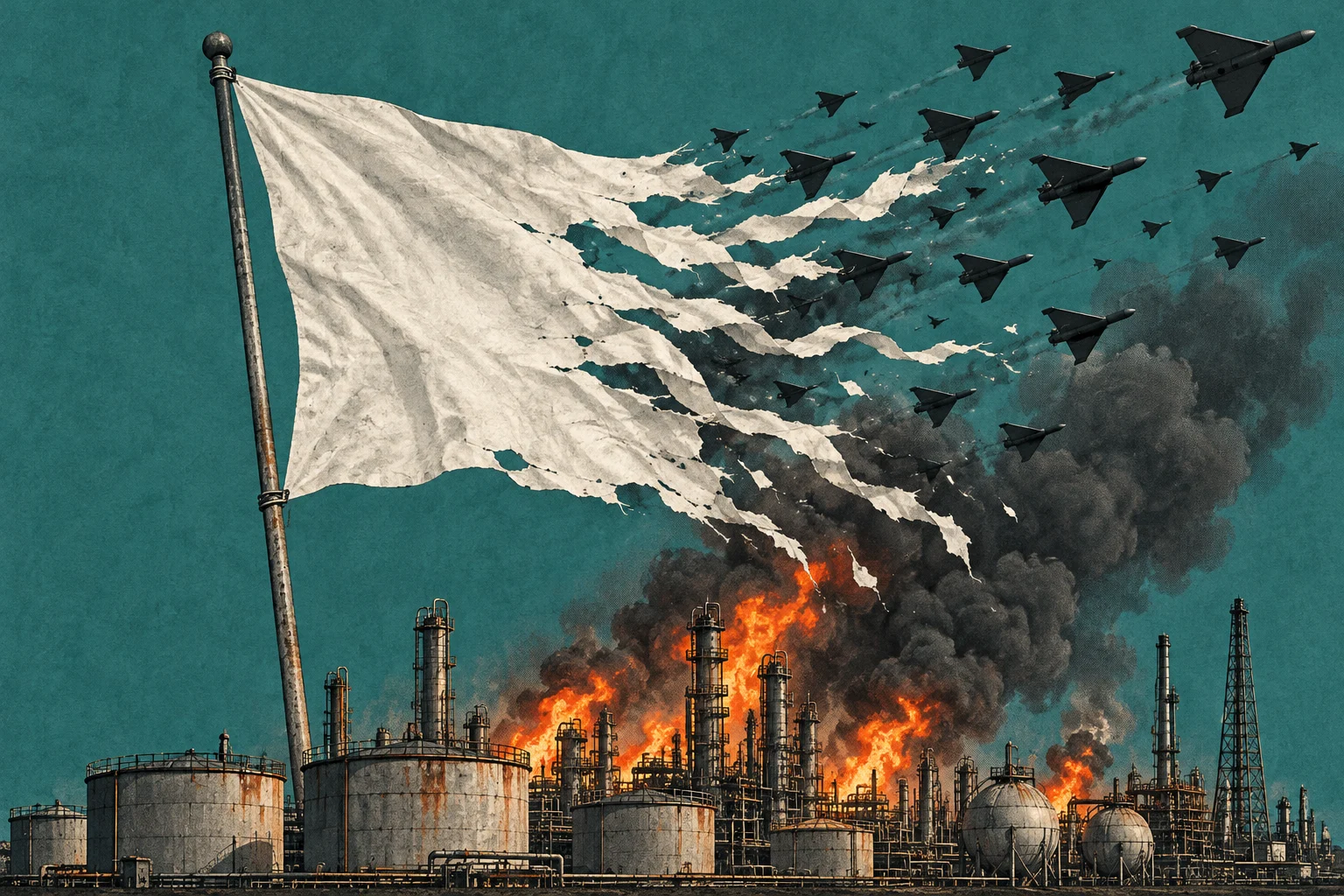
The step that made this official was Volodymyr Zelensky’s, who’s been in an ugly public feud with Trump for over a week. He told the Financial Times on Wednesday: “The block [on attacking refineries] is out. We’re done.” The ceasefire was never properly born, and now it is also dead, in both directions, within days.
Why refineries, though: an excursus on diesel
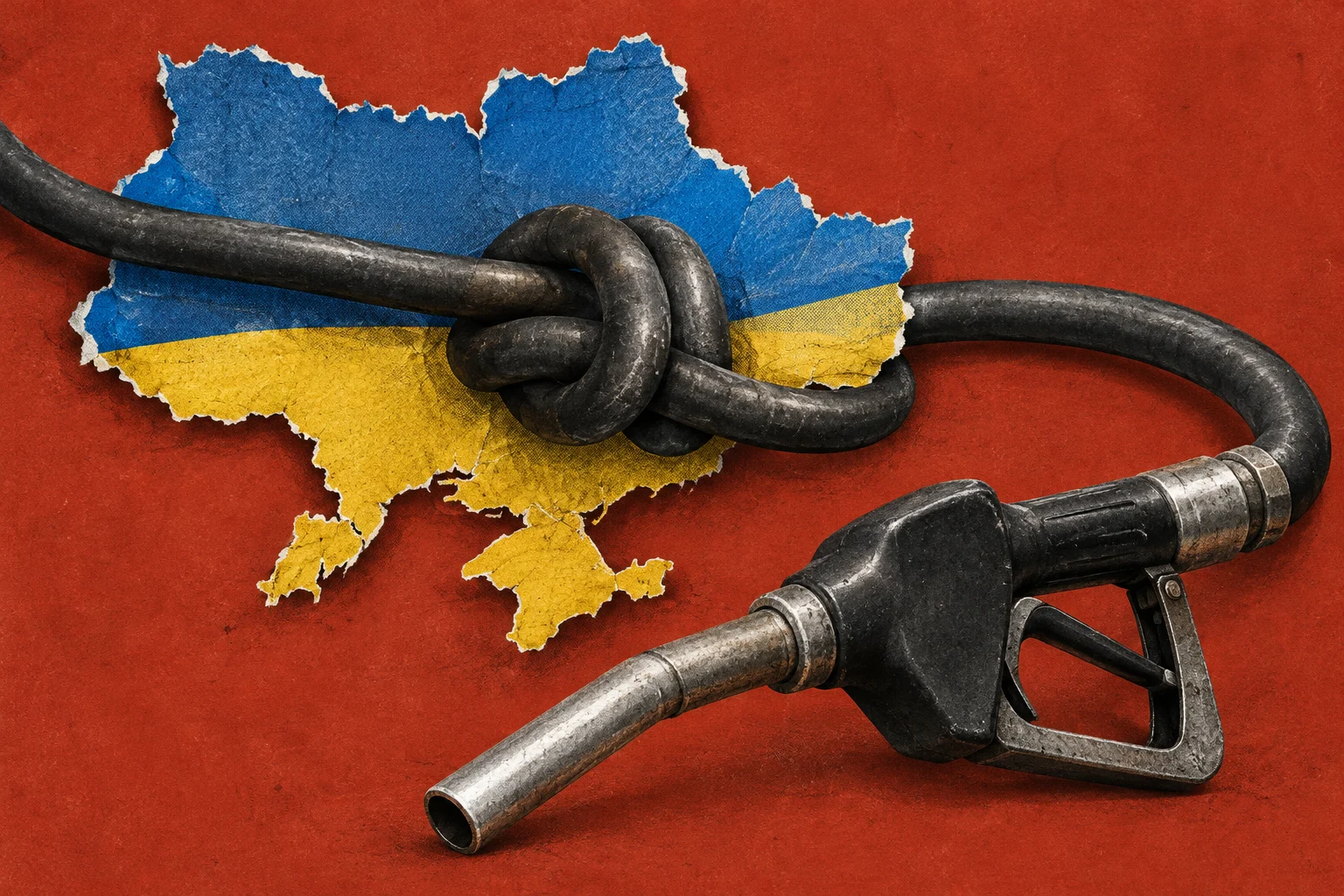
It helps to know that Trump has a specific economic grievance here, and it is not really about Ukraine’s military logic. He has demanded Zelensky stop hitting Russian refineries, blaming the strikes for a global rise in diesel prices, and — as RTÉ reminds us — he has also struck a surprise diesel deal with Russia, one that promptly drew European anger and a Zelensky accusation that he’d picked the wrong side. His ordering Kyiv to stop has, therefore, at least two possible readings: as a peace move, and as a price-protection move for a supply arrangement he has entered into with the country currently bombing Ukraine’s power grid. Imagine you run Ukraine. Your power stations are being knocked out by hypersonic and ballistic missiles, your cities are going dark, and your main patron is telling you not to hit the one Russian target class that both degrades their war economy and, coincidentally, raises the cost of the fuel he has just agreed to buy from them. You are entitled, I think, to wonder whose ceasefire this is.
Pressure with a dial
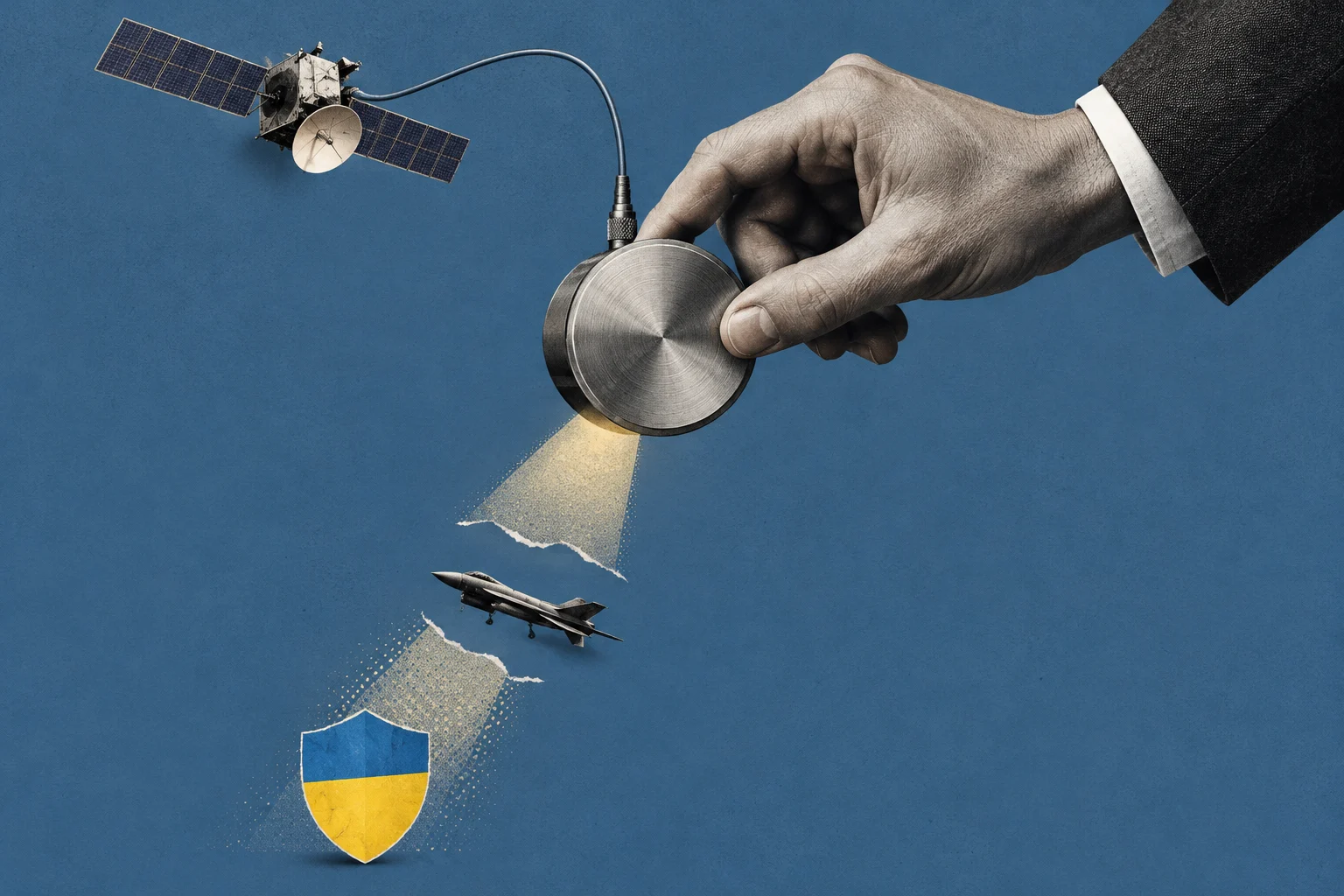
The American side of the coercion is where the story gets technical and worth reading carefully. Zelensky paused refinery strikes for several days — despite Russian claims, denied in Kyiv, that Ukraine attempted some anyway — and says that during that pause Ukraine got less, not more, from its partner: no advance US warning of Russian missile strikes for several days this week, and on Wednesday a real-world disruption of Starshield, the military-grade satellite network built on SpaceX’s Starlink, which Ukrainian forces use to run the interceptor drones that hunt Russia’s jet-powered attacks. Zelensky told the FT: “It was not a technical problem, it was the will.” Asked on Piers Morgan Uncensored whether he felt betrayed, he said yes: “It’s a pity that we are losing, we are losing a strong partner.”
There is a contract wrinkle of great geopolitical consequence buried here. Elon Musk, whose SpaceX makes the terminals, denied on Thursday that SpaceX throttled anything and said the systems are controlled by the US government — a framing we’ve examined before, because the Pentagon pays for the service and the cap lived inside the contract. Zelensky, in turn, described Ukraine’s defensive speed as “artificially restricted” at precisely the moment Russia was sending more than 850 Shaheds at it. A Ukrainian defence ministry source told RTÉ that by Thursday morning Starshield’s in-motion functionality had been restored, while the ministry kept asking who, exactly, pulled it and why.
Zelensky put the escalatory logic on X: “It is obvious that Russia deliberately chose to escalate its attacks after receiving sanctions relief and seeing attempts to pressure Ukraine. Ukraine needs steady support, above all in defending our skies. We need HONESTY from our partners about this war.” And then he’d got in a Piers Morgan interview earlier: “It’s painful when President Trump chooses one side, not our side.” He can live with a broker, he said, but “if you are in the middle, you have to stay in the middle.”
Why Russia likes this week
From Moscow’s side this is close to a best-case scenario: an “energy ceasefire” it never signed, instantly collapsible into the Western press as Ukraine breaking Trump’s truce, and meanwhile the military news is that Russia has nearly completed, according to defence experts and a Reuters imagery analysis carried by RTÉ, a whole new jet-drone launch base in what on August 31 was an empty field in the Rostov region — now a complex about the size of 126 football pitches. Mike Monnik of the intelligence firm DroneSec said the site could launch the Geran-4 and Geran-5, Russia’s newest 600km/h jet-powered drones, from eight visible rail platforms, adding to an existing network of at least 11 fixed launch sites, and judged it “probably a matter of weeks before (it is) fully operational, if not earlier.”
And Britain, at least, is acting like this is a long war. In London, Andy Burnham announced £45 million (€53m) of surface-to-air missiles aimed at jet-powered drones, £10 million of it fast-tracked, after Zelensky wrote on Telegram that Russia was trying to exploit the Starlink problems because Ukrainian interceptor drones depend on that connection. None of this is invisible if you stop to look: the war is accelerating at the drone layer even as the diplomacy is doing a bit of performance art. The counter on the diplomacy side reads like a round number nobody verified, and in this particular war the unverified round number is the one in the sky — 850 Shaheds, 360 into one region, 69 drones over Ryazan — all of it going somewhere, fast. The ceasefire post got decent reach, though.