
Last spring a woman went out on her bicycle and was hit by a car whose driver did not stop. She was not seriously hurt. The bike, which was brand new, was totaled. A couple of days later the police knocked on the driver’s front door and arrested him. He had not counted on a small black box on her seatpost.
The story belongs to Eric Bangeman, whose friend she is, and he tells it in the list of holiday gift picks that Ars Technica’s staff published on 27 November, the Friday after Thanksgiving, when America turns to shopping. Most of the list is ordinary, as such lists are: headphones, a game console you hold in your hands. But read through the cycling entries and a quieter theme emerges. Nearly every one is about something the rider fears.
The witness on the seatpost
The box was a Garmin Varia RCT715, a tail light, radar and camera in one unit, priced at $300. Its camera records at 1080p and 30 frames per second, and that was enough to read the car’s license plate and give the police their man. The radar spots vehicles coming from behind at 140 meters. Bangeman pairs his with a Garmin Edge 1050 bike computer, though it talks to most other brands over ANT+. He has set it to start filming the moment a car is detected and to keep going for 30 seconds after the car has passed. The battery runs up to six hours depending on whether the light is solid or flashing, and the footage goes onto a 16GB microSD card. According to the retailer Bikebug, a built-in accelerometer also locks footage automatically if it senses a crash.
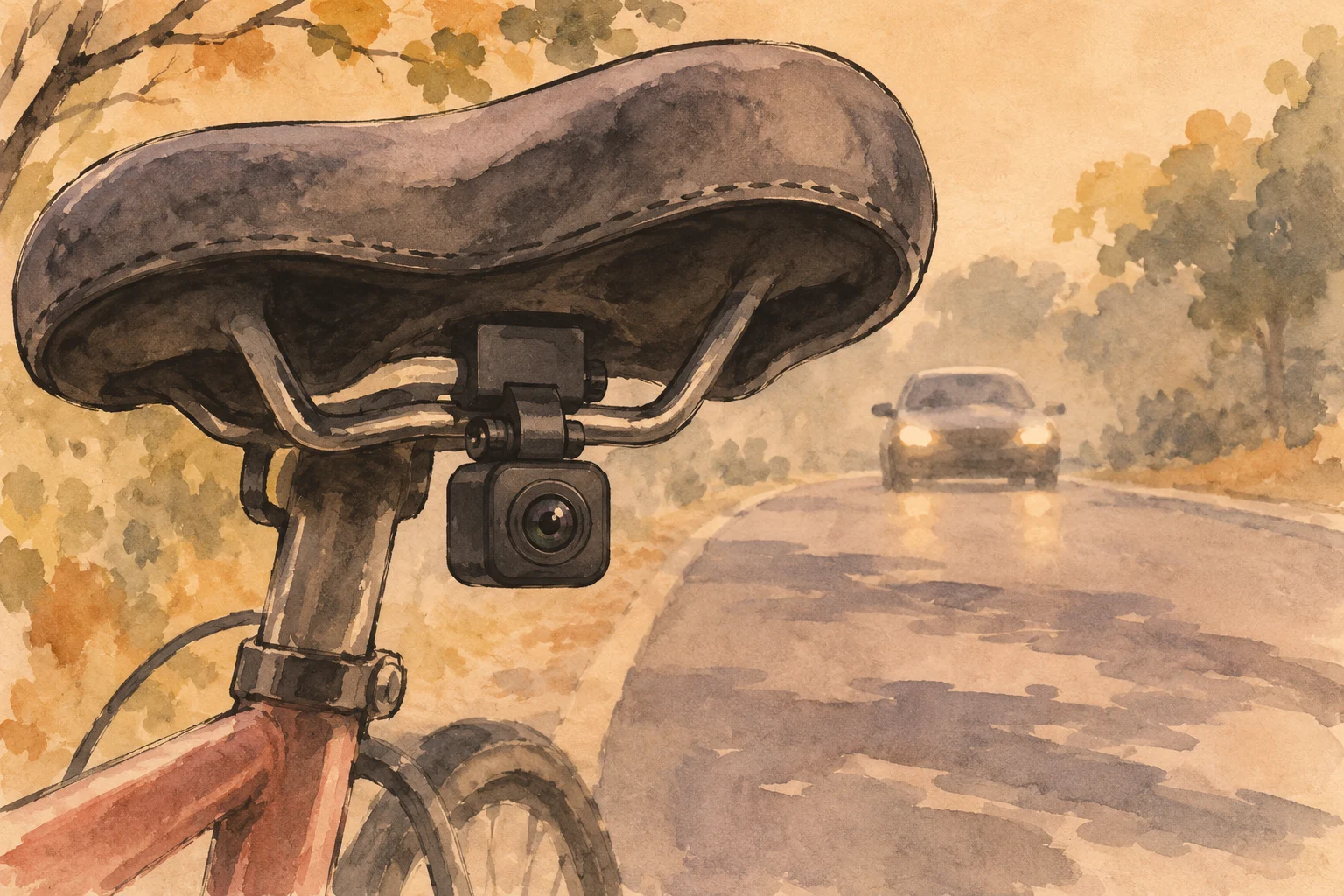
More than 90 percent of his riding is on roads, Bangeman writes, and he does not feel fully comfortable without it.
Here is something to think about. The road gives no protection of its own, so the person on two wheels has to bring a witness along, bolted under the saddle and watching the cars come.
The lock and the grinder
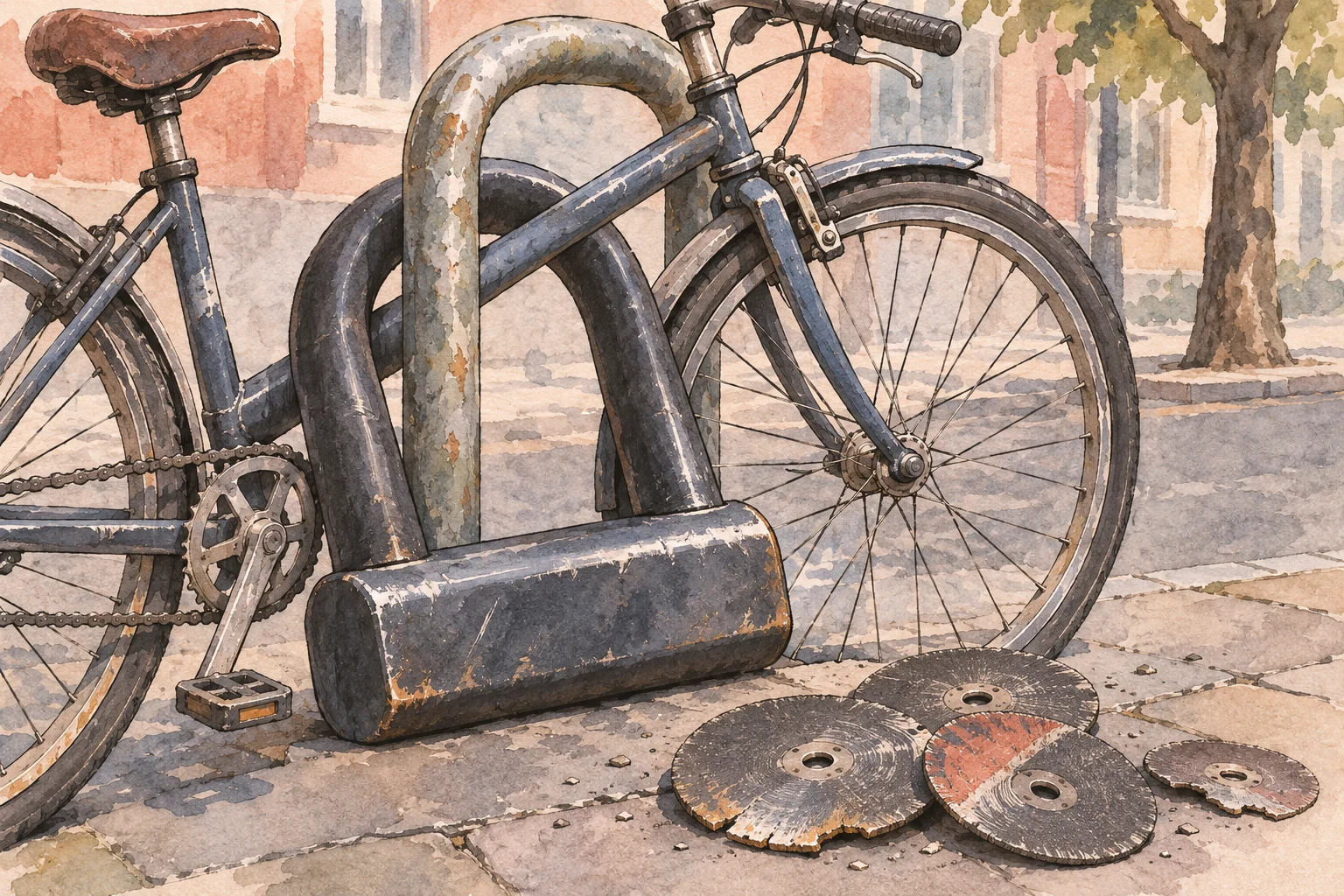
Jacob May’s fear is the thief. His YouTube algorithm has lately been serving him videos of testers cutting through decent bike locks with an angle grinder in under a minute. He has never seen such a theft happen. He has seen enough heaps of stripped bike parts around town to know that it happens.
His answer is the Hiplok DX1000, at $380. In the tests he has watched, it wears out several angle-grinder blades. Would a thief carry spare discs and spend about 15 minutes on one lock? May doubts it. At nearly $400, he concedes, this is about as expensive as securing a bike gets. But if your bike costs more than $5,000, he reckons it is probably worth it for the deterrence and the peace of mind.
Arithmetic of this kind is old. The more valuable the thing, the more is spent guarding it, and the spending never quite catches up with the tools of the people trying to take it.
Music without deafness
Bangeman’s second pick deals with a gentler danger: boredom, and the temptation it brings. One joy of cycling, he writes, is being alone with your thoughts, but on long zone 2 rides and centuries that can become too much. Headphones are the obvious cure and a hazardous one. The Trek BellBeats, at $125, is a Bluetooth speaker the size and shape of an old-fashioned bicycle bell. It plays music or navigation prompts loud enough to hear but not so loud that it drowns out traffic or the bike computer’s radar alerts. It fits almost any non-aero handlebar, charges over USB-C, plays for up to six hours, and still works as a bell. When it launched, Bikerumor put the price at $99.99 and reported that Trek had worked with Harman on the sound.
Light under the canopy
Two popular trails near Bangeman’s home run through forest preserves, where the light keeps changing as the trees close in overhead and open out again. Ordinary photochromic lenses react to that slowly, through chemistry. The Povec C1 Performance Sunglasses, at $250, run on a battery: swipe the right temple and the lenses darken or lighten in about a second. Povec claims 28 days of battery life at four hours of use a day. Bangeman has worn them off and on for about six weeks and charged them once. His everyday pair, for comparison, cost $28 from Rockbros. The C1 comes in three frame colors with either Green Revo or Gold Revo lenses.

Indoors, where the road cannot reach
The other picks belong to the living room. Samuel Axon’s Bluetooth headphones would not do voice chat on his PlayStation 5, and he needed something for his Friday night multiplayer games. He took a chance on the Fractal Design Scape, $160 over-ear headphones from a company whose PC cases he has long liked. They have a USB dongle for consoles. He found them comfortable and kind to his glasses frames, and he now wears them well beyond the PS5. They have the usual gaming features without looking ridiculous, he writes, so you could wear them in public without embarrassment.
Nick Indge’s AYN Odin 3, at $767, arrived from Santa last year, and since then the rest of his handheld collection has gone unplayed. It runs Android on a Snapdragon 8 Elite chip, now renamed Dragonwing Q8, with a 6-inch 120Hz AMOLED screen. With Proton, FEX translation and apps such as DroidDeck and GameNative, he writes, it handles console and PC streaming, Steam, GOG, Epic and Rockstar libraries, native Android games and emulation. He finds it free of the Steam Deck’s bulk and the bloat of Windows handhelds. A newer revision, the Odin 3 Portal, has a 7-inch screen and starts at 12GB of RAM, up from 8GB.
I may have to ask Mr. Claus about an upgrade…
Underneath, the page carries the usual notice: Ars Technica may earn compensation for sales made through its links.