

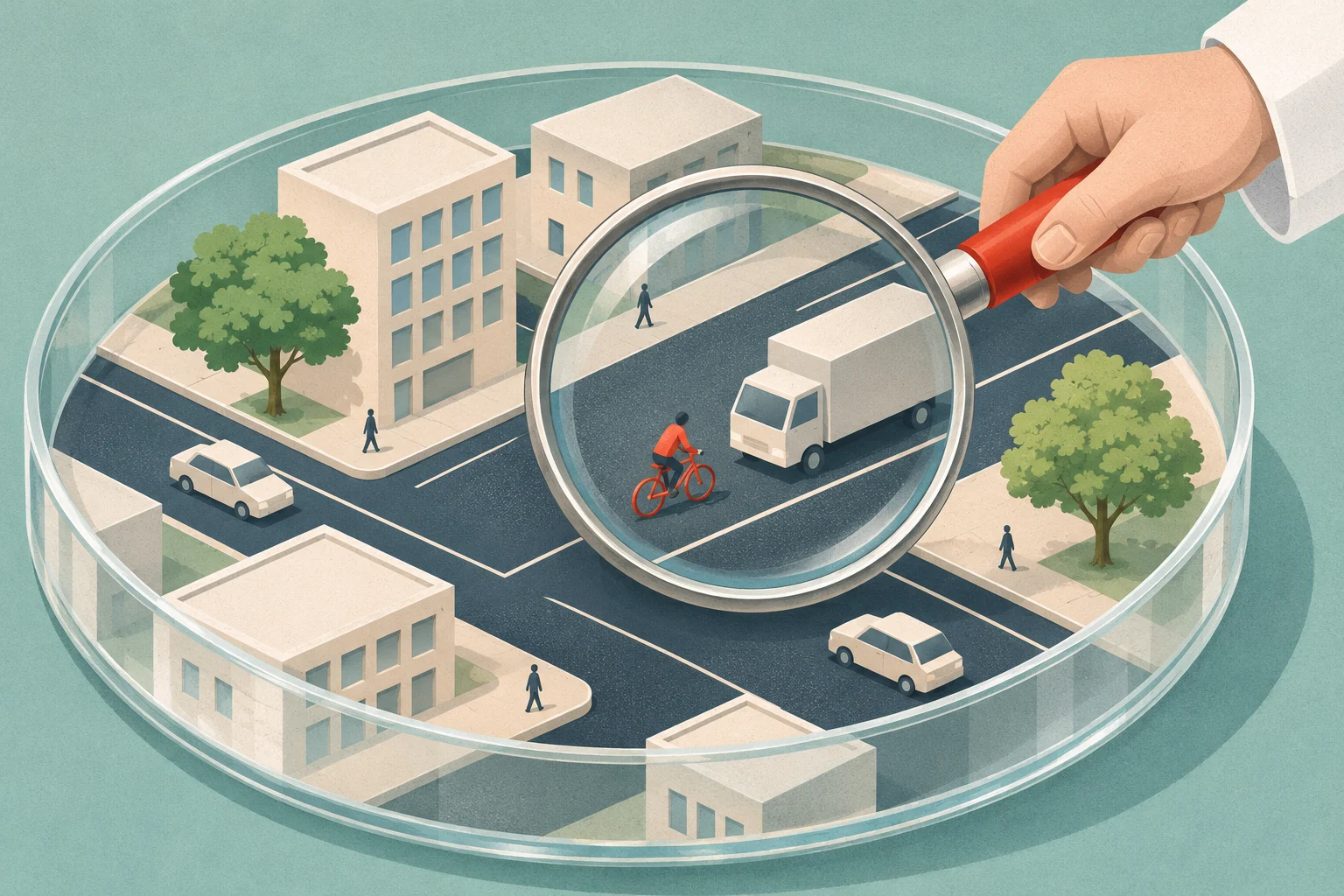
A big-budget video game costs €200m–€1bn ($224m–$1.1bn/£170m–£830m) to make. No university driving simulator comes close to that, and Pavlo Bazilinskyy, a human factors engineer at Eindhoven University of Technology, says the gap shows: “A polished product with a €200m-€1bn budget is miles ahead of average simulator set up.” That is the mechanism behind a small research field that has grown up inside Grand Theft Auto V: instead of building synthetic traffic, researchers mod a game that already simulates it, and use it to test technology and human behaviour that would be too dangerous, or too expensive, to study on real roads.
As Richard Gray reported for the BBC, the appeal is the physics. The recent GTA games model vehicles, weather, road conditions and traffic across a large fictional city, and that realism doubles as a cheap, ready-made test environment for early-stage work that even sophisticated purpose-built simulators struggle to replicate. “We wanted a way to test wearables and other new digital devices for traffic safety… in situations that would be far too dangerous to recreate on a real road,” says Milena Jäger, an engineer and computer science researcher at Osnabrück University of Applied Sciences in Germany.
A sixth sense for cyclists
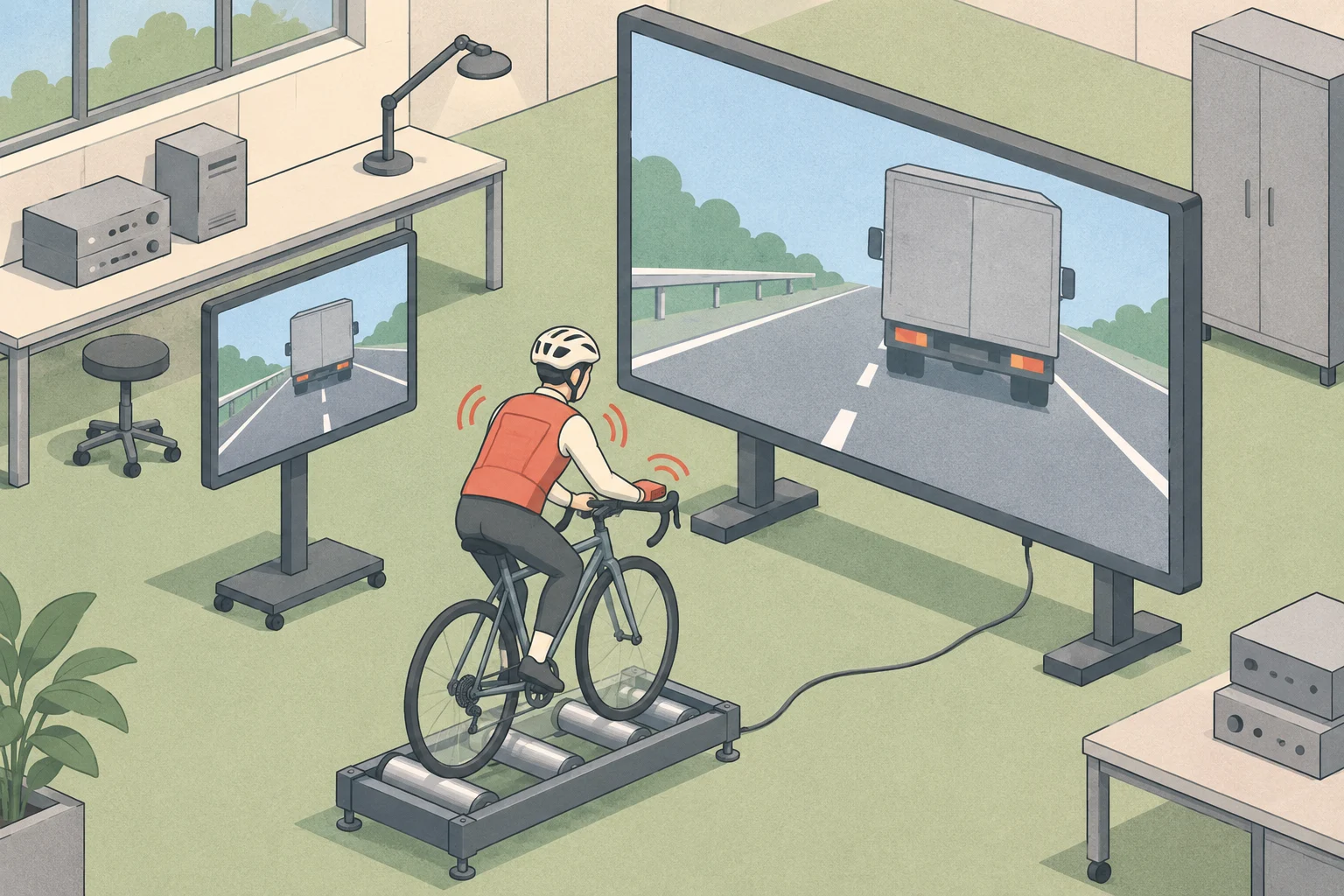
Jäger’s team was building warning devices for cyclists and pedestrians. One mounts on handlebars and vibrates with growing intensity as a vehicle approaches from behind; another is a vibrotactile vest meant to give the wearer what the researchers call a “sixth sense” for traffic. Testing either on a live road means putting volunteers in front of trucks. Testing them in a simulator means building the trucks first. GTA V offered a third option: a “mod” — software that alters the game — giving the researchers control over where the player starts and which scenario runs.
“Since GTA V does not enforce traffic rules on players, practically any traffic situation can be replicated on purpose,” says Julius Schöning, the engineering and computer science professor who led the Osnabrück work. The lab rigged a bicycle in front of a screen running the game, with a second screen behind showing the rear view when riders looked over their shoulders, and sent volunteers down a stretch of the game’s fictional Los Santos where trucks pass in volume. Both devices successfully warned riders of approaching vehicles. Neither has become a commercial product — a common endpoint for prototypes, and worth remembering when a paper reports that something “worked”.
Where the eyes go
Most traffic accidents are caused by humans rather than by hardware, so a second line of research uses the game to measure the humans. Bazilinskyy and his colleagues wired eye-tracking equipment to GTA V and recorded exactly where volunteers looked while cycling toward staged hazards: a car pulling out of a parking space, a door opening, a busy junction. “The aim was to measure human behaviour to inform the design of future mobility systems and policy making,” he says. “Informing road layout decisions is a good example. With an ultimate goal of making roads safer and reducing the number of traffic fatalities and injuries.”
Teaching machines to crash less
The most widespread research use of the games, though, is training driving AIs. At the Korea Advanced Institute of Science and Technology in Daejeon, engineers generated a large dataset of in-game accidents and near-misses in GTA V, then trained algorithms on it to recognise dangerous vehicles so a self-driving car could avoid them. The attraction is volume: a game world can produce thousands of labelled crash scenarios without bending any real metal.
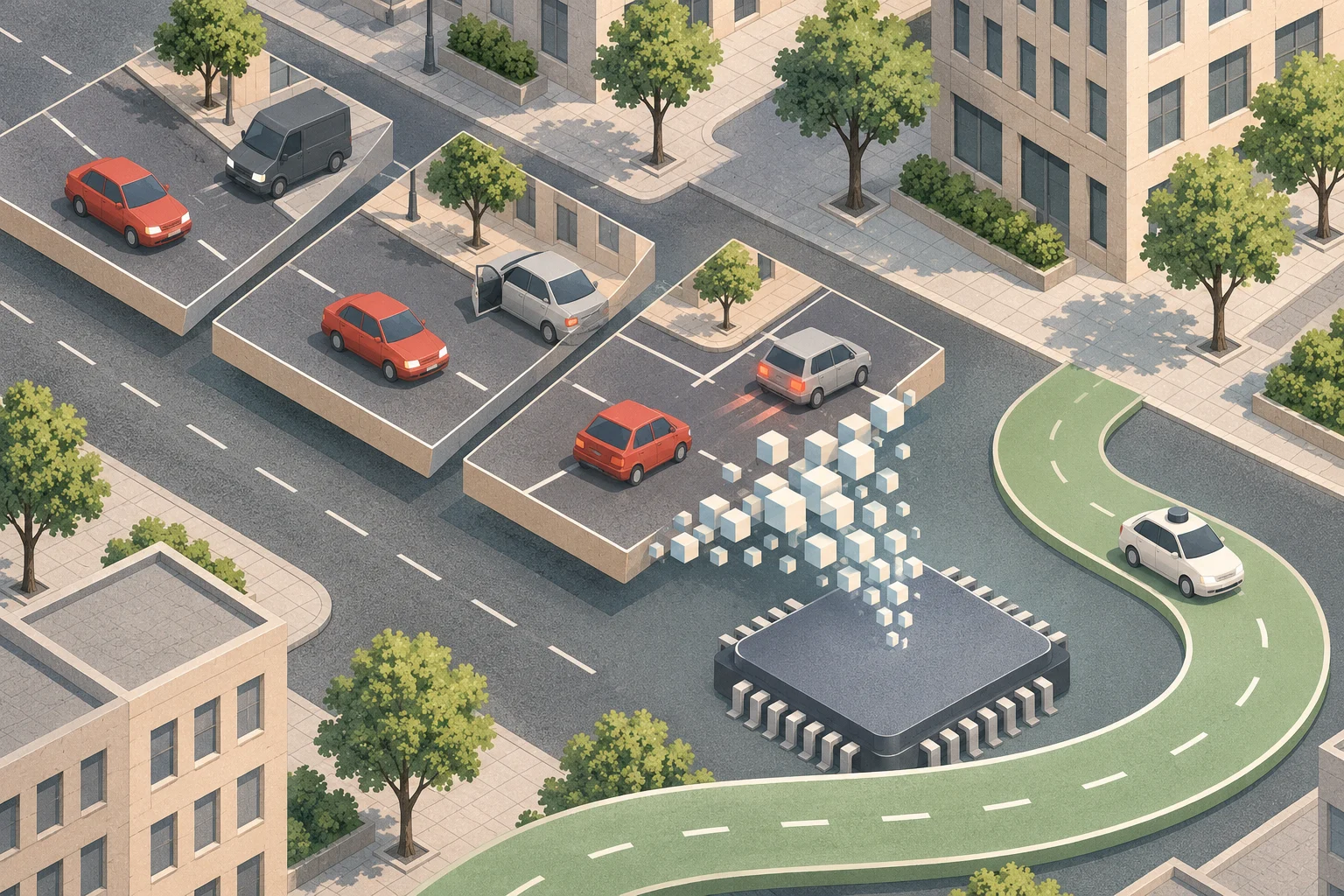
The harder problem is not collision avoidance but collision choice: should the car swerve onto a pavement to miss a motorcycle carrying two people, at the risk of hitting an elderly pedestrian, or hit the bike? Researchers at Eastern Michigan University tested an ethical decision-making algorithm against nine such scenarios in GTA V and reported that weighing the dilemma cut potential loss of life by about 24% — a simulated result, from nine hand-built situations, in a domain that remains controversial. Treat it as an upper bound from an early experiment, not a validated figure.
The next data point arrives on 19 November 2026, when GTA VI is released. Researchers are already eyeing its world for experiments, but using it for research requires permission from Rockstar Games. “Its potential as a research tool remains immense,” says Romain Delgrange, who used the game to study human navigation while at the Laboratory of Applied Psychology and Ergonomics in Paris. Neither Rockstar nor its parent company Take-Two Interactive responded to the BBC’s request for comment. The whole field, in other words, runs on one company’s continued tolerance of mods — a dependency no grant proposal lists as a risk factor.