
Twelve years into Narendra Modi’s premiership, the movement pressing him runs on three numbers: an education minister forced to resign after a series of examination scandals, 130 million people stripped of the right to vote by changes to India’s electoral rolls, and, when opposition leader Rahul Gandhi marched with tens of thousands to the Supreme Court on October 12 to petition for the election chief’s sacking, the 29-year-old student leader whose shoulder he rested his hand on in the front line. The other shoulder belonged to his 54-year-old sister Priyanka — Rahul, two years older, has called her his “best friend” and most trusted lieutenant. The 29-year-old was Neha Bora, a figure few outside college politics knew until months ago, as Yashraj Sharma profiles for Al Jazeera.
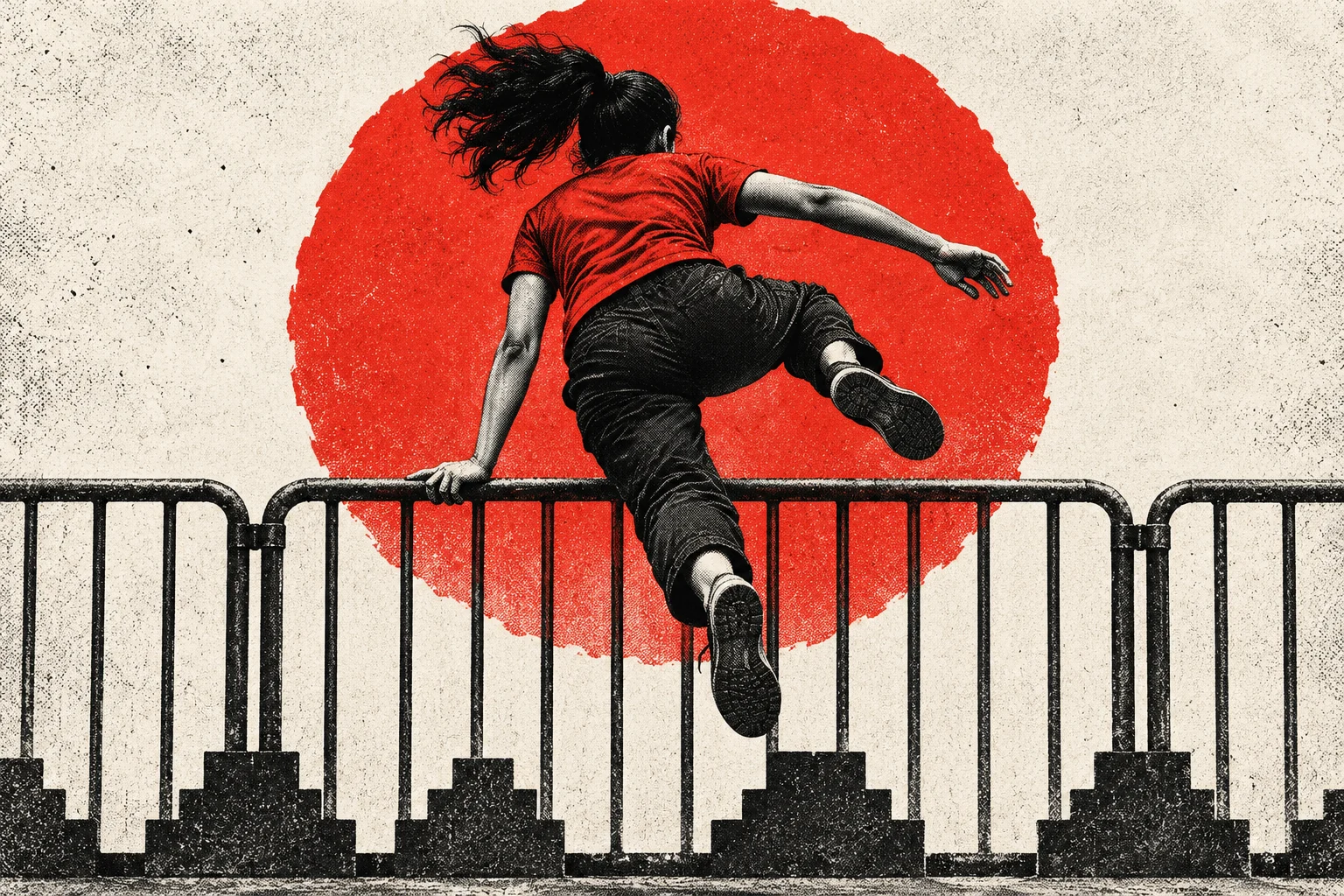
The Gen Z-led protests have so far been associated globally with the satirical Cockroach Janta Party (CJP), which camped at Jantar Mantar in central Delhi for months and whose leaders sat in with placards and were quickly picked up by police. Bora, the national president of the left student organisation AISA, took a different approach: she made evading the police into a tactic, and the tactic made her a cult figure. Software developers built Mario-style games of her leaping barricades and collecting “democracy” points; fan edits of her confrontations with police are shared by tens of thousands and viewed by millions. “Can we please, please call Neha the Goddess of Democracy,” asked Nishita Nath, a 24-year-old student — a reference to Hong Kong protest leader Agnes Chow. Such comparisons, Sharma notes, are the last thing Bora wants as the leader of a movement trying to cut a political demigod down to size.
An underground party’s playbook
Bora has spent nearly a decade studying the arts at Delhi universities and is a postdoctoral theatre student at Jawaharlal Nehru University, where AISA has been a major force for more than three decades. AISA was founded in August 1990 as the student wing of the Communist Party of India (Marxist-Leninist) Liberation, a party that emerged from a Maoist-led rebellion begun in 1967 with a peasant uprising in Naxalbari, West Bengal — the Maoists were called Naxals after the village. The party operated clandestinely under state crackdown for at least three decades before rejecting armed violence and entering parliamentary politics in the 1990s; some splinters still pursue violent overthrow of the state.
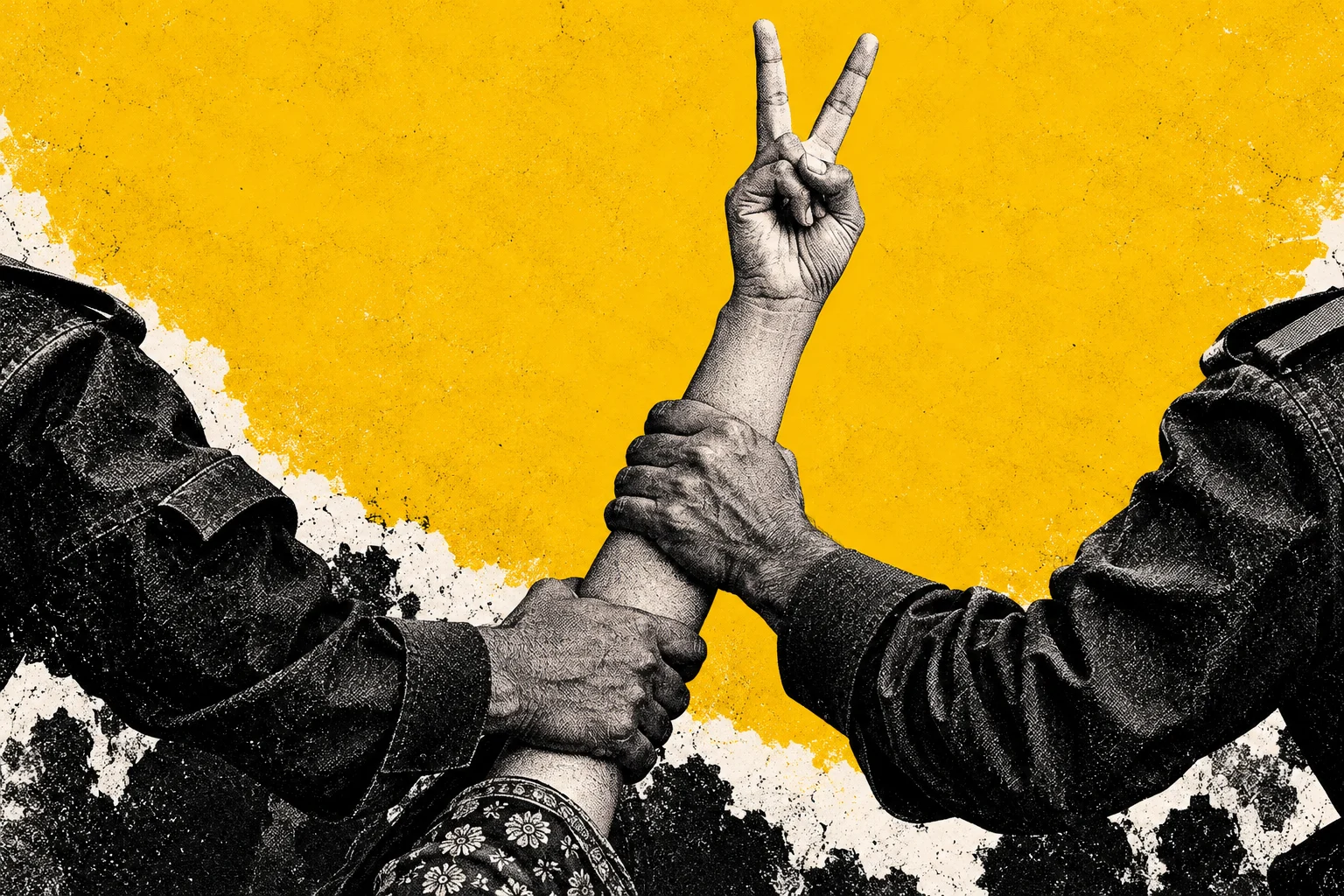
That institutional memory became operational on October 10. The government locked down the heart of New Delhi ahead of a youth protest demanding the election chief’s resignation: police detained protesters arriving by train and bus, confined student leaders to their homes, and boarded a landed plane to seize top Cockroach leaders. AISA, expecting the sweep, hid Bora. “We have been an underground party before, before our party contested elections; so, we followed the same tactics, some kind of guerrilla [tactics],” said Danish Ali, a 25-year-old AISA leader and friend of Bora, who said the party draws on methods “revolutionaries like Bhagat Singh” — the anti-colonial activist executed by the British in 1931 at age 23 — “used in resisting colonial rule.” That afternoon Bora appeared live on Instagram in a One Piece T-shirt, a symbol of global Gen Z protest movements, leading a few hundred people through affluent South Delhi, kilometres from the barricades. Police caught her within half an hour and dragged her into a van; she was released many hours later. Smaller coups followed through the week, each ending the same way on social media by evening: Bora straining against officers’ grips, smiling, flashing a victory sign, sometimes hoisted in the air by policewomen.
From Khatima to Jantar Mantar
Bora was born in Khatima, a small town in Uttarakhand, and grew up across Jammu, Bengaluru, Amritsar and Lucknow as her father’s Indian Army postings moved the family. Political differences with her family grew through her teens until, she says, she was “cut off.” A few months ago she staged a 23-day hunger strike at the Jantar Mantar protest strip in solidarity with the students there; she recalled her surprise when someone in the thousands-strong crowd said, “A woman is there, saying she is your mother; shall I let her in?” A motherly leg massage followed. The strike also nationalised her politics, said N Sai Balaji, a senior AISA leader who advises her: “India’s aspirational class, who felt betrayed by the government’s broken promises, found hope in people like Neha who were sitting selflessly. That’s where the whole propaganda vanishes. Suddenly, the so-called ‘anti-nationals’ become humans too.”
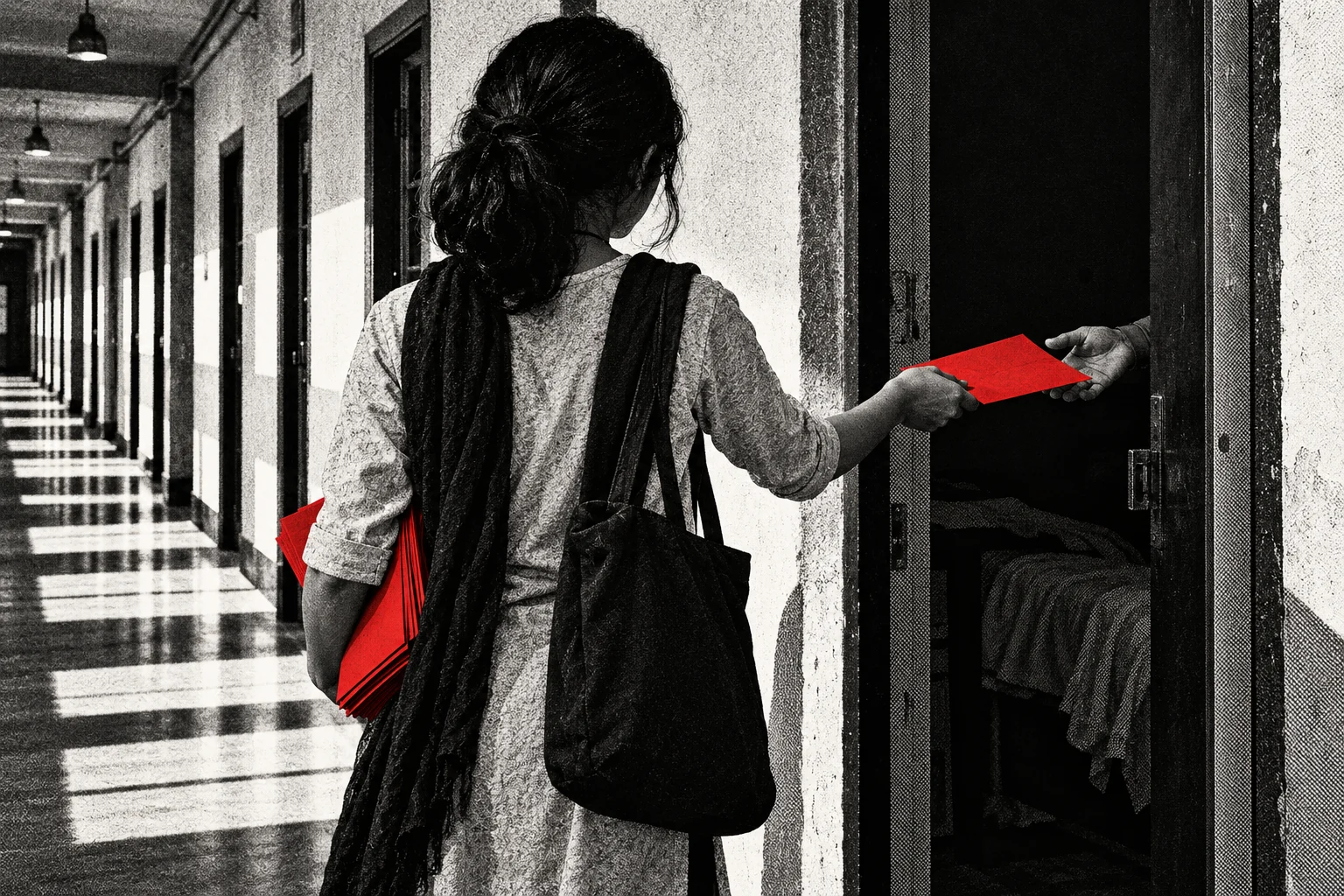
The mobilisation skill predates the cameras. Bora told Al Jazeera the 2019 protests against amendments to the citizenship laws — widely seen as discriminating against Muslims — were her true political awakening. At JNU she “distributed pamphlets and mobilised students for years, canvassing students’ votes for AISA, going to room to room,” Ali said, and speaks out for Muslim political prisoners such as Umar Khalid and Sharjeel Imam, jailed for more than six years without trial. He calls her “bravely honest.”
The context is a left that is electorally marginal — left parties have suffered historic setbacks in parliament and state legislatures — but rhetorically central to the government’s enemies list. Modi’s Bharatiya Janata Party has long demonised left politics, and after the protests forced Education Minister Dharmendra Pradhan’s resignation, Modi used his Independence Day speech in August to warn against “urban naxals” and “intellectual naxals,” terms his party applies to critics of all stripes. Bora’s answer, speaking to Al Jazeera: “How do you claim to be the champions of nationalism if you do not delegitimise the people who are actual inheritors of the radical legacy that got India independence?”
What the movement converts into remains unanswered. Its street wins — a minister gone, a mass petition before the Supreme Court — have come without an electoral vehicle, and the same state that confines student leaders to their homes and boards planes to make arrests has now seen the playbook Bora used on October 10. The next test is procedural rather than theatrical: whether the petition to remove the election chief goes anywhere, and whether 130 million struck voters find a way back onto the rolls before the next election.