
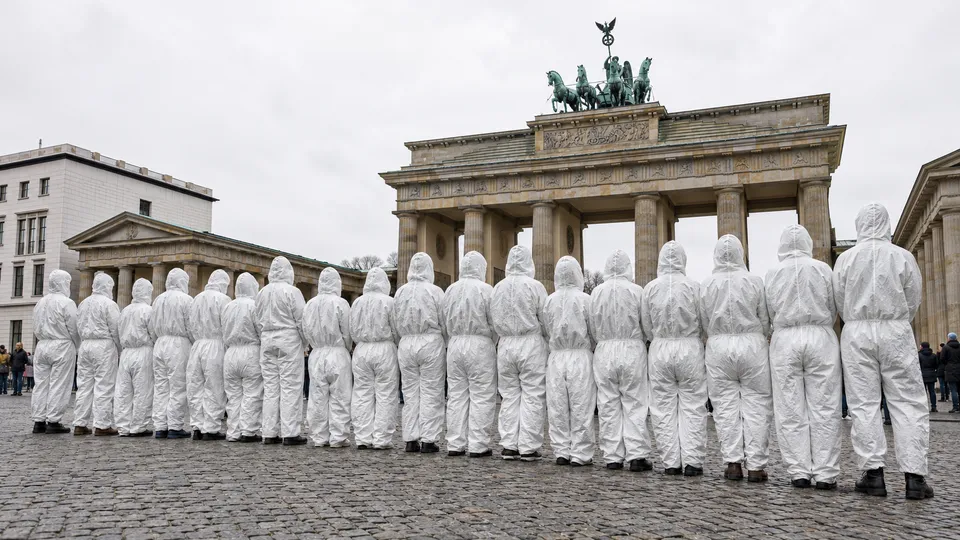
By early Saturday, the 128 parties to the UN Convention on Certain Conventional Weapons had converted a push for binding autonomous-weapons rules within one year into a commitment to “elaborate” an international instrument by 2028. The Geneva agreement does not settle whether that instrument will be legally binding. As Al Jazeera reported, nearly 100 countries had wanted swift adoption of legally binding rules for systems that can kill without a human making the final decision to fire.
That coalition amounted to roughly three-quarters of the states parties. It still could not determine the outcome. CCW decisions require consensus among all 128 parties, giving the United States, Russia and Israel—identified as leading arms-producing countries opposing the proposal—an effective veto over its scope. There is no dedicated new treaty during the intervening two years, although existing international humanitarian law continues to apply.
One objection can consume the negotiating calendar
The meeting had run since Monday, following more than 10 years of discussions. Supporters wanted rules covering weapons that identify and engage targets with varying degrees of autonomy. The International Committee of the Red Cross, which guards the Geneva Conventions, called before the talks for legally binding rules to be drafted within a year. UN Secretary-General António Guterres and Pope Leo backed that call.
The procedure then demonstrated why a large majority was insufficient. NPR’s Imogen Foulkes reported that Russia delayed proceedings on the first day by objecting to the agenda. Later Russian objections to rules of procedure forced the cancellation of some formal meetings. The United States proposed a five-year window to discuss nonbinding, optional guidelines. One frustrated delegate described that approach as “kicking the can down the road.”

Negotiators spent the final night disputing a handful of words. They emerged at about 4:30 a.m. Saturday with the two-year compromise: no agreement on a treaty within one year, and no agreement that the eventual text must bind governments. Exhausted negotiators argued that the result at least showed the UN disarmament process could still function.
The Swiss chair, Julien Thoeni, called it a significant achievement for humanitarian disarmament. “It shows that even in today’s deeply divided world, multilateral diplomacy can still deliver concrete results,” he told reporters after talks ended shortly after 4 a.m., according to the Kathmandu Post. A diplomat from a country supporting new laws offered the narrower assessment: “disappointing but could have been much worse.”
The central legal question remains in the text
The operative word was “elaborate,” not a commitment to adopt or ratify a binding treaty. The final formulation permits work toward an international instrument while leaving its legal force undecided. That is the difference between a timetable for negotiating and a timetable for regulation. The first now exists; the second does not.
The ICRC said it regretted the outcome and renewed its appeal for a binding treaty. Other campaigners called the agreement “a real disappointment” and a “nothing burger”; one warned, “I am concerned people will die because of this.” Their objection is not that nothing will happen between now and 2028. It is that governments will spend that period discussing rules without yet accepting enforceable limits.
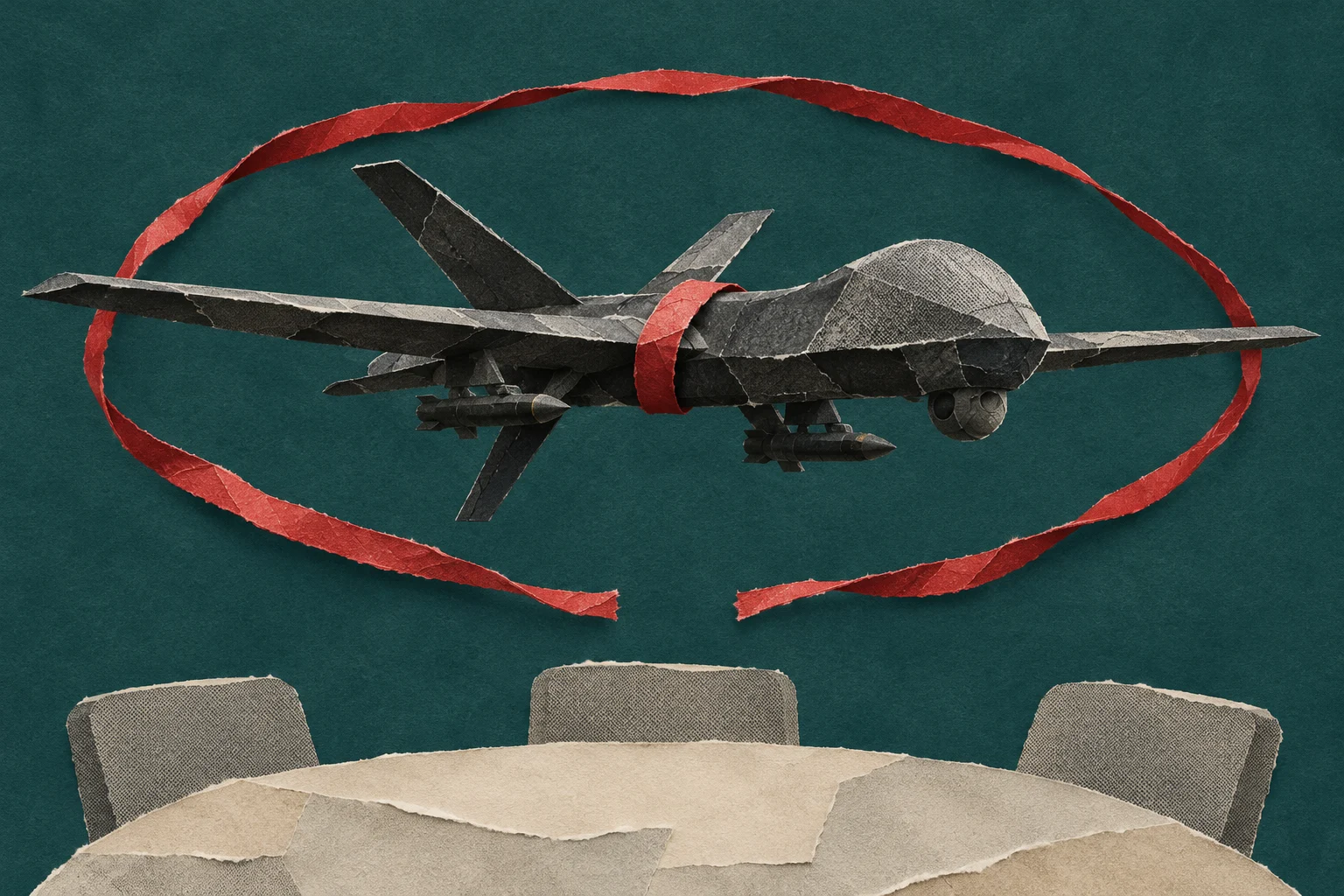
The consensus requirement also raises the question of what another two years can change. Some observers and former military officials say supporters should consider a process outside the CCW if unanimity continues to let a small number of weapons producers block binding measures. Moving venues would remove that particular veto, but the sources report no agreement to do so.
Today’s drone toll is not a measure of full autonomy
The pressure for rules comes from conflicts in Ukraine, Sudan, Gaza and elsewhere in the Middle East, where semi-autonomous drones are already killing civilians. The UN attributes 80% of civilian deaths in Sudan in 2026 to drones. Humans remain remotely in control for now. Humanitarian organisations fear the next step: AI-assisted systems selecting and engaging targets without a person making each lethal decision.
The Sudan figure needs a precise reading. It measures the share of civilian deaths attributed to drones, not the share caused by fully autonomous weapons or by algorithms independently choosing targets. It therefore establishes the scale of drone warfare, but not how often machines have already crossed the decision-making threshold that the proposed rules would govern.
For the ICRC, that threshold cannot be made acceptable solely through better engineering. “There is a fundamental ethical concern with having what are essentially these life-and-death decisions determined by programming, determined by an algorithm,” said ICRC legal adviser Georgia Hinds. “That’s not something that you can fix with better technology. That is a moral red line that we cannot cross.”

Hinds also identified an accountability problem. Existing rules of war require commanders to ensure that force is used lawfully and leave those commanders responsible for violations. “You cannot hold a machine accountable for a violation of the law,” she said. Accuracy improvements alone do not assign legal responsibility when no human makes the final decision to fire.
The proliferation clock does not follow the CCW calendar
Campaigners expect the technology and its availability to advance during the negotiating window. “We’re likely to see the systems proliferate,” said Anna Hehir, an expert in military AI governance at the Future of Life Institute. She contrasted them with nuclear weapons: autonomous systems can be inexpensive and accessible enough for individuals, nonstate groups and criminal organisations to purchase or build. That diffusion would expand the control problem beyond national arsenals.
Nicole van Rooijen, executive director of Stop Killer Robots, said delaying a legally binding instrument “puts civilians and humanity at risk.” The immediate consequence of the Geneva compromise is narrower and measurable: no new binding restrictions emerge from this week’s meeting, and another two years of work are authorised without resolving whether the final product will contain any.
The 2028 deadline is therefore only the first number to watch. The more consequential test is whether the resulting text imposes specific obligations, whether the states with the largest autonomous-weapons programmes accept them, and whether consensus again allows one holdout to remove those obligations before anyone has to comply.